Why Is RAM So Expensive in 2026? The Shortage Is a Choice
Micron revenue went from $9.30 billion to $41.46 billion in a year at gross margins near 85%. RAM is expensive in 2026 because scarcity pays more than volume.
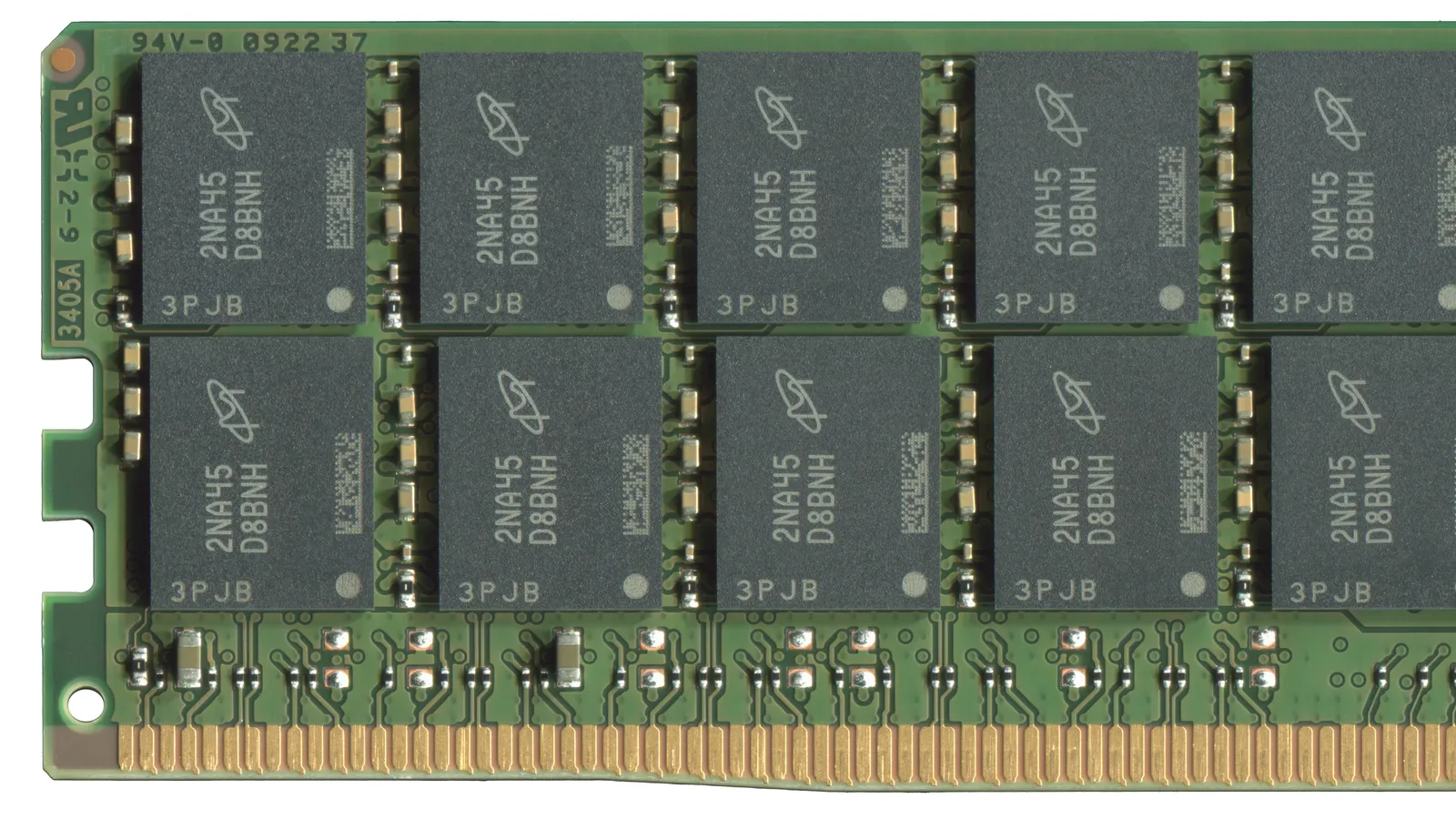
RAM is expensive in 2026 because the companies that make it earn more by keeping it scarce than by making more of it, and they are choosing scarcity. On June 24, 2026, Micron reported the most profitable quarter in its history: record revenue of $41.46 billion, up from $9.30 billion a year earlier, at gross margins near 85%. That is what the shortage looks like from the other side of the till. The mainstream DDR4 spot chip has nearly quadrupled since late 2025, the three big makers have locked up supply through 2026 and beyond, and they have told investors they will not flood the market to fix it. This is not a supply accident waiting to clear. It is the most lucrative thing to happen to the memory business in decades, and that is exactly why cheap RAM is not coming back soon.
Micron just had its most profitable quarter ever
Start with the scoreboard, because it explains the behavior. On June 24, 2026, Micron reported record fiscal Q3 2026 revenue of $41.46 billion, against $9.30 billion in the same quarter a year earlier, with GAAP net income of $28.24 billion and a gross margin near 85%. The company guided the next quarter higher still: fiscal Q4 revenue of $50.0 billion, plus or minus $1.0 billion, at a gross margin of approximately 86%, with those results due on September 30, 2026. CEO Sanjay Mehrotra called it proof of “the strategic value of memory in the AI era.”
It is not just Micron. SK Hynix, the leading maker of HBM, posted a 72% operating margin in Q1 2026, then went higher: its second-quarter 2026 results, released July 29, 2026, showed record revenue of 79.32 trillion won, up 257% year on year, at a 76% operating margin, and told investors plainly that “customer demand exceeds supply capabilities.” Margins like these are unheard of in a commodity business. They are the financial signature of a shortage, and they are the reason the people who could end the shortage are in no hurry to.
| Item | Q3 FY2025 | Q3 FY2026 |
|---|---|---|
| Micron revenue | $9.3B | $41.5B |
Why is RAM so expensive? Because scarcity pays
The standard explanation is that AI demand created a shortage. True, but incomplete. A shortage that lasts is a shortage someone has decided not to fix, and the makers have decided.
Two of the three, Samsung and SK Hynix, told investors in late 2025 they would not pursue aggressive capacity expansion, even as prices ran. Together they control roughly 70% of the DRAM market, so that restraint sets the price for everyone. Micron, on the same theme, said it could fill only 55% to 60% of its core customers’ demand and is steering output toward higher-margin parts rather than racing to add commodity supply. All three now ration what they make through allocation-only frameworks that put hyperscalers and big PC makers first, which keeps the open market starved.
Update, August 15, 2026: that restraint has since broken. On August 7, 2026 SK hynix approved 54 trillion won for two new fabs, part of a mid- to long-term framework of 1,100 trillion won, and Micron raised its US commitment past $250 billion. The reversal does not change the analysis below for 2026 and 2027 pricing, because the first cleanroom from that money opens in December 2028. The full timeline is in the memory capex buildout and why it buys no near-term relief.
This is not a conspiracy. It is discipline, and it is rational. The makers were badly burned in the 2023 glut, when oversupply crushed prices and pushed them into heavy losses. The lesson they took away was that flooding the market destroys profits, so this time they are holding the line. When the same three companies that caused the 2023 crash by overbuilding now refuse to overbuild, “shortage” and “strategy” stop being different words.
How AI eats your RAM: the HBM crowd-out
The mechanism that makes the discipline possible is high-bandwidth memory, the stacked DRAM that sits next to a GPU in an AI server. It is where the money is and where the capacity goes.
HBM is expensive to make and lucrative to sell. By SemiAnalysis estimates cited in IEEE Spectrum, it costs about three times as much as ordinary memory and makes up half or more of the cost of a packaged GPU. Crucially, it is far more wafer-hungry: Micron has described HBM consuming roughly three units of DDR5 capacity for every unit of HBM produced. So each wafer a maker points at AI is effectively three wafers’ worth of ordinary RAM that never gets made. With the entire 2026 HBM supply already booked and the HBM market forecast to nearly triple by 2028, the pull on capacity is structural, not seasonal.
| Item | Value |
|---|---|
| 2025 | $35B |
| 2028 (forecast) | $100B |
How high have prices actually gone?
Far enough to reset what normal looks like. DRAM prices rose 80% to 90% in the first quarter of 2026 alone, per Counterpoint Research data reported by IEEE Spectrum, one of the steepest single quarters on record. At retail, the cheapest 32GB DDR5-6000 CL30 kit tracked by the WhereIsMyRAM price chart cost $59 in April 2025 and $429 on September 25, 2026, with the average listing near $604. In June 2026 Tom’s Hardware tracking had the cheapest 32GB DDR5 kit near $375, so the climb has continued since. The research firm Gartner has gone further, forecasting a combined DRAM and SSD price rise on the order of 130% across 2026, which it expects to push average PC prices up around 17%.
The increases have not been a one-off spike that snaps back, either. They stacked quarter on quarter through the first half of 2026, which is the pattern you get from withheld supply rather than a temporary demand shock. The pace has slowed without reversing: a July 2026 TrendForce press release put conventional DRAM contract prices up 13% to 18% quarter on quarter in the third quarter, and the mainstream DDR4 1Gx8 spot chip closed at a new series high of $46.107 on September 24, 2026, per TrendForce DRAMeXchange data. For the current week-to-week numbers, this post pairs with a live DRAM price tracker that follows the spot market from primary sources.
Relief arrives when scarcity stops paying
Not in 2026, and probably not in 2027. The most-quoted forecast is the bluntest: at a February 2026 conference, Intel CEO Lip-Bu Tan said the memory industry told him “there’s no relief until 2028,” as reported by Bloomberg. Micron’s own commentary points the same way, with demand described as tight well beyond calendar 2027.
The arithmetic backs the pessimism. A new memory fab takes roughly 18 to 24 months to build and longer to reach good yields, and Micron’s new Idaho fab is not expected to reach volume until 2027. So even a crash program started today lands supply in 2027 or 2028. Add the makers’ deliberate restraint on top of the build time, and relief is slower still: the capacity only arrives when they decide the profits from scarcity no longer beat the profits from volume. The honest answer to “when does RAM get cheap again” is a range, not a date: elevated through 2026, maybe easing in 2027, normalizing toward 2028, and even then likely settling above the pre-AI baseline.
If you are deciding whether to buy now, the practical read is simple. Prices are more likely to rise than fall over the next several months, so buy what you actually need and skip the speculative stockpiling. For the full timeline, the competing forecasts, and a buy-now-or-wait call by buyer type, see when will RAM prices drop.
What it costs you, and what it costs AI
The bill lands in two places. First, on consumers and PC buyers. The research firm IDC expects the 2026 PC market to contract between 4.9% and 8.9% and smartphone shipments to fall 2.9% to 5.2%, with average selling prices up 3% to 8% as memory costs pass through. PC makers including Dell, Lenovo, HP, Acer, and ASUS have warned of price increases in the 15% to 20% range, per Tom’s Hardware reporting, and where they cannot raise prices they ship less memory for the same money. The rational consumer move when storage gets this expensive is to keep existing machines longer rather than buy into the spike, and to recover the value in old kit rather than bin it: Directories that route retired hard drives to local recyclers keep the magnets, aluminium, and rare-earth content in circulation instead of sending it to landfill. Graphics cards are where the pass-through is starkest, because a card’s memory cannot be specced down without changing the product: Nvidia has raised its GPU-and-memory kit prices three times in 2026, which I take apart in why GPU prices keep rising.
Second, and less obviously, the squeeze raises the cost of AI itself. Memory is one of the largest line items in a server, so pricier DRAM and HBM lift the cost of every GPU box and, with it, the cost of running inference. The demand that created the shortage now pays more to feed itself. That makes the economics of decentralized GPU capacity versus the big clouds and of self-hosting models on your own hardware more interesting, and it sharpens the open question behind the AI productivity paradox: whether the build-out earns back what it costs. For the model-by-model running costs, the cost-per-task calculator keeps the figures current.
Is this the new normal?
For a while, yes. The combination of disciplined makers and structural HBM demand means the baseline price of memory has reset higher, and even the eventual easing is unlikely to return prices to the pre-AI floor. The makers have learned that scarcity is more profitable than scale.
The one force that ends it is the one that always ends memory cycles: the makers overbuild, supply overshoots demand, and the glut crashes the price, as it did in 2019 and again in 2023. As of August 2026 that overbuild has formally begun, with roughly $2 trillion of announced memory capex across Samsung, SK hynix, Micron and the South Korean government. What it has not done is arrive: the delivery dates run from late 2027 to 2029, so the reckoning is scheduled rather than imminent. It still comes on the makers’ schedule, not the market’s, and they are being paid extraordinarily well to delay it. Until the math flips, expensive RAM is the new normal, not the anomaly.
Frequently asked questions
- Why is RAM so expensive in 2026?
- Because the memory makers profit more from scarcity than from volume and are choosing to keep supply tight. AI demand for high-bandwidth memory pulled capacity away from ordinary RAM, and rather than build their way out, Samsung, SK Hynix, and Micron are prioritizing high-margin AI parts and rationing the rest. Prices rose 80% to 90% in the first quarter of 2026 alone.
- Is the RAM shortage artificial or deliberate?
- It is real demand met with deliberate restraint. AI genuinely consumes enormous memory, but through mid-2026 the makers also told investors they would not aggressively expand capacity, having been burned by the 2023 oversupply crash. The result is record profits (Micron posted a record $41.5 billion quarter in June 2026), which is the clearest sign the shortage suits the suppliers. That restraint reversed in August 2026, though the resulting capacity does not come online until 2028 at the earliest.
- Why do memory makers not simply build more capacity?
- Because scarcity currently pays better than volume. Adding conventional DRAM capacity would dilute the pricing power the makers are enjoying, and the same wafers earn far more as high-bandwidth memory for AI accelerators. A new memory fab also takes 18 to 24 months to build, so even a decision made today lands well after the current pricing window. The constraint is a margin choice first and a build-time problem second.
- Is now a good time to buy RAM?
- Buy what you need now and skip stockpiling. Prices are more likely to rise than fall over the next several months, so waiting for a near-term dip is a weak bet. If a purchase can wait until 2027 or later, you may catch the start of a normalization, but that timing is a scenario, not a certainty.
- What is HBM and why does it cause the shortage?
- HBM, or high-bandwidth memory, is the stacked memory next to a GPU in AI servers. It sells at a large premium and consumes roughly three units of DDR5 capacity per unit produced (Micron), so when makers prioritize HBM for AI customers, they sharply cut the wafer capacity left for the commodity RAM in PCs and ordinary servers.
For the underlying record, the RAM price chart plots every published DRAM spot reading over time and tabulates the move between each one, and the server RAM price tracker covers the enterprise channel where the reallocation shows up first.
Sources
- Micron Technology (2026). Reports Results for the Third Quarter of Fiscal 2026 (SEC Form 8-K exhibit, June 24 2026). sec.gov
- SK Hynix (2026). Q1 2026 Business Results. news.skhynix.com
- SK Hynix (2026). SK hynix Announces 2Q26 Financial Results (July 29 2026). news.skhynix.com
- TrendForce (2026). AI Server Demand Continues to Support Memory Prices in 3Q26, but Gains Moderate as Consumer Demand Weakens (press release, July 3 2026). trendforce.com
- TrendForce (2026). DRAMeXchange Daily Express (mainstream DDR4 1Gx8 3200MT/s spot close, September 24 2026). trendforce.com
- WhereIsMyRAM (2026). DDR5 price chart (32GB DDR5-6000 CL30 kit minimum and average, read September 25 2026; retail aggregator). whereismyram.com
- IEEE Spectrum (2026). AI Boom Fuels DRAM Shortage and Price Surge (citing Counterpoint Research and SemiAnalysis). spectrum.ieee.org
- Sourceability (2026). Tracking memory price increases across the last several quarters (citing TrendForce, Counterpoint, and Micron earnings on capacity discipline and the HBM consumption ratio). sourceability.com
- Bloomberg (2026). Intel CEO Says There’s ‘No Relief’ on Memory Shortage Until 2028. bloomberg.com
- IDC (2025). Global Memory Shortage Crisis: Market Analysis and the Potential Impact on the Smartphone and PC Markets in 2026. idc.com
- Tom’s Hardware (2026). RAM price tracking 2026 and Framework warns of even more rising RAM and SSD prices through 2026. tomshardware.com
- Gartner (2026). Forecast of a combined DRAM and SSD price rise on the order of 130% across 2026, as reported in June 2026 (secondary). Treated as an attributed forecast.