When Will RAM Prices Drop? 2026-2028 Forecast
A 32GB DDR5 kit went from $59 in April 2025 to $429 in September 2026. Forecasters now split between late 2027 and 2028. Here is when relief actually arrives.
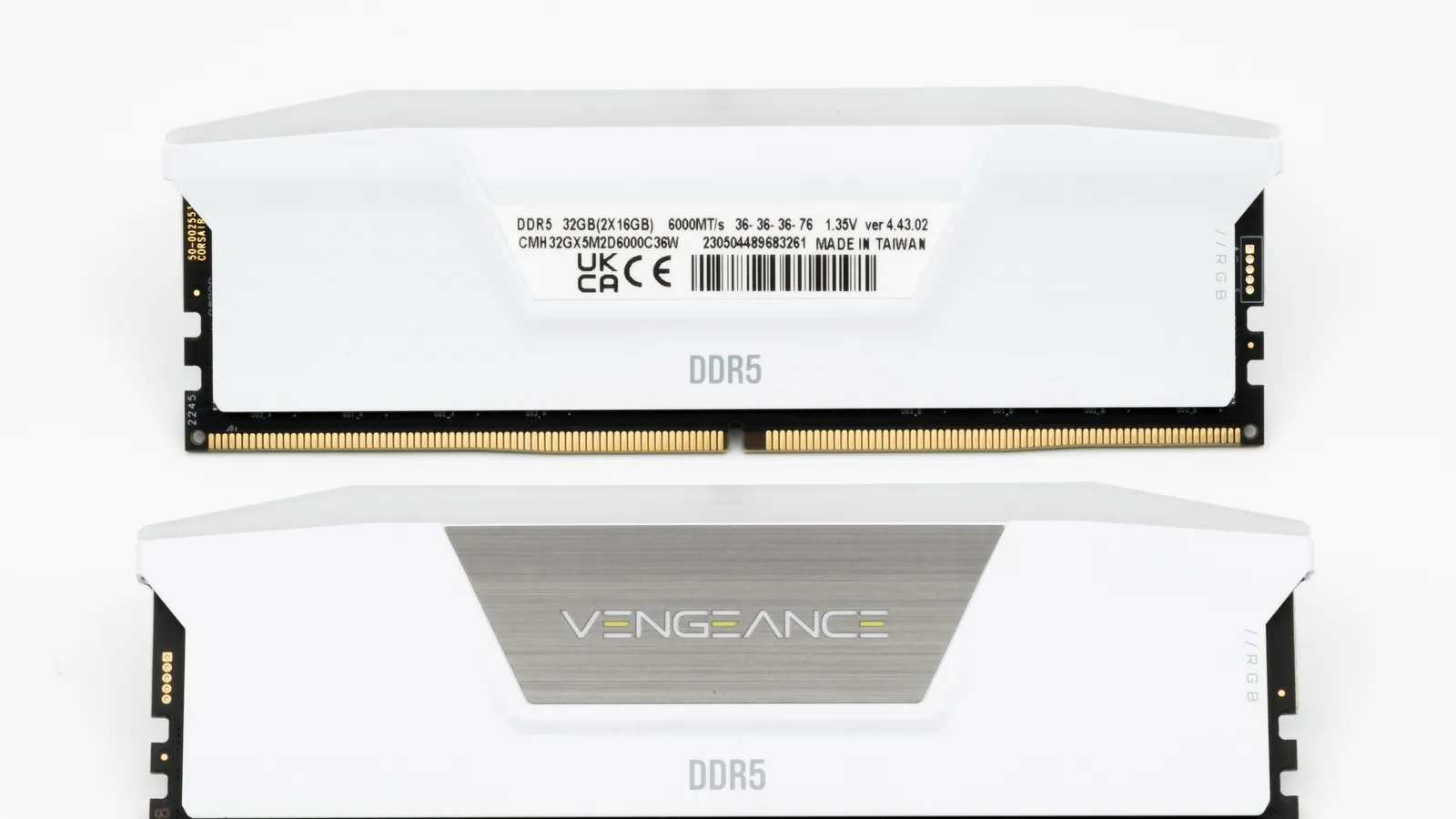
RAM prices are not expected to go down in 2026. What is happening is that AI servers are absorbing DRAM supply, so prices are still rising, only more slowly. The earliest credible relief is late 2027, and parts of the industry say 2028. Prices will likely ease eventually, but probably not back to 2024 levels.
So if you need memory now, buy what you need now. Waiting is a bet that prices fall before you finish waiting, and almost nobody who tracks this market expects that inside the next twelve months. The mainstream DDR4 spot chip has gone from $12.18 in November 2025 to $46.11 in September 2026, and the cheapest 32GB DDR5 kit this site tracks has gone from $59 to $429.
One thing genuinely has changed since the summer, and it is worth stating plainly rather than burying: the rate of increase is slowing. In a July 2026 press release TrendForce put conventional DRAM contract prices up 13 to 18 percent quarter on quarter in the third quarter, and put the moderation down to weaker consumer demand and a higher comparison base. Its September 30 2026 release projects 10 to 15 percent for the fourth quarter. Set that against the same firm’s earlier readings for the same channel: 58 to 63 percent in the second quarter and 93 to 98 percent in the first. That is deceleration, not relief, and the reason for it is demand-side (PC and phone makers hitting an affordability ceiling and cutting memory configurations) rather than any new supply arriving. The spot market says the same: TrendForce’s September 16 2026 spot update described consumer end demand as sluggish, with prices held up by firm supplier quotes rather than by buying. The forecasts still argue about the date of relief, not the direction.
When will RAM prices drop? The short answer
RAM prices are unlikely to fall in any meaningful way before late 2027. A February 2026 Gartner press release expects combined DRAM and SSD prices to rise about 130% across 2026, and Intel CEO Lip-Bu Tan says the memory industry sees no relief until 2028, as reported by Bloomberg. Spot prices wobble week to week, but contract prices set what you actually pay, and those are still rising as of the third quarter of 2026.
By horizon, with the source for each:
- Rest of 2026: still rising, more slowly. TrendForce has conventional DRAM contract prices rising 13 to 18 percent quarter on quarter in the third quarter, down from 58 to 63 percent in the second, with weaker consumer demand and a higher comparison base doing the moderating while capacity shifting toward server and HBM keeps prices from falling back. Server DRAM is on the same 13 to 18 percent track, capped by long-term agreements. For the fourth quarter, TrendForce’s September 30, 2026 press release projects conventional DRAM contract prices up another 10 to 15 percent quarter on quarter, with AI server demand doing the lifting while consumer-side pressure persists. That is the fourth straight quarter of smaller increases, not a turn. The quarter-by-quarter table sits on the DDR5 price forecast tracker. Module maker Adata was more bullish, projecting a further 20 to 30 percent for DRAM in the third quarter, as reported by TrendForce.
- 2027: tighter before looser. Gartner puts the earliest broad relief in late 2027. In August 2026 Adata said it expects DRAM supply to be more constrained in 2027, not less, and Winbond reported customers seeking long-term agreements out to 2029 and 2030 with its own 2026 and 2027 capacity already sold out.
- 2028: the first date new supply can physically land. The August 2026 capacity commitments open their first cleanroom in December 2028. Intel CEO Lip-Bu Tan says memory makers told him directly there is no relief until 2028.
That is the consensus, and it is unusually one-sided. In a normal memory cycle you can find an analyst calling the bottom. This time the disagreement is only about how late relief arrives, which is why “wait for the price to come back” is a weak plan for anything you need in the next year.
When is the RAM shortage going to end?
The RAM shortage is expected to ease no earlier than late 2027, and parts of the industry point to 2028. The shortage and the high price are two views of the same thing: memory makers have redirected wafer capacity toward high-bandwidth memory for AI accelerators, so mainstream DRAM stays undersupplied until either that demand cools or new fabs come online. Neither happens quickly. A new memory fab takes 18 to 24 months to build, Micron does not expect its Idaho fab at volume until 2027, and Gartner puts the earliest broad relief in late 2027. Even then, server and AI memory clears before the consumer DDR5 in a desktop, so the shortage eases for data centers first and for buyers last. For the full picture of how it started and what it will take to end, see the 2026 memory shortage explained. The DRAM price tracker follows the live readings, and why RAM is so expensive in 2026 explains why the squeeze is a deliberate business choice rather than an accident of supply.
What the forecasters actually say
The headlines make this sound like a single number. It is not. Different firms are measuring different things (spot versus contract, server versus consumer, this quarter versus the full year), so the dates only line up if you read what each one is actually forecasting.
| Forecaster | What they are saying | Earliest meaningful relief |
|---|---|---|
| TrendForce | Conventional DRAM contract prices rise 13-18% QoQ in 3Q26, down from 58-63% in 2Q26 and 93-98% in 1Q26, as weaker consumer demand and a higher base moderate the increases. Server DRAM is on the same 13-18% track, capped by long-term agreements, and capacity shifting to server and HBM keeps prices from falling back. Separately, HBM contract prices are expected to surge multiples higher in 2027. | Late 2026, and at first only as a slowdown in increases, not a fall |
| Gartner | Combined DRAM and SSD prices up roughly 130% across 2026, pushing average PC prices up about 17% and cutting global PC shipments by double digits. | No meaningful relief before late 2027 |
| Micron | Demand stays tight beyond 2027. The company has said it can fill only 55% to 60% of its core customers’ demand and is steering output to higher-margin AI parts. | 2027 to 2028 |
| Winbond | Its own 2026 and 2027 capacity is sold out, and as of August 2026 customers were negotiating long-term agreements covering 2029 and 2030. President Pei-Ming Chen called the DDR4 supply gap so large it is hard to see how it can be filled. | Beyond 2028 for the parts it makes |
| Adata | In August 2026 the module maker said DRAM supply will be more constrained in 2027 than in 2026, and projected a further 20% to 30% rise in the third quarter of 2026. | Not in 2027 |
| Intel (Lip-Bu Tan) | The memory industry told the Intel CEO directly that there is “no relief until 2028.” | 2028 |
Two things stand out. First, the contract-versus-spot gap. When you read that “RAM prices are falling,” it is almost always a spot quote, which is the thin open market for loose chips. The contract market, where PC makers and data centers buy in volume, is what flows through to retail, and TrendForce had contract prices still rising into the second half of 2026. Second, AI gets fed first. Server and high-bandwidth memory clear before the commodity DDR5 in your desktop, so even when relief starts, consumer parts are near the back of the queue.
For the week-to-week spot numbers from primary sources, the live DRAM price tracker follows the gap between the spot market and the official inflation indices, and carries a buy-or-wait verdict by buyer type. This post is the forecast; that page is the ticker. For current retail prices per generation, the DDR5 price tracker and the DDR4 price tracker list kit and per-gigabyte prices by capacity, and the HBM price tracker covers the contract pricing on the AI memory that started the reallocation. If you want the record rather than the forecast, the chart of RAM prices over time plots every published spot reading and tabulates the move between each one and the index level, and the server RAM price tracker shows what the same gigabyte costs in the enterprise channel where the shortage started. If the purchase you are timing is a graphics card rather than a memory kit, the same forecast applies with a steeper slope, and why GPU prices keep rising in 2026 works through the three kit-price hikes and the buy-or-wait call by buyer type.
When did RAM prices go up?
The turn is datable, and knowing the date is what tells you whether this is a spike or a new floor. Through most of 2025 memory was cheap: the cheapest tracked 32GB DDR5-6000 kit sat at $59 in April 2025. The break came that autumn. TrendForce recorded DDR5 spot prices rising 307 percent between September and November 2025, and this site’s DDR4 spot series opens at $12.18 on November 12, 2025, already partway up the climb. By September 2026 that same DDR4 1Gx8 chip was $46.11.
The shape matters more than the start date. Every month since the autumn of 2025 has set a new plateau rather than a spike that retraced, which is the signature of a supply reallocation rather than a demand shock. Spikes give the money back. This one has not, and the full reading history shows the step pattern period by period.
What is the RAM price trend in 2026?
Up, and by a lot. The cleanest way to feel it is the multiple: how many times more expensive a part is now than at its recent low.
| Item | Value |
|---|---|
| DDR4 1Gx8 spot chip | 3.8x |
| 32GB DDR5 kit, typical listing | 4.8x |
| 32GB DDR5 kit, cheapest listing | 7.3x |
The most useful detail in that chart is which line is longest. The cheapest tracked 32GB kit rose 7.3 times while the typical listing rose 4.8 times, because the bargain listings did not drift up with the market: they held in a band from $59 to roughly $195 for months and then disappeared. Hunting for a deal used to work in this category and now does not, which is a different and more expensive problem than a high average price.
Inside 2026 the trend has not been a clean line. By late April some spot DDR4 and channel quotes drifted lower, enough for a few outlets to ask whether the top was in. It was not, and the signals that would actually mark a peak are worth separating from the noise: a dip in a spot quote is usually a distributor clearing old stock, not the cycle turning. Tom’s Hardware tracking showed the same split market, with spot softening at the edges while contract and enterprise segments stayed tight.
Will DDR4 prices drop?
DDR4 deserves a separate answer, because the intuition is backwards here. It is the older generation, so it ought to be cheap and getting cheaper. Instead the mainstream DDR4 1Gx8 spot chip rose about 3.8 times from its November 2025 low, at times running above comparable DDR5. The reason is that DDR4 is in managed retirement: fabs are winding those lines down to free capacity for DDR5 and high-bandwidth memory, and Winbond president Pei-Ming Chen has described the resulting DDR4 supply gap in exactly those terms. A part being retired does not get cheaper while demand for it persists, because no one is adding capacity to serve it.
At retail the picture inverts once more. DDR4 kits still cost roughly half what DDR5 does per gigabyte, about $7.77 against $17.50 per GB as of September 11, 2026, because retail inventory was bought at older prices and DDR4 platforms are a shrinking market. That gap is the one real saving available today, and it closes as old stock clears rather than as new supply arrives.
So of the three parts covered here, a DDR4 price drop is the least likely. New capacity is not coming for a generation being retired, and the retail discount is an inventory artifact rather than a trend. The DDR4 price tracker carries the current readings.
Why new fab capacity will not make your RAM cheap
The most common mistake in reading this market is assuming capacity announcements translate into consumer supply. They do not, for a reason that is now measurable: high-bandwidth memory consumes wafers far faster than it produces gigabytes, so a fab that opens on schedule is partly consumed by the highest-margin and least bit-efficient product on the line. In a June 2026 press release, TrendForce said it expects the crowding-out effect on conventional DRAM capacity to intensify through 2027 rather than ease, and that HBM contract prices could surge multiples higher next year.
That mechanism, and the wafer-share numbers behind it, are worked through in the 2027 memory shortage forecast. What matters for the dates on this page is the consequence: a capacity number is not a supply number, so every relief window below should be read as conditional on how wafers get allocated, not just on when concrete gets poured.
Which fabs actually open, and when
The relief dates above are abstractions until you put names and dates on the buildings. Every major DRAM maker has capacity in flight, and the useful thing about that is how late it lands.
| Facility | Owner | What it is for | Date on the record |
|---|---|---|---|
| M15X, Cheongju | SK hynix | Next-generation DRAM including HBM | Announced April 2024 at about 5.3 trillion won for the fab, targeting completion in November 2025 for early mass production. Trade press through 2026 reports the ramp running later than that |
| Yongin cluster, first fab | SK hynix | DRAM, the anchor of an approximately 120 trillion won cluster | Construction begins March 2026, completion May 2027, per the company’s own announcement |
| Pyeongtaek mega-fab | Samsung | Leading-edge DRAM capacity | Construction being accelerated by at least six months, as reported June 2026 |
| Idaho | Micron | DRAM | Not expected at volume until 2027 |
| The August 2026 capex wave | Industry-wide | New greenfield capacity | First cleanroom December 2028 |
Two things fall out of that table, and both argue against waiting.
The dates land after the relief window, not before it. SK hynix’s own announcement puts the first Yongin fab at completion in May 2027. Micron does not expect Idaho at volume until 2027. The December 2028 cleanroom from the August 2026 capex wave is later still. A fab completing is also not the same as bits shipping: yield ramps take quarters, and the output is sold before it exists. Big buyers are already negotiating 2027 allocations.
The new capacity is pointed away from you. The facilities above are being built for HBM and leading-edge server DRAM, because that is where the margin is. Samsung is accelerating its Pyeongtaek expansion to meet AI demand, as reported by the Korea Economic Daily in June 2026, and SK hynix describes M15X as a next-generation DRAM and HBM line. None of that is a promise of cheaper 32GB desktop kits. The money side of this argument, and why roughly $2 trillion of commitment does not change your 2027, is worked through in the memory capex buildout.
Why the relief date keeps slipping
The honest reason the date moves is that two clocks are running, and the slower one wins. One clock is physical: building memory takes years. The other is strategic: for most of this cycle the makers were in no hurry, because scarcity paid better than volume. I go deep on the second clock in why RAM is so expensive in 2026; the short version is that on June 24, 2026 Micron reported the most profitable quarter in its history in an SEC filing, guided the current quarter to $50.0 billion, plus or minus $1.0 billion, at a gross margin of approximately 86%, with those results due September 30, 2026. A supplier earning record margins on tight supply has little reason to flood the market.
The strategic clock did turn, and it changed nothing about 2027. In August 2026 the makers reversed their capacity discipline and committed roughly $2 trillion to new fabs, with SK hynix alone approving 54 trillion won on August 7. The dates in those announcements are the whole story: as the capex buildout post works through, the first new cleanroom opens in December 2028. So the reversal that optimists point to is real, and it lands after every relief date in the table above. If anything it confirms them.
That leaves the physical clock, which is what makes even an optimistic forecast land in 2027 or later.
Late 2025
Spot DRAM starts its near-vertical climb
Makers divert wafer capacity to AI memory, and the loose-chip spot market is the first place the squeeze shows up.
Early 2026
AI memory keeps absorbing wafer capacity
HBM continues to take a growing share of the top three suppliers wafer starts, and the makers tell investors they will not expand aggressively.
August 2026
The capacity U-turn, dated 2028
The makers reverse course and commit roughly $2 trillion to new fabs. SK hynix approves 54 trillion won on August 7. The first cleanroom opens in December 2028, which is why the reversal does not move the near-term dates.
2026 to 2027
New supply is still under construction
A new memory fab takes roughly 18 to 24 months to build and longer to yield well. Micron does not expect its Idaho fab to reach volume until 2027.
Late 2027
Gartner: earliest window for real relief
And only if AI contract demand stabilizes and the wafer allocation shifts back toward conventional DRAM. Consumer parts ease after server and HBM.
2028
The date the industry gave Intel
Intel CEO Lip-Bu Tan says memory makers told him there is no relief until 2028, and even then prices likely settle above the pre-AI baseline.
So a crash program started today still lands meaningful new capacity in 2027 or 2028. Add the makers’ deliberate restraint on top of the build time, and the supply only really loosens when they decide the profits from scarcity no longer beat the profits from volume. That is a business decision, not a calendar date, which is exactly why the forecasts keep drifting later.
Should you buy RAM now or wait?
Break it down by who you are. If you want the verdict against a live price rather than a general rule, the buy-or-wait price check tests a specific kit or module against the current per-gigabyte readings.
If you are building or upgrading a PC now, or repairing one, buy the memory now and buy what the machine actually needs. The cheap 2024 price is gone and is not coming back this year, so holding out for it costs you the use of the machine and probably a higher price when you cave. If you were eyeing a 64GB build, a 32GB build you can live with today is the rational trade while a gigabyte costs what it costs.
If the purchase can wait a year or more (a second machine, a someday-upgrade, a spare kit), waiting is defensible. You might catch the very start of normalization in 2027. Just size the bet honestly: you are wagering that relief arrives on the optimistic end of a forecast range that has only moved later so far.
If you buy in volume (a small business, a build shop, a home lab at scale), the spot market is the wrong signal to watch. Lock contract pricing where you can and avoid timing the spot quotes, because the volatility that looks like an opportunity is the same volatility that strands you at the top.
The one move almost everyone should make is to stop treating old hardware as worthless. When memory is this expensive, keeping an existing machine a year longer, or pulling usable RAM and drives out of a retired one, is worth real money for the first time in a decade. The guide to how much RAM you actually need to run a local LLM is a good gut-check before you spend: a lot of “I need more RAM” turns out to be “I need the right amount.”
Will you even see the savings when prices drop?
Here is the part the countdown-to-2028 takes skip. Even when the cycle turns, the discount reaches your shelf slowly and partially.
Prices are sticky on the way down in a way they are not on the way up. Distributors and retailers who bought inventory at the peak will not sell it at a loss to chase a falling spot price; they hold and bleed it out. PC makers locked higher memory into their bill of materials and, where they cannot raise the sticker, ship less memory for the same money instead. And the makers, having relearned that scarcity pays, will throttle supply long before they let a glut crash the price the way it did in 2023.
The realistic read is not “2024 prices return in 2028.” It is “the rate of increase slows, then flattens, then eases gently, and the floor settles higher than it was before AI.” Planning around a sharp snap-back is planning around the least likely outcome.
What would have to be true for each date
Forecast dates are only as good as their assumptions, and most coverage of this market states the date without the assumption. Here is what each relief window actually requires. These are conditions, not probabilities: nobody, including the forecasters, publishes a defensible number for how likely each one is, so this table deliberately does not invent one.
| Relief window | What would have to be true | What to watch as the tell |
|---|---|---|
| Late 2026 (slowdown only) | Already happening. Consumer buyers are hitting an affordability ceiling and cutting configurations, so quarterly conventional DRAM contract increases keep converging: 93-98% in 1Q26, 58-63% in 2Q26, 13-18% in 3Q26. | The next quarterly contract print. A single-digit rise is this scenario |
| 2027 | AI contract demand plateaus and the HBM share of wafer starts stops climbing, freeing conventional capacity without any new fab opening. | HBM wafer-share revisions, and whether HBM contract prices actually surge |
| 2028 | The August 2026 capacity lands roughly on schedule, starting with the first cleanroom in December 2028, and the makers choose volume over margin once it does. | Fab schedule slips, and the makers’ stated capex discipline at each earnings |
| A genuine crash | AI capital spending contracts sharply enough to strand the new capacity, which would reprice memory the way 2023 did. | AI datacenter capex guidance, not memory prices |
| Back to 2024 prices | Not in any forecaster’s published range. Even the optimistic paths describe a floor above the pre-AI baseline. | Nothing. Treat this as out of scope rather than distant |
The asymmetry is the point. Three of these five paths still have you paying more than you did in 2024, and the two that do not require something to go wrong in the AI buildout rather than something to go right in memory supply.
Bottom line
RAM does not get cheap again in 2026, and probably not in 2027. The forecasts that disagree about the date agree about the shape: elevated through 2026, maybe easing in 2027, normalizing toward 2028, and settling above the old floor. Buy what you need now, defer only what you can truly defer, and do not plan your finances around a price drop that the people who make the chips are being paid extraordinarily well to delay.
Frequently asked questions
- When will RAM prices drop?
- Not meaningfully in 2026. Gartner sees no real relief before late 2027, Adata said in August 2026 that it expects supply to be even tighter in 2027, and Intel CEO Lip-Bu Tan says the memory industry told him there is no relief until 2028. The roughly 2 trillion dollars of new fab capacity committed in August 2026 opens its first cleanroom in December 2028, so it cannot help before then. What has changed is the rate: TrendForce has conventional DRAM contract prices up 13 to 18 percent quarter on quarter in the third quarter of 2026, after 58 to 63 percent in the second quarter and 93 to 98 percent in the first, driven by consumer buyers hitting an affordability ceiling rather than by new supply.
- How long will RAM prices stay high?
- Through 2026 and most of 2027 on the current forecasts, with the argument being about 2027 versus 2028 rather than about whether prices fall this year. The reason the answer is measured in years rather than quarters is that both clocks run slowly: a memory fab takes roughly 18 to 24 months to build and longer to yield well, and the makers have been earning record margins on tight supply, so neither physics nor incentives push for a quick unwind. The dated facilities bear that out. SK hynix completes its first Yongin fab in May 2027, Micron does not expect Idaho at volume until 2027, and the first cleanroom from the August 2026 capex wave opens in December 2028.
- Which new memory fabs are opening, and will they make RAM cheaper?
- The largest are SK hynix M15X in Cheongju and the first fab of its Yongin cluster, which the company says completes in May 2027, an accelerated Samsung expansion at Pyeongtaek, and Micron Idaho, which is not expected at volume until 2027. They will add capacity and they are unlikely to make a desktop memory kit cheap, because they are being built for high-bandwidth memory and leading-edge server DRAM, which is where the margin is. A capacity number is not a supply number: HBM consumes far more wafer per gigabyte shipped, so new wafers do not convert one for one into consumer bits.
- Will the $2 trillion of new memory fabs bring prices down?
- Not before 2029. Memory makers reversed their capacity discipline in August 2026 and committed roughly 2 trillion dollars to new fabs, with SK hynix alone approving 54 trillion won on August 7. The first cleanroom from that wave opens in December 2028, and a cleanroom opening is not the same as volume output, so the commitments land after every relief date the forecasters currently give. The announcement is a reason to expect eventual normalization, not a reason to wait.
- Should I buy RAM now or wait?
- If you need it within a year, buy now. Prices are more likely to rise than fall over the next several months, so waiting mostly buys a higher price. Only defer a purchase you can genuinely push to 2027 or later, and treat any saving then as a possibility rather than a plan.
- What is the RAM price trend in 2026?
- Sharply up, and still up as of the third quarter, but decelerating. The mainstream DDR4 1Gx8 spot chip went from 12.18 dollars in November 2025 to 46.11 dollars in September 2026. The cheapest tracked 32GB DDR5 kit went from 59 dollars in April 2025 to 429 dollars. Contract prices are still rising, though the pace has slowed sharply: TrendForce has conventional DRAM up 13 to 18 percent quarter on quarter in the third quarter and a projected 10 to 15 percent in the fourth, after 58 to 63 percent in the second quarter. Brief spot dips appeared in April but were distributors clearing stock, not the cycle turning.
- Will RAM prices go back to 2024 levels?
- Unlikely. Even the optimistic forecasts describe a gentle easing toward 2028, not a return to the pre-AI floor. Prices are sticky on the way down, makers are rationing supply to protect record margins, and the structural pull of AI memory demand keeps the baseline elevated.
- Why do forecasts for RAM relief disagree?
- Because they measure different things. Spot prices can soften while contract prices, which set retail, keep rising. Server and high-bandwidth memory ease before consumer DDR5. So TrendForce can see early moderation in one segment while Gartner and Intel point at late 2027 or 2028 for broad relief.
Sources
- TrendForce (2026). AI Server Demand Continues to Support Memory Prices in 3Q26, but Gains Moderate as Consumer Demand Weakens and High Base Effects Take Hold (press release, July 3 2026). PRIMARY; conventional DRAM contract prices up 13% to 18% QoQ in 3Q26 and NAND Flash up 10% to 15%, with the moderation attributed to weaker consumer demand and a higher comparison base. Verified September 12 2026. trendforce.com
- TrendForce (2026). Long-Term Agreements Cap Price Increases; Server DRAM Contract Prices Expected to Rise 13-18% QoQ in 3Q26 (press release, July 9 2026). PRIMARY; server DRAM contract prices up 13% to 18% QoQ in 3Q26, capped by long-term agreements, with quarterly increases expected to continue through 2H27 at a moderating pace. No 4Q26 percentage is given. Verified September 12 2026. trendforce.com
- TrendForce (2026). Rapid Contract Price Surge Drives 1Q26 DRAM Industry Up 81% QoQ (press release, June 1 2026). PRIMARY; the prior-quarter conventional DRAM contract readings this post uses as the deceleration baseline, 93% to 98% QoQ in 1Q26 and 58% to 63% in 2Q26. The 81% figure is industry revenue, not price, and is not used here as a price figure. Verified September 12 2026. trendforce.com
- TrendForce (2026). Tight DRAM Supply Gives Suppliers Greater Pricing Power in HBM, with HBM Contract Prices Expected to Surge Multiples Higher in 2027 (press release, June 2 2026). PRIMARY; the intensifying crowd-out of conventional DRAM capacity through 2027 and the expectation that HBM contract prices surge multiples higher in 2027. The underlying wafer-share figures are argued in
memory-shortage-2027-forecast, which owns that mechanism. Verified September 3 2026. trendforce.com - TrendForce (2026). Winbond Says Customers Seek LTAs Through 2030; Adata Expects Even Tighter DRAM Supply in 2027 (news, August 7 2026). SECONDARY, reporting company statements; Winbond capacity sold out through 2027 with LTA talks into 2029 and 2030, and the Adata view that 2027 supply is more constrained plus a projected 20% to 30% third-quarter DRAM rise. Verified September 3 2026. trendforce.com
- TrendForce (2026). Winbond Expects DRAM Prices to Jump Nearly 4x by June 2026; Capacity Booked Through 2027 (news, February 11 2026). SECONDARY, reporting company guidance; the DDR4 supply-gap comment attributed to Winbond president Pei-Ming Chen. Verified September 3 2026. trendforce.com
- SK hynix (2024). SK hynix to Produce DRAM From M15X in Cheongju (company newsroom, April 24 2024). PRIMARY; the M15X fab investment of about 5.3 trillion won with more than 20 trillion won long-term, and the Yongin cluster figure of approximately 120 trillion won with the first fab starting construction March 2026 and completing May 2027. Announcement-date targets, not delivered dates. Verified September 12 2026. news.skhynix.com
- Korea Economic Daily (2026). Samsung fast-tracks mega-fab expansion to meet surging AI demand (June 21 2026). SECONDARY, trade press; Samsung accelerating its Pyeongtaek mega-fab construction by at least six months. Verified September 12 2026. kedglobal.com
- Gartner (2026). Gartner Says Surging Memory Costs Will Reduce Global PC and Smartphone Shipments in 2026 (press release, February 26 2026). gartner.com
- TrendForce (2026). Memory Spot Price Update: DRAM Spot Cools as DDR5 Inquiries Slow, 2Gx8 DDR4 Prices Retreat (September 16 2026). PRIMARY; sluggish consumer end demand, prices held up by supplier quotes. Verified September 26 2026. trendforce.com
- TrendForce (2026). AI Server Demand Sustains Memory Contract Price Increases in 4Q26, While Consumer-Side Pressure Persists (press release, September 30 2026). PRIMARY; conventional DRAM contract prices up 10% to 15% QoQ in 4Q26. Verified October 1 2026. trendforce.com
- TrendForce (2025). Memory Price Surge to Persist in 1Q26; Smartphone and Notebook Brands Begin Raising Prices and Downgrading Specs (press release). trendforce.com
- TrendForce (2025). Tight DRAM Supply to Boost DDR5 Contract Prices: Profitability in 2026 Expected to Surpass HBM3e (press release). trendforce.com
- TrendForce (2026). DRAM Spot Price (mainstream DDR4 1Gx8 3200MT/s chip). trendforce.com
- Micron Technology (2026). Reports Results for the Third Quarter of Fiscal 2026 (SEC Form 8-K exhibit, June 24 2026). sec.gov
- Bloomberg (2026). Intel CEO Says There’s ‘No Relief’ on Memory Shortage Until 2028. bloomberg.com
- IDC (2025). Global Memory Shortage Crisis: Market Analysis and the Potential Impact on the Smartphone and PC Markets in 2026. idc.com
- Tom’s Hardware (2026). RAM price tracking 2026: lowest price on DDR5 and DDR4 memory of all capacities. tomshardware.com
- Capital and Compute (2026). RAM price index and DRAM price tracker (this site’s own dataset,
src/data/memory-prices.json, as of September 26 2026). INTERNAL; the DDR4 1Gx8 3200 spot series ($12.18 on November 12 2025 to $46.107 on September 24 2026) and the 32GB DDR5 kit history (minimum $59 and average $125 on April 4 2025, to $429 and about $604 on September 25 2026, sourced from WhereIsMyRAM, which resamples its own history between reads so the series reflects one dated read). capitalandcompute.net/memory-prices