Why Local LLMs Got Good in 2026: Capability & Cost
Open-weights LLMs crossed from toy to useful in 2026. What actually changed, and the cost math for when running a model yourself beats paying an API.
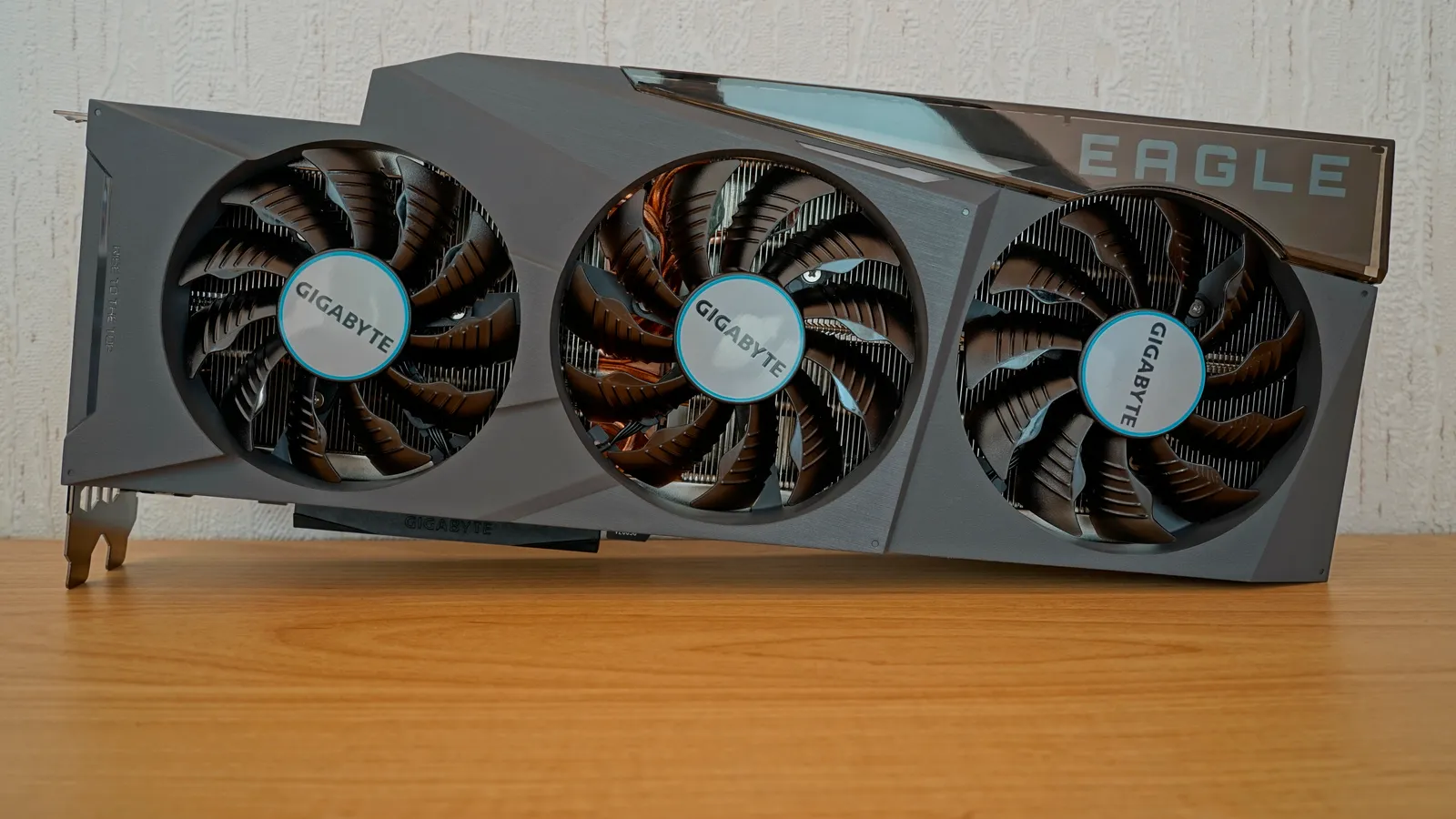
A year ago, a model you could run on your own machine was a privacy toy: fine for a quick chat, useless for real work. In 2026 that flipped. An open-weights model you can download for free and run on a single consumer GPU now scores in the high 70s on a serious coding benchmark, follows tool calls across long sessions, and holds a six-figure context. The capability gap to the best closed models narrowed from a chasm to a margin. That is the part people feel. The part that matters for anyone deciding what to actually run is the cost math underneath it, and that math points the opposite way from the hype: for most users, most of the time, the API is still cheaper. Local inference does not win on price until the volume is high enough to pay off the hardware.
This piece does two things. First, it pins down what genuinely changed in the year that made local models useful, against primary sources rather than vibes. Then it works the economics: what running a model yourself actually costs, and the specific conditions under which that beats a per-token API bill.
What actually changed: the four shifts that made local models useful
The shift was not one breakthrough. It was four things compounding inside a single year: the mid-size open models got dramatically better at the tasks people care about, quantization made them fit on hardware people own, the local runtimes matured into something agent harnesses can drive, and the weights stayed openly licensed. Each is verifiable.
Mid-size models closed most of the coding gap
The clearest single data point is Qwen3.6-27B, released by Alibaba’s Qwen team on April 22, 2026. It is a 27-billion-parameter dense model under the permissive Apache 2.0 license, and per the official Qwen model card it scores 77.2 on SWE-bench Verified, the benchmark that measures whether a model can resolve real GitHub issues. In Qwen’s own announcement, that 27B dense model edges past the previous generation’s 397-billion-parameter flagship on coding suites. A model roughly one-fifteenth the total size matching last year’s giant is the capability jump in a sentence.
| Item | Value |
|---|---|
| SWE-bench Verified | 77.2 |
| SWE-bench Multilingual | 71.3 |
| Terminal-Bench 2.0 | 59.3 |
| SWE-bench Pro | 53.5 |
One caveat travels with every number above: these are vendor-reported scores, produced with Qwen’s own agent scaffold (the model card specifies an internal harness with bash and file-edit tools, temperature 1.0, and a 200K context window). That is not the same as an independent evaluation, and a model’s score swings with the harness wrapped around it. The discipline that applies to closed-model leaderboards applies here too, a point worth keeping in mind when reading any open-weights ranking. For why benchmark numbers deserve that skepticism in the first place, see the breakdown in AI agent benchmarks in 2026.
Quantization made them fit hardware people own
A 27B model in full precision does not fit a consumer graphics card. Quantization is what closed that gap: storing weights at lower bit-depth so the model occupies a fraction of the memory while keeping most of its quality. The open runtime that most local setups depend on, llama.cpp, supports integer quantization from 8-bit all the way down to roughly 1.5-bit, and 2026 added native support for newer low-bit formats, including NVIDIA’s MXFP4 and ternary BitNet b1.58 models. At 4-bit, a 27B model lands around 15 to 16 GB of weights, which fits inside a single 24 GB card with room for context (the Can I Run This LLM? checker does this fit-check for any hardware). The model authors ship for this directly: Qwen3.6-27B is published in an FP8 variant alongside the full-precision weights, and the community provides 4-bit builds for local runtimes within days.
How much quality survives quantization is itself now a measured question rather than a guess. A 2026 arXiv preprint, Which Quantization Should I Use?, evaluates llama.cpp quantization levels on Llama-3.1-8B-Instruct and maps the tradeoff between bit-depth, memory, and accuracy. The headline for practitioners is that 4-bit and higher retain the bulk of a model’s capability, which is why 4-bit is the default most people run.
The runtimes grew up into agent backends
Capability and quantization only matter if something can drive the model through a real task. The thing that changed here is that the local runtimes became dependable tool-calling backends. llama.cpp’s server can hold long contexts, and it added throughput tricks like speculative decoding, where a small draft model proposes tokens that the target model verifies, raising tokens-per-second on memory-bandwidth-bound machines. On top of that runtime, agent harnesses now loop a local model through plan-edit-test cycles the way they drive a closed model. The model is only half the system. The harness around it is the other half, the same lesson that holds for cloud coding agents, covered in the 2026 AI coding-agent landscape.
This is also where the honest limit sits. The local models still trail the best closed models on long-horizon work: tasks that need sustained planning across a large repository, recovering from their own mistakes over many steps, and holding a coherent thread across a very long session. The gap narrowed; it did not close. For a bounded, well-specified task, a good local model now does the job. For an open-ended multi-hour agent run, the frontier still wins.
Turning that limit into a working practice is its own subject, and the research points somewhere counterintuitive: identical weights swing by more than twenty points on SWE-bench depending on the harness, and the task shapes that defeat a local model defeat a frontier model too. Why local LLMs fail at agentic coding works through the failure modes and the rules for routing work between local weights and a paid API.
The capability gap to the best closed models narrowed from a chasm to a margin. The cost gap moved the other way: for most users, the API is still cheaper.
The cost math: when does running it yourself actually pay?
Here the story inverts. The capability news makes local sound like the obvious default. The economics say otherwise for most users, and the reason is the shape of the cost, not its size.
An API charges per token. Every request costs something, forever, in proportion to use. Running a model yourself replaces that with a mostly fixed cost: the hardware, plus electricity, plus your own time to set it up and keep it running. Once the box is paid for, the marginal cost of one more request falls toward the price of the power it draws. That is an attractive curve only if you push enough volume through it to amortize the fixed cost. At low or interactive volume, the per-token API bill stays small and the fixed cost of a capable local rig never pays itself back.
Put concrete numbers on the API side. Current list prices for capable hosted models cluster low: frontier general-purpose models run on the order of a few dollars per million input tokens and around fifteen dollars per million output tokens, and the cheapest competent APIs fall well under a dollar per million tokens, per 2026 LLM API pricing surveys. On the subscription side, the dedicated coding plans that wrap these models sit in a tight band: the Capital & Compute AI pricing tracker puts most entry tiers between roughly $10 and $20 a month, verified against provider pages. Beating either of those on cost with your own hardware takes real, sustained throughput.
A 2026 total-cost-of-ownership analysis from SitePoint works this through and lands where the curve predicts: local deployments beat the hosted APIs on per-token cost only at heavy, sustained usage, and only once the hardware has been amortized over a multi-year horizon. The same analysis notes that renting GPUs by the hour in the cloud runs roughly $0.50 to $5.00 depending on model size, which means rented compute rarely beats a hosted API either; it carries the per-token problem and adds an hourly meter on top. The break-even is owned hardware running near-continuously at high volume.
So the cost case for local is real, but narrow:
- High, steady volume. If you are processing billions of tokens a month on a predictable workload, owned hardware running flat out is where local finally undercuts the API.
- A box you already own, otherwise idle. If the GPU or the high-memory Mac is already paid for and would otherwise sit idle, the marginal cost of local inference is mostly electricity, and the comparison tilts hard toward local.
For everyone else, an interactive coder, a light or bursty workload, anyone whose machine is doing other work, the API or a sub-$20 monthly plan is both cheaper and less hassle. The cost-per-task framework that makes this concrete for coding agents specifically is worked through in the true cost per task of Claude Code; the same token math applies whether the tokens are billed by a vendor or drawn from your own GPU. For the hardware side of that math, what an owned token actually costs across a DGX Spark, a Mac Studio, or a stack of used 3090s, see local LLM tokenomics.
When local wins for reasons that are not cost
The cost analysis assumes price is the deciding variable. Often it is not, and these are the cases where local is the right call regardless of the math.
Data that cannot leave. If the input is regulated, confidential, or contractually barred from third-party processing, local inference is not a cost optimization, it is a requirement. No API price competes with “the data never leaves the building.”
Latency and offline. A local model has no network round trip and no rate limit, and it runs with no connection at all. For tight interactive loops, air-gapped environments, or anywhere a dependency on someone else’s uptime is unacceptable, that is decisive on its own.
Control and permanence. An openly licensed model you have downloaded cannot be deprecated out from under you, rerouted to a quantized variant without notice, or repriced. For a workflow built to last, owning the weights removes a class of vendor risk that no API tier eliminates.
What this means for the AI cost stack
The useful way to read 2026 is that open weights turned model capability from a metered service into a fixed asset you can choose to own. That does not make the API obsolete. It adds a second curve to every build-versus-buy decision: a flat per-token line that wins at low and medium volume, and a fixed-cost line that wins only past a high break-even or when non-cost factors decide it. The capability jump is what made the second curve worth drawing at all. A year ago the local option was not good enough to put on the chart. Now it belongs there, with a clear-eyed label: genuinely useful, frequently the right call for privacy and control, and cheaper than the API only when the volume justifies the box.
Sources
- Qwen Team, Alibaba (2026). Qwen3.6-27B (model card). Hugging Face. https://huggingface.co/Qwen/Qwen3.6-27B
- Qwen Team, Alibaba (2026). Qwen3.6-27B: Flagship-Level Coding in a 27B Dense Model. Qwen blog. https://qwen.ai/blog?id=qwen3.6-27b
- Qwen Team, Alibaba (2026). Qwen3.6-27B-FP8 (model card). Hugging Face. https://huggingface.co/Qwen/Qwen3.6-27B-FP8
- MarkTechPost (2026, April 22). Alibaba Qwen Team Releases Qwen3.6-27B: A Dense Open-Weight Model Outperforming 397B MoE on Agentic Coding Benchmarks. https://www.marktechpost.com/2026/04/22/alibaba-qwen-team-releases-qwen3-6-27b-a-dense-open-weight-model-outperforming-397b-moe-on-agentic-coding-benchmarks/
- ggml-org (2026). llama.cpp (repository README). GitHub. https://github.com/ggml-org/llama.cpp
- Anonymous (2026). Which Quantization Should I Use? A Unified Evaluation of llama.cpp Quantization on Llama-3.1-8B-Instruct (preprint). arXiv. https://arxiv.org/html/2601.14277v1
- CloudZero (2026). LLM API Pricing Comparison in 2026: Every Major Model, Ranked by Cost. https://www.cloudzero.com/blog/llm-api-pricing-comparison/
- SitePoint (2026). Local LLMs vs Cloud APIs: 2026 Total Cost of Ownership Analysis. https://www.sitepoint.com/local-llms-vs-cloud-api-cost-analysis-2026/