Which Games Has AI Decompiled? The Verified List
AI agents helped finish Melee and both Snowboard Kids games, and matched 99.9% of SM64 DS. The verified list, with the models each project names.
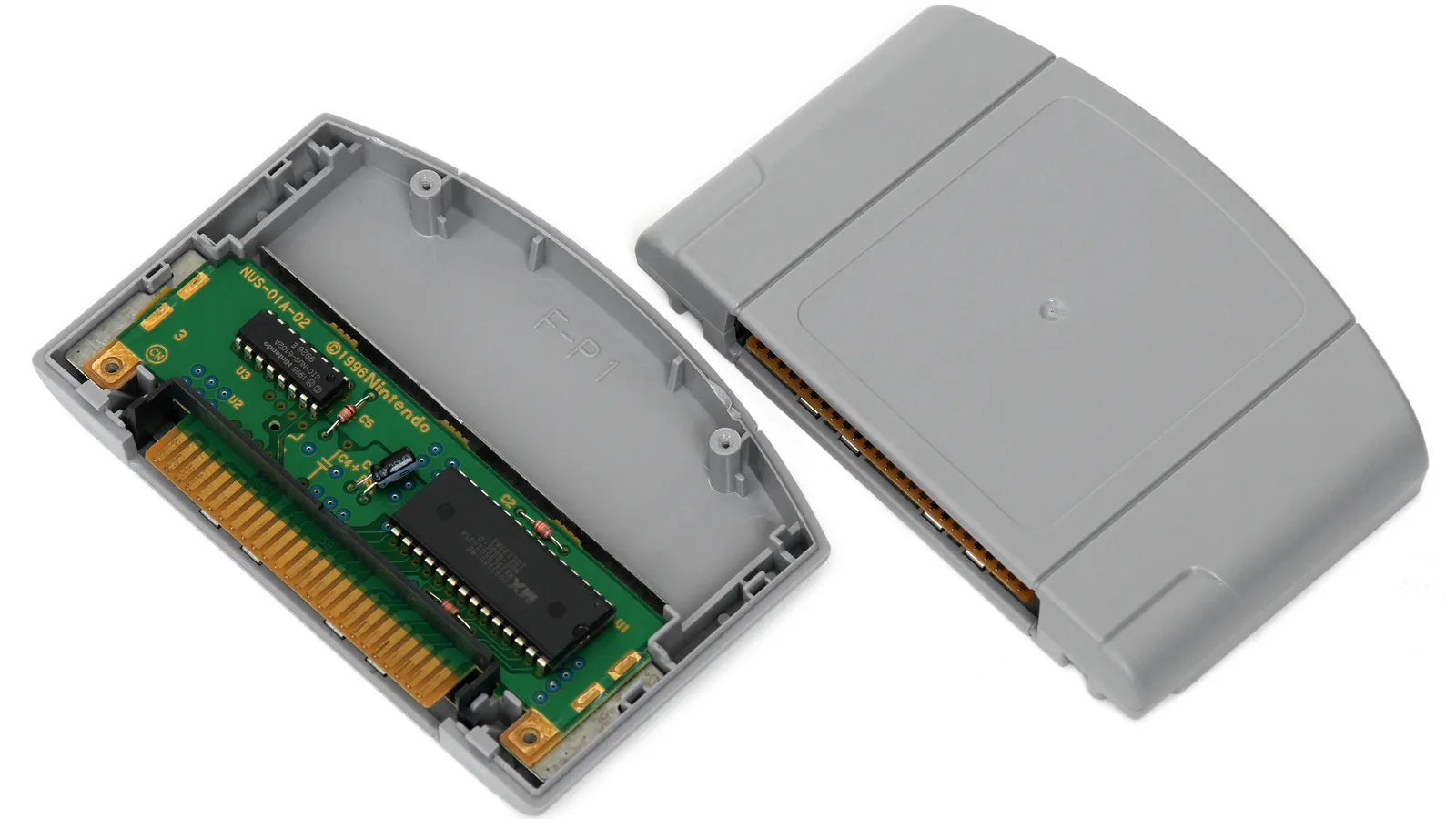
AI coding agents have now helped take three commercial games to 100% matching decompilation: Super Smash Bros. Melee (GameCube), Snowboard Kids and Snowboard Kids 2 (both Nintendo 64). In each case the project’s own blog, wiki or commit history names the models. A fourth, Super Mario 64 DS, has 99.9% of its functions matched with AI help.
That is a shorter list than the “AI is decompiling every game” headlines suggest. Every entry below was checked against the project’s own README, commit history or the decomp.dev progress tracker on October 11, 2026, not against coverage of it.
What does “AI decompiled a game” actually mean?
It usually means a matching decompilation: hand-written C source that, when compiled with the original compiler, produces the exact same machine code as the retail game, byte for byte. The compiler acts as a strict grader. Code that is close but not identical scores zero.
That grader is why AI agents suddenly work here. An agent can write a candidate function, compile it, diff the output against the original, and try again, hundreds of times, without a human in the loop. Chris Lewis described exactly this in a 2025 post on one-shot decompilation with Claude: “leveraging Claude’s headless mode in a continuous loop,” where a script feeds Claude “the cheapest function” left. Simon Willison’s write-up of the same loop shows it runs claude -p on the simplest unmatched function, then the next.
Three other things also get called “AI decompiled,” and they are not the same:
- Static recompilation. Tools like N64Recomp translate the game’s machine code straight into C for a native PC port. It runs, but it is not readable source.
- Reconstruction. An agent rewrites the game so it behaves the same, often in another language, without matching the original bytes.
- Readable source. A matched function can still be unreadable. The Super Mario 64 DS project tracks this separately, as shown below.
Which games has AI helped decompile?
Verified projects, ordered by how complete the matching work is. “Matched” is the share of functions whose compiled output equals the original, read from decomp.dev or the project README on October 11, 2026.
| Game | Platform | Matched | AI named in the project’s own records | What the AI did |
|---|---|---|---|---|
| Super Smash Bros. Melee | GameCube | 100% (19,828 functions) | Claude Fable 5 and 5.1, Claude Opus 4.8 to 5.5, Codex (commit co-author lines) | Helped close the final stretch after six years of human work |
| Snowboard Kids 2 | N64 | 100% (3,013 functions) | Claude Opus 4.5, GLM, Codex 5.5 xhigh | Headless Claude loop on the long tail; Codex on the last functions |
| Snowboard Kids | N64 | 100% (2,119 functions; 95.8% of data) | GPT-5.5 and 5.6, Claude 4.5 and Fable, GLM 5.2 | Most matches, with experts on about 4.8% of commits |
| Super Mario 64 DS | DS | 99.9% (11,378 of 11,389); 31.5% readable | Claude, Codex, Kimi K3 (agent protocol and commits) | The harder functions, “at a few cents of usage each” |
| Klonoa: Empire of Dreams | GBA | 51.3% of code bytes | Claude Code, with Claude Opus 4.6 to 5.5 in commits | Started from zero in March 2026; agent-driven with human review |
| DX-Ball 1.07 | Windows | 206 byte-exact functions of 285 written; unfinished | A coding agent driving REA; every commit is prefixed “gpt-6.1-sol” | Reconstruction checked function by function against the original |
| Sonic Advance 3 | GBA | Two enemy modules (about 0.5% of the game) | Claude 3.5 and 3.7 Sonnet, DeepSeek R1, ChatGPT | Early experiments on free tiers, with human fixes |
One reconstruction that is not a matching decompilation belongs here too. Piotr Migdał’s Chromatron recompile (March 2026) rebuilt a Windows XP and PowerPC Mac puzzle game in Rust for Apple Silicon, Windows, Linux and the browser. His attempts with Claude Opus 4.5 fell short; a fresh start with Opus 4.6 produced a version where “307,199 out of 307,200 pixels” match the original.
Did AI really decompile Super Smash Bros. Melee?
Partly, and only at the end. The doldecomp/melee repository was created in June 2020. decomp.dev now shows every one of its 19,828 functions matched and every code unit linked, with the last match committed on September 7, 2026.
The project’s FAQ says it “already benefits from automated tools and AI-assisted workflows, but they produce candidates rather than verified answers,” and lists several Claude Code setups its contributors use. In a sample of 900 commits from June to October 2026, 116 carry AI co-author lines, most often Claude Fable 5, followed by Codex and Claude Opus 5.5. Two of the final-day commits name Claude.
One claim to discount: a widely shared guide says a model called “GPT-6 Astra” finished Melee and produced a macOS build. Neither the repository nor its commits mention it. The FAQ also says the project is “not promising a PC port.”
How did Snowboard Kids get decompiled in 84 days?
With AI, a second game’s worth of experience, and expert help at the hard points. Lewis spent 596 days taking Snowboard Kids 2 to 100%, announced in May 2026. He then did the first Snowboard Kids in 84 days, “roughly one-seventh of the elapsed time.”
He is careful about why. “I tried GPT-5.5 and 5.6, Claude 4.5 and Fable, and GLM 5.2,” he writes, calling the comparison “completely unscientific,” and found that “Codex continued to outperform Claude.” He also says it would be “a gross oversimplification to attribute the difference entirely to LLMs”: he had nearly two years of practice, the game was smaller, and “roughly 4.8% of matching commits involved expert intervention.” Without that expertise, he estimates the project “would have stalled around 89–90%.”
The same post supplies the comparison that tempers the hype:
| Item | Value |
|---|---|
| Pilotwings 64 (team effort) | 74 |
| Snowboard Kids (AI-assisted) | 84 |
| Snowboard Kids 2 (AI in the long tail) | 596 |
| Super Smash Bros. Melee (AI at the end) | 2,260 |
The comparison is not clean (Pilotwings 64 has 1,791 functions against 2,145 for Snowboard Kids), and Lewis says so. But it is the best evidence available that AI speeds up a determined individual far more than it outpaces a determined team.
Is “100% decompiled” the same as having the source code?
No. The clearest proof is Super Mario 64 DS. Its README reports three counters, refreshed automatically:
- Matched: 99.9%. The source compiles to the cartridge’s exact bytes.
- Converted: 31.5%. A person “can read that source without the ROM open.”
- Linked: 93.5%. The matched file builds straight into the project’s PC port.
The project says most functions “were matched for free by the automatic templates, and the harder ones with AI assistance at a few cents of usage each.” Matching is the part AI is now good at. Turning matched code into code a human understands is still mostly human work. A kingy.ai analysis quoted 30.5% converted on October 4, 2026; a week later it reads 31.5%.
Snowboard Kids 2’s own announcement says the same thing in one line: “A 100% match doesn’t mean the source is perfectly understood.”
Which decompilations did not use AI?
Some of the most prominent projects say so explicitly, and it matters, because rumours run the other way.
| Project | Status (October 11, 2026) | What it says about AI |
|---|---|---|
| Super Mario Galaxy (Petari) | 100% matched functions; 68.75% of code linked | “We did not.” AI was allowed for naming and cleanup but “never ended up playing a role” |
| Zelda 64: Recompiled | Released PC port of Majora’s Mask | “has not, does not, and will not use generative AI tools” |
| N64Recomp and Banjo: Recompiled | The recompiler behind most N64 PC ports | “AI must not be used to generate code for contributions to this project” |
Which game ports were written with AI?
Here AI does much more of the work, and the community is split. These are static recompilations and recreations, not matching decompilations:
- Banjo-Tooie (independent PC recompilation, Windows alpha, September 2026). Its README has said since the first commit that “AI tools generated substantial portions of this project’s code.” The row started when a YouTube video promoting it, as reported by Kotaku, “didn’t initially make clear” it was AI-built. Banjo: Recompiled developer DarioSamo posted that it “is NOT associated with us. It is entirely AI-generated.” The port has since been renamed.
- Diddy Kong Racing (DKR-R). No disclosure in the README, but commits are co-authored by Claude Opus 5 and 5.5.
- GoldenEye (GoldenEye-Recomp), a recomp of the Xbox 360 remaster, not the N64 original. “Yes, AI was used during development. I’m not hiding that.”
- Banjo-Kazooie and Paper Mario (HarbourMasters’ Lighthouse and PaperBoat). Both accept AI-assisted pull requests under a policy that reads “not an Anti AI organization, however, we are Anti Slop.”
DarioSamo’s broader argument is worth hearing: “Any claims you’ve seen about AI speeding up this ‘tedious’ process are false when recompilation is involved,” he wrote on October 5.
Where can you find a full list of decompiled games?
No single list tracks AI use the same way. The four that matter:
| List | Size and update | How it handles AI |
|---|---|---|
| decomp.dev | 80+ projects, live from each build | Doesn’t track it. Pure progress data, the source for most “100%” headlines |
| Read Only Memo | Curated, updated monthly (Oct 3) | AI-assisted projects get an “AI disclosure” tag; “vibe coded” ones are moved to an unlinked reference list |
| awesome-decomp-games | 1,462 projects, auto-refreshed | Subtracts 0.2 from a project’s score if a source list flags it as AI-generated |
| PCGamingWiki unofficial ports | Community wiki | Requires a 0–5 REAL (Reported Engagement with AI Level) rating; many entries note “Made without AI” |
A fifth, a human-only Google Doc maintained by the curator FunkyLion, was covered by Retro Dodo in October 2026. It exists to filter AI projects out.
How do you start an AI-assisted decompilation?
The working pattern across these projects is the same, and it starts with a project that already exists:
- Join an existing decompilation. decomp.dev lists the active ones. Matching needs the original compiler, a build that splits the ROM, and a diff tool (objdiff), all of which established projects already have set up.
- Give the agent a compile-and-diff loop. The agent writes a function, builds it, and reads the diff score. Lewis’s loop runs Claude in headless mode on the easiest unmatched function first; it is the same pattern as any agentic Claude Code workflow.
- Stop it from cheating. Macabeus, who took Klonoa to 51% with Claude Code, warns that “when the AI agent gets stuck decompiling a function, it’ll start trying to cheat.” Review every match.
- Budget for the model, not the tools. The decompilation tools are free. The cost is model usage, and no project has published a whole-game total. Lewis credits contributors for “lending their tokens”; the model choice matters as much as the price, as the Claude Code vs Codex comparison shows.
- Read the project’s AI policy first. Melee and SM64 DS welcome AI-assisted work. N64Recomp and Super Mario Galaxy do not.
For PC binaries without a community project, a reverse-engineering MCP server such as REA connects the agent to Ghidra, Hopper or IDA. That is how the DX-Ball reconstruction was built. More options are in the best MCP servers guide.
Frequently asked questions
Frequently asked questions
- Which games have been decompiled by AI?
- As of October 11, 2026, three games are 100% decompiled with AI agents named in the project records: Super Smash Bros. Melee, Snowboard Kids and Snowboard Kids 2. Super Mario 64 DS is at 99.9% matched, and Klonoa: Empire of Dreams at 51%. In every case humans did substantial work too.
- Did AI decompile Super Mario Galaxy?
- No. The Petari project README says AI "never ended up playing a role" and that AI-generated decompilation work is not allowed. Its fast progress came from new collaborators.
- Which AI model is best at game decompilation?
- No benchmark settles it. Chris Lewis found Claude Opus 4.5 the most effective in late 2025, but by 2026 "Codex continued to outperform Claude" on the Snowboard Kids games. Melee commits most often credit Claude Fable 5.
- Did GPT-6 Astra decompile Melee?
- There is no evidence of it. The claim comes from one unsourced guide. The Melee repository and its commits credit Claude and Codex, and the project FAQ says it is not promising a PC port.
- How much does it cost to decompile a game with AI?
- No project has published a whole-game cost. The Super Mario 64 DS project reports its hardest functions cost "a few cents of usage each," and most functions were matched by templates for free.
- Is the Banjo-Tooie PC port AI generated?
- Yes. Its README says AI tools generated substantial portions of the code. It is an independent project, not affiliated with Banjo: Recompiled, whose team does not use AI.
Sources
- decomp.dev (2026). Decompilation progress tracker (Melee, Snowboard Kids, Snowboard Kids 2, Klonoa, Petari). https://decomp.dev/
- Lewis, Chris (2025). The Unexpected Effectiveness of One-Shot Decompilation with Claude. Blog. https://blog.chrislewis.au/the-unexpected-effectiveness-of-one-shot-decompilation-with-claude/
- Lewis, Chris (2026). Snowboard Kids 2 is 100% Decompiled. Blog. https://blog.chrislewis.au/snowboard-kids-2-is-100-decompiled/
- Lewis, Chris (2026). Decompiling a Nintendo 64 Game in 84 Days. Blog. https://blog.chrislewis.au/decompiling-a-nintendo-64-game-in-84-days/
- Willison, Simon (2025). One-shot decompilation. Simon Willison’s Weblog (secondary). https://simonwillison.net/2025/Dec/6/one-shot-decompilation/
- doldecomp (2026). melee repository and FAQ. GitHub. https://github.com/doldecomp/melee/wiki/FAQ
- tangosdev (2026). sm64ds-decomp README. GitHub. https://github.com/tangosdev/sm64ds-decomp
- SMGCommunity (2026). Petari README. GitHub. https://github.com/SMGCommunity/Petari
- Macabeus (2026). Starting a Decompilation Project from Zero: Claude Code and 51% of a 2001 GBA Game. Substack. https://gambiconf.substack.com/p/starting-a-decompilation-project
- Macabeus (2025). Development Journey on Game Decompilation Using AI, Part 2. Substack. https://gambiconf.substack.com/p/development-journey-on-game-decompilation-841
- Migdał, Piotr (2026). Chromatron Recompiled. Quesma blog. https://quesma.com/blog/chromatron-recompiled/
- N0zoM1z0 (2026). dx-ball progress log. GitHub. https://github.com/N0zoM1z0/dx-ball/blob/HEAD/docs/PROGRESS.md
- some-scurvy-dog (2026). Banjo-Tooie Independent PC Recompilation README. GitHub. https://github.com/some-scurvy-dog/banjo-tooie-scurvy-dog-port
- Gach, Ethan (2026). Zelda and Banjo Recompiled devs go to war with AI vibe-coded slopcomps. Kotaku (secondary). https://kotaku.com/zelda-and-banjo-recompiled-devs-go-to-war-with-ai-vibe-coded-slopcomps-2000739936
- DarioSamo (2026). Posts on Bluesky, October 1 and 5. https://bsky.app/profile/dariosamo.bsky.social/post/3mwtxn3uz4k2h
- N64Recomp (2026). CONTRIBUTING.md. GitHub. https://github.com/N64Recomp/N64Recomp/blob/main/CONTRIBUTING.md
- Zelda64Recomp (2026). README. GitHub. https://github.com/Zelda64Recomp/Zelda64Recomp
- HarbourMasters (2026). AI policy. GitHub. https://github.com/HarbourMasters/code-of-conduct
- Read Only Memo (2026). Game decompilations, N64 Recompiled and more PC ports. https://readonlymemo.com/decompilation-projects-and-n64-recompiled-list/
- SubmitGame (2026). awesome-decomp-games. GitHub. https://github.com/SubmitGame/awesome-decomp-games
- PCGamingWiki (2026). List of unofficial ports. https://www.pcgamingwiki.com/wiki/List_of_unofficial_ports
- Santabarbara, Sebastian (2026). A List Of Human-made Decomps & Recomps Has Arrived To Filter Out AI Projects. Retro Dodo (secondary). https://retrododo.com/a-list-of-human-made-decomps-recomps-has-arrived-to-filter-out-ai-projects/