Will GPU Prices Go Up in 2027? What the HBM Sell-Out Means
Yes for AI GPUs: Samsung reportedly sold all its 2027 HBM4, and HBM is forecast up 44% to 150%, not 200%. Gaming cards feel it later, through GDDR.
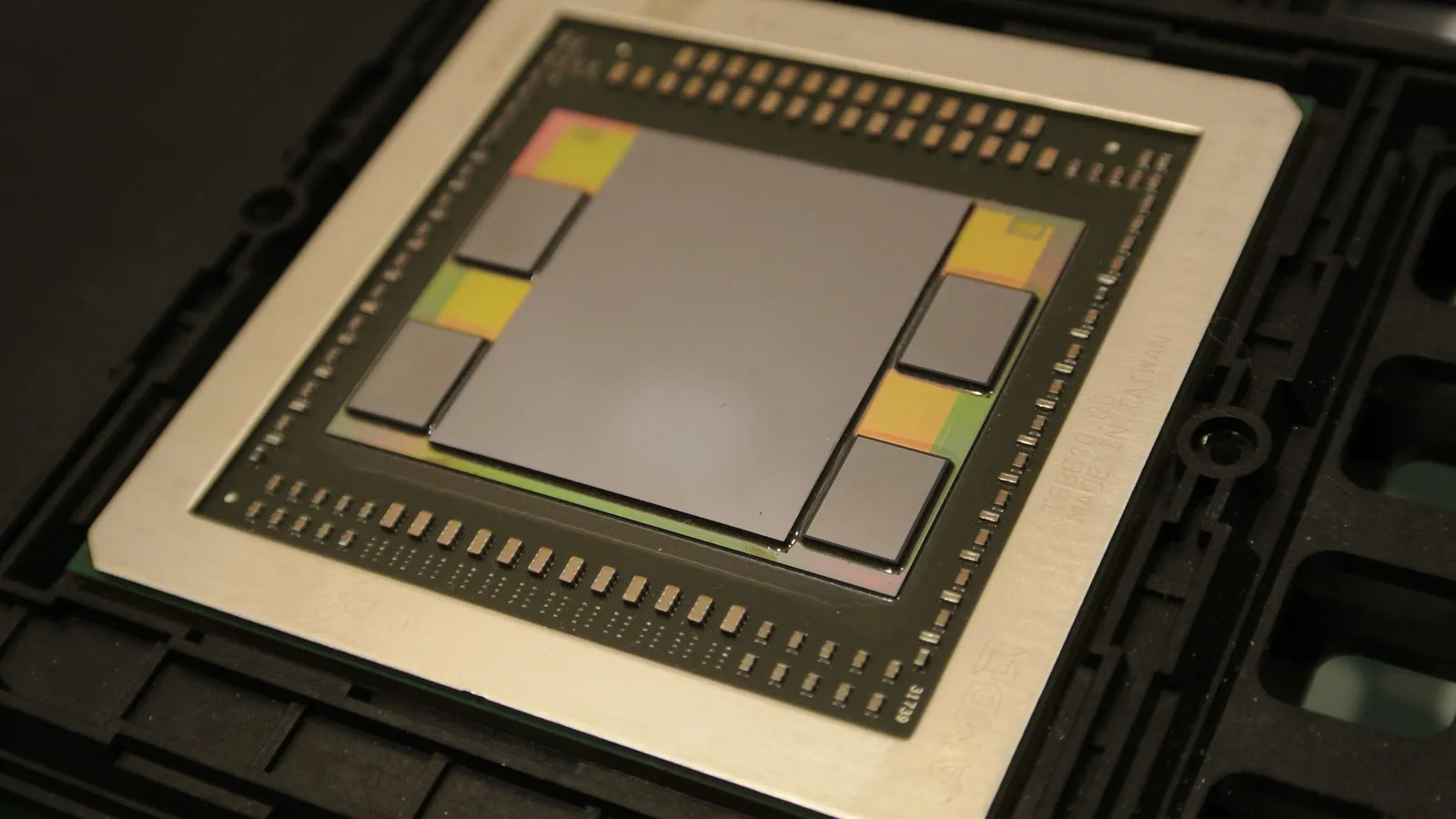
Yes, for AI accelerators and the cloud GPUs built on them. All of Samsung’s planned 2027 HBM4 output is already contracted, and published forecasts put HBM prices up 44% to 150% in 2027. That is a big rise, but it is not the 200% in the viral headline. Gaming graphics cards do not use HBM, so they get hit later and less, through the GDDR and DRAM supply that HBM squeezes. For a card buyer, the October 2026 news is a reason not to expect relief in 2027. It is not a reason to panic-buy this week.
Is Samsung’s 2027 HBM really sold out?
For HBM4, yes, according to the broker that follows Samsung most closely. Yonhap’s October 20 2026 report on the KB Securities note (in Korean) quotes Kim Dong-won, head of research at KB Securities, saying Samsung has “completed supply contracts for 100% of annual HBM4 production” for 2027. The same note says Samsung has five-year long-term supply agreements with global big tech companies covering 70% of next year’s general-purpose memory, meaning DRAM and NAND. Together, KB estimates about 80% of Samsung’s planned 2027 memory output is under long-term contract. Hyperscalers are still competing for the remaining 20%.
Three caveats keep this from being a hard fact:
- It is a broker’s estimate. KB Securities is an outside analyst, not Samsung. Samsung has not published its contract book, and a Korea Herald report on October 7 2026 notes that Samsung “has not publicly confirmed individual 2027 HBM4 terms.”
- No customers are named. The Yonhap piece refers only to “global big tech companies” and hyperscalers. Any buyer list circulating with the story did not come from the KB note.
- “Sold out” means allocated, not shipped. Long-term agreements reserve volume. Price is often negotiated separately, and the Herald reported Samsung was still negotiating 2027 HBM4 supply terms with large customers in early October.
The broader claim, that all three memory makers have allocated their 2027 DRAM and HBM, has circulated since August. It comes from industry-sourced trade press rather than company statements. SK hynix’s president Kwak Noh-jung has gone further on the record, calling 2027 “the worst year” for supply, as reported by The Korea Herald on August 26 2026.
Will HBM prices really rise 200% in 2027?
No published forecaster says 200% for 2027 HBM prices. The figure comes from a translation error and a generation comparison.
The translation. GSMArena’s October 20 2026 article cites Yonhap as its only source and says HBM prices are “expected to rise 150-200% next year.” The Yonhap original quotes Kim Dong-won saying the 2027 HBM average selling price will rise “100 to 150% year on year,” led by HBM4. Everything else in the GSMArena piece matches the source. Only the range shifted up by 50 points, and it is the number the Reddit headline ran with.
The generation comparison. The Korea Herald’s October 7 report says Samsung’s reported 2027 HBM4 asking price is “in the mid-to-high $4 range per gigabit,” against about $1.50 per gigabit for its current HBM3E. Going from $1.50 to $4.50 is a 200% increase. But a buyer moving from HBM3E to HBM4 is buying a different part, with more bandwidth per stack, so that is not the same product getting more expensive. The Herald is explicit that these are “reported asking prices, not disclosed final contract prices.”
Here is what each forecaster actually published, measured the way each one measures it:
| Forecaster | What it measures | 2027 vs 2026 | Published |
|---|---|---|---|
| KB Securities | Samsung’s own HBM average selling price | +100% to +150% | Oct 20 2026 |
| TrendForce | Industry blended HBM average selling price | +121% | Sep 29 2026 |
| TrendForce | HBM contract prices | +70% to +140% | Aug 26 2026 |
| UBS | Industry blended HBM average selling price | +79% | Aug 10 2026 |
| Goldman Sachs | HBM average selling price, to about $17 per GB | +44% | Aug 26 2026 |
| Forecaster | Measures | Forecast |
|---|---|---|
| KB Securities | Samsung HBM selling price | +100% to +150% |
| TrendForce | Industry blended average price | +121% |
| TrendForce | HBM contract prices | +70% to +140% |
| UBS | Industry blended average price | +79% |
| Goldman Sachs | Average price per GB | +44% |
| Viral headline | Headline figure being checked | +200% |
The spread is wide because the forecasts measure different things. A blended average rises partly because the mix shifts toward expensive HBM4: KB expects HBM4 to grow from about 40% of Samsung’s HBM revenue in 2026 to 80% in 2027. A contract-price forecast strips out some of that mix effect. And TrendForce’s September 29 2026 press release adds a counterweight: GPU and ASIC makers “are now considering reducing HBM capacity per device.” TrendForce has also said, as reported by the Korea Herald in August, that some long-term agreements signed after the second quarter of 2026 carry price ceilings. The current per-gigabit readings for each grade are on the HBM price tracker.
Does HBM affect gaming GPU prices?
Indirectly, and with a lag. A GeForce or Radeon card carries GDDR6 or GDDR7, not HBM. HBM sits beside AI accelerators such as Nvidia’s data-center parts, Google’s TPUs and custom chips like OpenAI’s Jalapeño. The two never share a bill of materials.
They do share the factories. HBM, GDDR and ordinary DRAM all come off the same DRAM wafer capacity at Samsung, SK hynix and Micron, and HBM earns several times more per wafer. When 2027’s HBM is sold at double the price, every wafer a memory maker gives to GDDR has a higher opportunity cost. That is the mechanism behind 2026’s graphics card prices, laid out in GPU prices in 2026: Nvidia raised the price of the GPU-and-memory kits it sells to board partners by 10% to 15% in January and 20% to 30% in July, and an Asus TUF RTX 5080 went from $1,199 to $1,595.
The October news adds three things for card buyers:
- DRAM keeps rising into 2027. KB expects DRAM prices up a double-digit percentage quarter on quarter in the first quarter of 2027, following TrendForce’s forecast of 10% to 15% for conventional DRAM contracts in the fourth quarter of 2026. Graphics memory is priced in that market.
- GDDR is already moving. The GDDR6 8Gb chip averaged $12.45 on the spot market on October 5 2026, up from roughly $2.50 per GB in autumn 2025. AMD reportedly raised the GDDR6 price it charges board partners from October 1, as covered in the AMD Q4 price hike report.
- No relief comes from HBM’s side. With 2027 HBM allocated, memory makers have no reason to move wafers back to graphics memory next year.
No named source has published a 2027 forecast for consumer GPU prices, so this page does not invent one. The direction is up or flat, not down. The GPU price tracker carries the current street readings.
How much will an AI GPU’s memory cost in 2027?
Roughly double, if the forecasts hold. A worked example makes the scale concrete. OpenAI’s Jalapeño accelerator carries 216 GB of HBM4 across six 12-layer stacks, as reported by the Korea Herald. At 8 gigabits per gigabyte, that is 1,728 gigabits per chip.
| HBM4 price per gigabit | HBM cost per accelerator |
|---|---|
| $2.00 (second half of 2026 contract) | $3,456 |
| $4.00 (low end of 2027 forecast) | $6,912 |
| $4.50 (Samsung’s reported asking price) | $7,776 |
| $5.00 (high end of 2027 forecast) | $8,640 |
This is modeled, not a teardown. The per-gigabit prices are trade-press figures (the 2026 and 2027 rows come from DigiTimes figures reported by Seoul Economic Daily, the $4.50 row from the Korea Herald), and a buyer with a long-term agreement may pay less. The point is the order of magnitude: on these numbers the memory on one accelerator gets $3,500 to $5,200 more expensive in a single year, and an accelerator vendor passes that on. The Korea Herald’s August report says Nvidia plans to raise prices by more than 15% on AI server systems shipping early in 2027.
Will cloud GPU rental prices go up in 2027?
For the newest hardware, probably. Rental rates for the newest instances follow the cost of building them, and those systems are where the HBM increase lands in full. Expect launch pricing for HBM4-based instances to start higher than for the generation they replace.
The case against is real, though, and it applies to older hardware. TrendForce projects combined DRAM and HBM supply up 27% in the second half of 2027, and each year’s new data-center capacity pushes the previous generation down the price ladder. An H100 or H200 rented in 2027 competes with a much larger installed base than it did in 2025. Price ceilings in long-term agreements also cap how much of the HBM spike reaches the clouds that signed early. The likely 2027 shape is new-generation rental at a premium and older-generation rental flat or cheaper. If you run inference, the per-token side of that is tracked in AI inference providers.
Should you buy a GPU now or wait for 2027?
If you need a graphics card in the next six months, buying now beats waiting on these numbers. Every input that would bring prices down in 2027 is moving the wrong way: HBM allocated, DRAM contract prices still climbing, and GDDR spot several times its 2025 level. Waiting pays only if you can skip the purchase entirely or ride an older card into 2028, which is the earliest window most memory makers put on new fab capacity, as covered in the 2027 memory shortage forecast.
A practical order of operations:
- Price the card you need today against the GPU price tracker and buy at or near the lowest recent reading, not at MSRP, which no longer means much.
- Buy the VRAM you need, not more. Denser GDDR7 modules cost about three times as much for 50% more capacity, so the top VRAM tier carries the steepest memory premium.
- Do not buy on a Reddit headline. The 200% figure is wrong, and a slower, real rise does not justify paying a scalper premium this week. The what to buy now guide covers which parts carry the most memory risk.
Frequently asked questions
- Is Samsung sold out of HBM for 2027?
- For HBM4, yes, according to KB Securities. Yonhap reported on October 20 2026 that KB estimates 100% of Samsung annual 2027 HBM4 output is contracted, and about 70% of its DRAM and NAND is under five-year agreements. Samsung has not confirmed the figures.
- Will HBM prices go up 200% in 2027?
- No forecaster says that. KB Securities forecasts Samsung HBM prices up 100% to 150%, TrendForce forecasts the industry blended average up 121%, UBS 79% and Goldman Sachs 44%. The 200% figure comes from a mistranslated range and from comparing HBM4 asking prices with older HBM3E prices.
- Do gaming graphics cards use HBM?
- No. GeForce and Radeon cards use GDDR6 or GDDR7. HBM goes on AI accelerators. The two compete for the same DRAM wafer capacity, which is how HBM demand raises gaming GPU prices indirectly.
- Will cloud GPU rental get more expensive in 2027?
- For the newest HBM4-based instances, likely yes, because their memory costs roughly double. Older hardware such as H100 and H200 is more likely to hold flat or get cheaper as new capacity arrives and supply grows in the second half of 2027.
Sources
- Yonhap News (2026). KB증권 “삼성전자 내년 이익 증가 확정적…물량 80% 장기공급” (KB Securities: Samsung’s profit growth next year is certain, 80% of volume on long-term supply). October 20 2026, in Korean. https://www.yna.co.kr/view/AKR20261020028100008
- GSMArena (2026). Samsung signs huge DRAM and HBM contracts. October 20 2026; secondary, citing Yonhap. https://www.gsmarena.com/samsung_signs_huge_dram_and_hbm_contracts-news-75124.php
- The Korea Herald (2026). Samsung’s HBM prices tipped to more than double in 2027. October 7 2026. https://www.koreaherald.com/article/10895833
- The Korea Herald (2026). HBM supercycle’s paradox: Soaring prices push Big Tech to cut memory loads. August 26 2026; secondary, reporting TrendForce and Goldman Sachs figures. https://biz.heraldcorp.com/article/10852833
- TrendForce (2026). HBM Supply Constraints Persist, 2027 Price Outlook Revised Upward with Blended ASP Forecast to Rise 121% YoY. Press release, September 29 2026. https://www.trendforce.com/presscenter/news/20260929-13255.html
- Proactive Investors (2026). Micron poised for “structural reset” in earnings power, UBS says, as HBM squeeze tightens further. August 10 2026; secondary, reporting a UBS note. https://www.proactiveinvestors.com.au/companies/news/1096831/micron-poised-for-structural-reset-in-earnings-power-ubs-says-as-hbm-squeeze-tightens-further-1096831.html
- Seoul Economic Daily (2026). HBM4 Prices to Double Next Year as Samsung, SK hynix Keep Upper Hand. July 12 2026; secondary, reporting DigiTimes figures. https://en.sedaily.com/finance/2026/07/12/hbm4-prices-to-double-next-year-as-samsung-sk-hynix-keep