Mac mini M6 vs Mac Studio M5 for Local LLMs
Apple refreshed the Mac mini and Mac Studio on August 25 2026. Every memory ceiling stayed flat, and bandwidth became a paid upgrade.
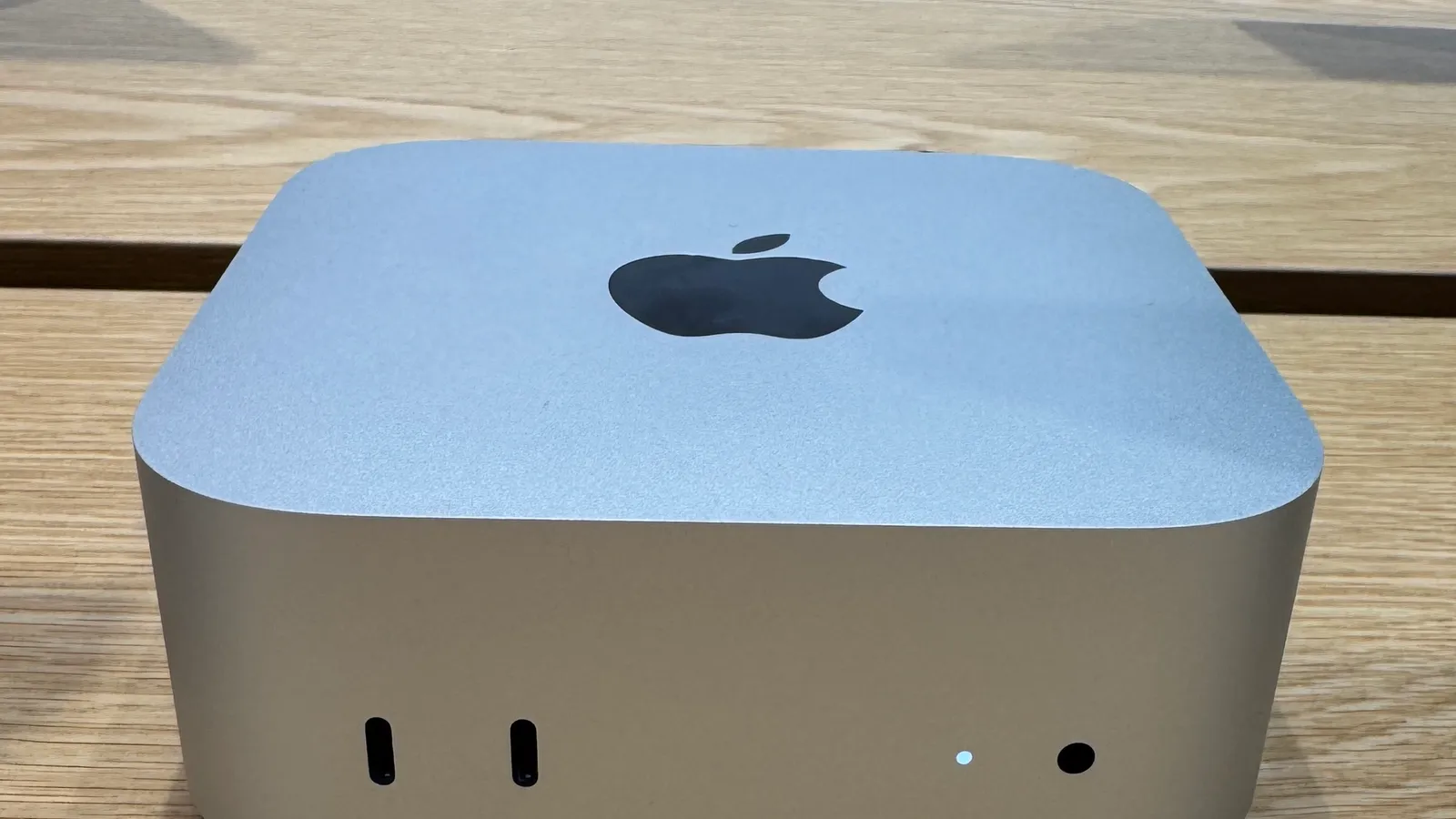
Apple announced a new Mac mini with the M6 and M5 Pro chips on August 25 2026, alongside a Mac Studio refresh built on the M5 Max and M5 Ultra. The press release leads with AI: up to 4x faster AI performance than M4, up to 13.5x faster LLM prompt processing than M1. Apple’s own technical specification pages tell a narrower story. The $899 Mac mini runs at 153GB/s of memory bandwidth, not the 170GB/s in the announcement, and it holds exactly as much model as the $599 Mac mini did in October 2024. Across all four tiers of this refresh, from the $899 mini to the $5,499 Mac Studio, not one memory ceiling went up.
What Apple actually shipped
Pre-orders opened August 25 2026 and both machines ship September 22. Prices below are the published US configuration prices from Apple’s own store, and the bandwidth figures are from Apple’s Mac mini technical specifications and Mac Studio technical specifications.
| Configuration | Price | Unified memory | Memory bandwidth |
|---|---|---|---|
| Mac mini M6, 16GB, 256GB | $899 | 16GB | 153GB/s |
| Mac mini M6, 16GB, 512GB | $1,099 | 16GB | 153GB/s |
| Mac mini M6, 24GB, 512GB | $1,299 | 24GB | 170GB/s |
| Mac mini M6, 32GB, 1TB | $1,799 | 32GB | 170GB/s |
| Mac mini M5 Pro, 24GB, 512GB | $1,699 | 24GB | 307GB/s |
| Mac mini M5 Pro 18-core, 64GB, 1TB | $3,199 | 64GB | 307GB/s |
| Mac Studio M5 Max, 36GB, 512GB | $2,499 | 36GB | 460GB/s |
| Mac Studio M5 Max 40-core, 64GB, 1TB | $3,799 | 64GB | 614GB/s |
| Mac Studio M5 Ultra, 96GB, 1TB | $5,499 | 96GB | 1.2TB/s |
The M6 is Apple’s first 2-nanometer Mac chip, with a 12-core CPU built from two super cores, four performance cores and six efficiency cores, a 12-core GPU carrying a Neural Accelerator in every core, and the first dual Neural Engine, two 16-core blocks instead of one. The M5 Ultra is a quad-die part joined by UltraFusion, reaching 36 CPU cores and 80 GPU cores. These are real engineering gains. They are also, for local inference, mostly gains in the wrong place.
The press release says 170GB/s. The spec sheet says 153GB/s
Apple’s announcement credits the M6 with “up to 170GB/s” of memory bandwidth. On the Mac mini specification page, that number is attached to a configuration, not to the chip. The 16GB machine, which is the $899 model and the $1,099 model, is listed at 153GB/s. Only the 24GB and 32GB configurations carry 170GB/s.
That is a real hardware distinction rather than a marketing quirk. Unified memory bandwidth on Apple silicon scales with how many memory dies the package addresses, so a machine with more capacity also gets a wider path to it. The consequence is that on the M6 Mac mini, memory bandwidth is a paid upgrade. The cheapest way to buy 170GB/s is the 24GB configuration at $1,299, which is $400 above the advertised entry price.
The number matters because 153GB/s is exactly what the previous-generation M5 delivers, per Apple’s MacBook Pro technical specifications. A buyer taking the $899 machine home in September gets last-generation memory bandwidth, and therefore last-generation token generation speed, from a chip announced as a large AI leap.
Prompt processing is the half that improved
Apple’s headline AI claims are specific: up to 13.5x faster LLM prompt processing than M1, up to 4.8x faster than M4 on the mini, up to 8.5x faster than M2 Pro on the M5 Pro. Every one of those is a prompt processing claim, and prompt processing is the half of local inference that Apple improved most.
Running a local model has two phases with different bottlenecks. Prefill, which reads your prompt, does a large matrix multiplication across the whole input at once, so it saturates compute. More GPU cores, Neural Accelerators in each core, and a doubled Neural Engine all land directly on this phase, which is why the multiples are so large. Decode, which writes the answer one token at a time, has to stream the active model weights out of memory for every single token produced. It is bound by memory bandwidth almost exclusively, and no amount of extra compute fixes it.
So the practical translation of this launch is that a long document will be ingested several times faster, and the answer will then come out at roughly the speed set by that 153, 170, 307, 460, 614 or 1,200 GB/s figure. Those rose between 12 and 46 percent generation over generation. The advertised multiples did not.
| Tier | Price | Memory bandwidth | Memory ceiling |
|---|---|---|---|
| Mac mini (M4 to M6) | 599 to 899, +50.1% | 120 to 153, +27.5% | 32 to 32, +0% |
| Mac mini Pro (M4 Pro to M5 Pro) | 1399 to 1699, +21.4% | 273 to 307, +12.5% | 64 to 64, +0% |
| Mac Studio Max (M4 Max to M5 Max) | 1999 to 2499, +25.0% | 410 to 460, +12.2% | 128 to 128, +0% |
| Mac Studio Ultra (M3 Ultra to M5 Ultra) | 3999 to 5499, +37.5% | 819 to 1200, +46.5% | 512 to 512, +0% |
Not one memory ceiling moved
Memory capacity is the gate. A model either fits in the memory the chip can address or it does not run at usable speed at all, which is the central point of the RAM guide. Compare each new tier against the chip it replaces:
| Tier | Previous maximum | New maximum |
|---|---|---|
| Mac mini | 32GB (M4, October 2024) | 32GB (M6) |
| Mac mini Pro | 64GB (M4 Pro, October 2024) | 64GB (M5 Pro) |
| Mac Studio Max | 128GB (M4 Max, March 2025) | 128GB (M5 Max) |
| Mac Studio Ultra | 512GB (M3 Ultra, March 2025) | 512GB (M5 Ultra) |
Four tiers, two years, zero capacity increases. The M4 mini’s memory options, per Apple’s 2024 Mac mini technical specifications, were 16GB standard and configurable to 24GB or 32GB, which is the identical menu the M6 offers today.
The Ultra tier deserves a footnote, because 512GB there is a restoration rather than a continuation. Apple removed the 512GB unified memory option from the Mac Studio and raised its 256GB tier by $400 in March 2026, then raised prices across the Mac and iPad line on June 25 2026, citing memory costs directly: “We have never seen a component price increase this much, this quickly,” as reported by Reuters. That sequence is covered in more detail in the post on what the Apple price hike means for local AI. The 512GB tier is back on the M5 Ultra, but it is not orderable at launch and has no published price yet, shipping in late October.
What each rung actually runs
The arithmetic below uses the same method as the Can I Run This LLM checker: roughly 0.5GB per billion parameters at 4-bit quantization, 3GB reserved for the operating system, and a generation estimate of memory bandwidth multiplied by 0.4 and divided by the active weight bytes. These are bandwidth-derived estimates, not measured benchmarks, and real throughput varies with the runtime, the context length and thermal behaviour.
| Machine | Price | Usable memory | Largest model that fits | Est. tokens/sec |
|---|---|---|---|---|
| Mac mini M6 16GB | $899 | 13GB | 8B dense, or a 20B MoE | 15.3 |
| Mac mini M6 24GB | $1,299 | 21GB | 32B class | 4.2 |
| Mac mini M5 Pro 24GB | $1,699 | 21GB | 32B class | 7.7 |
| Mac mini M6 32GB | $1,799 | 29GB | 32B class | 4.2 |
| Mac Studio M5 Max 36GB | $2,499 | 33GB | 32B class | 11.5 |
| Mac mini M5 Pro 64GB | $3,199 | 61GB | 70B class | 3.5 |
| Mac Studio M5 Max 64GB | $3,799 | 61GB | 70B class | 7.0 |
| Mac Studio M5 Ultra 96GB | $5,499 | 93GB | 70B class | 13.7 |
Two things fall out of that table. The first is that the $899 machine is not a 30B-class box. With 13GB of usable memory it holds an 8B dense model comfortably, or a compact mixture-of-experts design like gpt-oss-20b whose 4-bit footprint lands right at 13GB. A 27B or 32B dense model does not load. The entry ticket to the 32B class is $1,299.
The second is that spending more money does not move generation speed monotonically, because each larger machine tends to get used for a larger model. Fix the model instead and the ladder becomes legible. Below is a single workload, a 32B dense model at 4-bit, across the whole lineup.
| Machine | Estimated tokens per second, 32B dense at Q4 |
|---|---|
| Mac mini M6 16GB ($899, 153GB/s) | Does not fit in 13GB |
| Mac mini M6 24GB ($1,299, 170GB/s) | 4.2 |
| Mac mini M5 Pro 24GB ($1,699, 307GB/s) | 7.7 |
| Mac mini M6 32GB ($1,799, 170GB/s) | 4.2 |
| Mac Studio M5 Max 36GB ($2,499, 460GB/s) | 11.5 |
| Mac mini M5 Pro 64GB ($3,199, 307GB/s) | 7.7 |
| Mac Studio M5 Max 64GB ($3,799, 614GB/s) | 15.4 |
| Mac Studio M5 Ultra 96GB ($5,499, 1.2TB/s) | 30.0 |
The $1,799 Mac mini, the most memory the M6 can hold, is slower on this workload than the $1,699 Mac mini with less memory, because the M5 Pro carries 307GB/s against the M6’s 170GB/s. Buying capacity and buying speed are separate purchases on this lineup, and above the 24GB line they point at different machines.
The dense 70B question
For anyone whose reason to own hardware is running a 70B-class model, the refresh reprices that goal sharply. Two configurations reach the roughly 42GB footprint a dense 70B needs at 4-bit: the M5 Pro Mac mini with 64GB at $3,199, and the M5 Max Mac Studio with 64GB at $3,799. On the estimate above, the mini lands near 3.5 tokens per second and the Studio near 7.0. Neither clears the 8 tokens per second usable band, so both are machines that technically hold the model and produce text slowly enough to change how you would use it.
The $600 gap between those two is worth naming precisely, because it buys 614GB/s instead of 307GB/s. Double the bandwidth, double the generation speed, same 64GB of capacity. If the 70B class is the goal, the Studio is the better $600 anyone spends here.
Above them, the $5,499 M5 Ultra is the first configuration where a dense 70B lands in comfortable territory, and where sparse mixture-of-experts models become genuinely fast: with only about 5B active parameters per token, a 117B-parameter MoE fits in 93GB of usable memory and streams far quicker than its total size suggests. That is what Apple means by running models with hundreds of billions of parameters on device, and it is a $5,499 sentence.
Buy or rent
The case for owning has not improved this month. Hardware to run a mid-sized model locally now costs 21 to 50 percent more per tier than the last generation, the memory ceilings that decide capability are unchanged, and API prices have continued to fall. That pushes the break-even point on a local box further out, exactly as the June price analysis found, and it does not touch the separate finding that local models still struggle on long agentic coding loops.
The reasons to own are the ones that were always the real reasons: data that cannot leave the building, work that has to happen offline, and steady high-volume batch inference where a fixed cost beats a metered one. Those are good reasons and this hardware serves them. What has changed is that the “buy once, run free” pitch now opens at $1,299 for a machine that runs a 32B model at 4.2 tokens per second, and the memory shortage driving those prices is not forecast to ease until 2027.
Frequently asked questions
- Does the M6 Mac mini have 170GB/s of memory bandwidth?
- Only in some configurations. Apple lists the 16GB Mac mini, which is the 899 dollar and 1,099 dollar models, at 153GB/s. The 170GB/s figure applies to the 24GB and 32GB configurations. On this machine memory bandwidth scales with memory capacity, so the cheapest 170GB/s Mac mini is the 24GB model at 1,299 dollars.
- How much RAM does the M6 Mac mini have for local AI?
- It ships with 16GB and is configurable to 24GB or 32GB, the same memory options the M4 Mac mini offered in October 2024. After a roughly 3GB operating-system reserve, the 899 dollar machine leaves about 13GB for model weights, which fits an 8B dense model at 4-bit or a compact mixture-of-experts model, but not a 27B or 32B dense model.
- Can a Mac mini run a 70B model?
- Only the M5 Pro configuration with 64GB of unified memory, which costs 3,199 dollars. A dense 70B model needs about 42GB at 4-bit quantization, so 32GB machines cannot hold it. At 307GB/s the estimated generation speed is about 3.5 tokens per second, below the 8 tokens per second usable threshold.
- Is the M5 Pro Mac mini worth it over the M6 for running local models?
- For generation speed, yes. At the 24GB level both machines hold the same models, but the M5 Pro runs at 307GB/s against 170GB/s on the M6, roughly 80 percent faster token generation for 400 dollars more. The M6 is the better buy only if 8B-class models are enough or the budget stops at 1,299 dollars.
- Did Apple increase the memory ceilings on the M6 and M5 chips?
- No. The M6 Mac mini caps at 32GB like the M4, the M5 Pro caps at 64GB like the M4 Pro, the M5 Max Mac Studio caps at 128GB like the M4 Max, and the M5 Ultra caps at 512GB like the M3 Ultra. The 512GB Ultra option is a restoration of a tier Apple removed in March 2026, and it is not orderable at launch.
Sources
Apple (2026). Apple unveils a more powerful Mac mini featuring the all-new M6 and M5 Pro. Apple Newsroom. https://www.apple.com/newsroom/2026/08/apple-unveils-a-more-powerful-mac-mini-featuring-the-all-new-m6-and-m5-pro/
Apple (2026). Apple introduces M6 and M5 Ultra for a big leap in performance and AI compute. Apple Newsroom. https://www.apple.com/newsroom/2026/08/apple-introduces-m6-and-m5-ultra-for-a-big-leap-in-performance-and-ai-compute/
Apple (2026). Mac mini: Technical Specifications. Apple. https://www.apple.com/mac-mini/specs/
Apple (2026). Mac Studio: Technical Specifications. Apple. https://www.apple.com/mac-studio/specs/
Apple (2026). MacBook Pro: Technical Specifications. Apple. https://www.apple.com/macbook-pro/specs/
Apple (2024). Mac mini (2024): Tech Specs. Apple Support. https://support.apple.com/en-us/121555
Apple (2024). Apple introduces the new Mac mini, more mighty, more mini, and built for Apple Intelligence. Apple Newsroom. https://www.apple.com/newsroom/2024/10/apples-new-mac-mini-is-more-mighty-more-mini-and-built-for-apple-intelligence/
Reuters (2026). Apple raises prices on MacBooks, iPads as memory costs skyrocket. Reuters. https://www.reuters.com/world/asia-pacific/apple-raises-prices-macbooks-ipads-memory-costs-skyrocket-2026-06-25/
9to5Mac (2026). Apple raises MacBook prices while keeping RAM the same. 9to5Mac. https://9to5mac.com/2026/03/03/apple-macbook-price-increase-ram-same/