Why SSDs Are So Expensive in 2026: The NAND Squeeze
NAND contract prices ran 70 to 75 percent in one quarter, and the cheapest 2TB NVMe drive hit $209.99 by August 2026. What drove it, and what happens next.
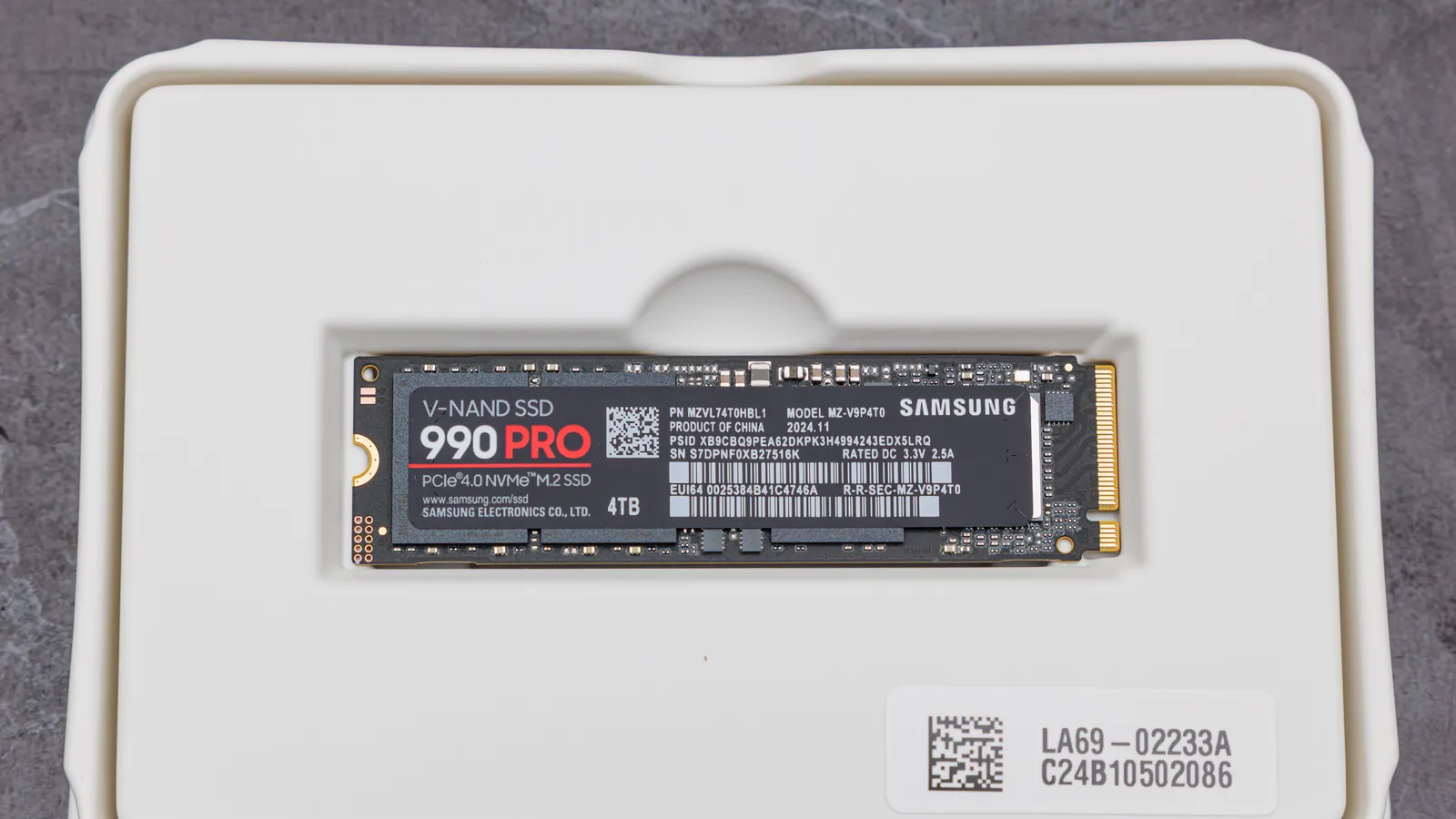
SSDs are expensive in 2026 because half the world’s flash stopped being for sale to you. Counterpoint Research puts enterprise SSDs at 48% of all NAND bits shipped in the second quarter of 2026, against 26% a year earlier. That is 22 percentage points of total world flash supply reassigned to datacenter drives inside twelve months. Nothing about how many people buy laptops had to change for a consumer drive to double in price. The bits went somewhere else, and the somewhere else pays more.
Everything downstream follows from that one reallocation, and it is worth walking the chain rather than asserting it. Enterprise SSD revenue set a record. Contract prices followed. Consumer drives, which are what is left after the datacenter orders are filled, repriced to match. Then the pass-through reached things that are not computers at all: as of August 1, Microsoft charges $150 more for a 1TB Xbox, and it says why in plain language.
The squeeze looked like it was running out of room, and then it sped up again. Mainstream NAND contract prices rose 33 to 38% in the first quarter of 2026, then 70 to 75% in the second, then a forecast 10 to 15% in the third, a pace TrendForce described as noticeably slower. On September 30, 2026 TrendForce forecast 15 to 20% for the fourth quarter, the first re-acceleration of the cycle, led by enterprise SSDs, while client SSD increases stay restrained. The 512Gb TLC wafer spot price, the thin market that turns first, keeps falling. The shortage is not over, and the datacenter side of it is getting tighter, not looser.
What a terabyte of flash actually costs
The retail picture, read off the cheapest tracked new listing at each capacity on August 19, 2026:
The shape matters more than any single number. Flash does not get monotonically cheaper per gigabyte as capacity rises. The 500GB tier is punished by controller and packaging costs that do not shrink with the drive, and the 8TB tier is punished by scarcity, because the high-capacity dies are the ones datacenter buyers want. The cheapest gigabyte sits in the middle, at 2TB on NVMe and 4TB on SATA. Two 4TB drives cost less per terabyte than one 8TB drive.
That is the opposite of how memory kits price, where the DDR5 tracker shows the inverted density curve running the other way. Same shortage, different geometry, because the cost structure of a drive is not the cost structure of a module.
The number that explains everything
Most explanations of a shortage are stories about demand. This one has a measurement. Counterpoint Research tracks NAND by bits shipped, which is volume rather than money, and in the second quarter of 2026 enterprise SSDs took 48% of all of them. A year earlier the same figure was 26%.
| Measure | Base | Percent |
|---|---|---|
| Enterprise SSD share of NAND bits, 2Q25 | of all NAND bits shipped that quarter | 26% |
| Enterprise SSD share of NAND bits, 2Q26 | of all NAND bits shipped that quarter | 48% |
| Samsung share of NAND bits, 2Q26 | still first, down from 32 percent in 2Q24 | 25% |
| YMTC share of NAND bits, 2Q26 | third by volume for the first time, fifth by revenue | 14% |
Two things in that chart are easy to miss. The first is that Samsung, still the largest supplier, is down to 25% of bits from 32% two years earlier, which tells you the squeeze is not one company hoarding. The second is YMTC at 14%, third by volume for the first time, while ranking fifth by revenue. Shipping the most bits and making the most money have come apart, and Counterpoint says so directly: profitability is now “decided less by who ships the most bits, but who ships the right mix”. The right mix means enterprise. Consumer drives are, by definition, the wrong mix.
Enterprise SSD became the whole business
The revenue side confirms the volume side. TrendForce reported that the top five enterprise SSD brands posted a record $18.46 billion in the first quarter of 2026, up 86.1% in a single quarter, with Samsung alone at $7.05 billion on 92.8% quarterly growth. Contract prices rose about 80% over the same three months, and supplier inventories fell to historic lows.
| Enterprise SSD brand | 1Q26 revenue | Change on the quarter |
|---|---|---|
| Samsung | $7.05B | +92.8% |
| SK hynix Group | $4.64B | not broken out |
| Micron | $3.09B | not broken out |
| Kioxia | $2.22B | not broken out |
| SanDisk | $1.47B | not broken out |
| Top five combined | $18.46B | +86.1% |
An 86% revenue increase in three months is not a market clearing. It is a market where buyers have no alternative and sellers know it.
How fast the rise actually was, quarter by quarter
TrendForce publishes NAND contract prices as quarter-over-quarter percentage bands rather than absolute levels, so the honest way to show the trajectory is as bands, not points.
| Item | High end of published range | Low end of published range |
|---|---|---|
| 1Q26 contract | +38% | +33% |
| 2Q26 contract | +75% | +70% |
| 3Q26 contract (forecast) | +15% | +10% |
| 4Q26 contract (forecast) | +20% | +15% |
Compounded, the first two quarters of 2026 took mainstream NAND contract prices up roughly 126 to 142%. Then the third quarter forecast collapsed to 10 to 15%. TrendForce tied that slowdown to elevated OEM inventories and to price tolerance among consumer customers reaching its limit, which is a polite way of saying buyers stopped paying.
The fourth quarter undid the slowdown at the headline level. TrendForce’s September 30 release forecasts mainstream NAND up 15 to 20%, and names enterprise SSD as the only memory product category expected to see a larger increase than in the third quarter. The consumer side has not changed character: TrendForce describes client SSD increases as restrained by inventory and limited procurement, and wafer prices as rising only modestly. So the re-acceleration is a datacenter story, and the consumer drive on the shelf is a flat-to-rising price rather than a sharply rising one.
For comparison, conventional DRAM contract prices are forecast up 10 to 15% in the same quarter, down from 13 to 18%. For the first time this cycle, storage is the part of the memory squeeze that is rising faster.
The number everyone is quoting wrong
If you have seen a claim that NAND prices rose 130 to 150%, that figure is real and it is being misused. It comes from a June 2026 TrendForce release on structural shortages in NOR Flash and SLC NAND, and both of those errors matter:
| Product | Period | Contract price change |
|---|---|---|
| SLC NAND | 1H26 actual | +130 to 150% |
| NOR Flash | 1H26 actual | +100 to 120% |
| Mainstream NAND (3D TLC and QLC) | 1H26, compounded from the two quarterly bands | +126 to 142% |
| SLC NAND | 2H26 forecast | +70 to 75% |
| Mainstream NAND | 3Q26 forecast | +10 to 15% |
| Mainstream NAND | 4Q26 forecast | +15 to 20% |
SLC NAND and NOR are industrial, automotive and embedded parts on their own supply lines. The flash in an ordinary SSD is 3D TLC or QLC. Over the first half of 2026 the two moved at a broadly similar pace, so quoting the specialty figure for that window was roughly right by accident. It stops being right in the second half, where SLC is forecast up another 70 to 75% and mainstream NAND up 10 to 15% in the third quarter and 15 to 20% in the fourth. And quoting a half-year figure as though it described a quarter overstates any of them by a factor of two or more.
Why it happened: the capital went somewhere else
The clearest evidence that this is allocation rather than scarcity is where the money is going. TrendForce’s November 2025 survey of 2026 memory capital spending has SK hynix at $20.5 billion on DRAM, up 17% year over year, Samsung at $20 billion, up 11%, and Micron at $13.5 billion, up 23%, with the money aimed at HBM4 capacity, 1C-process HBM and TSV equipment.
On the NAND side, the same survey has Kioxia and SanDisk at $4.5 billion combined, and reports that Samsung and SK hynix with Solidigm are expected to reduce or limit NAND Flash investment and shift focus to HBM and DRAM. Micron is raising NAND spending, but toward the G9 process and the enterprise SSD market, which is the segment competing with you for wafers rather than the one that relieves the pressure.
A memory fab takes 18 to 24 months to build. New flash capacity is what ends a flash shortage, and it is the line item nobody is funding.
What you are actually paying for it
Component prices are abstract until they reach something with a price tag on a shelf. Consoles are the cleanest read available, because they are normally sold at or below cost, so an input increase has nowhere to hide. Two first-party notices landed this year.
May 7, 2026
Nintendo: Switch 2 US MSRP goes from $449.99 to $499.99
Effective September 1, 2026. Nintendo cites "various changes in market conditions, which are expected to extend over the medium to long term" and does not name memory or storage. The memory attribution that circulates in coverage comes from president Shuntaro Furukawa and is secondary.
June 25, 2026
Microsoft: Xbox consoles up $100 on 512GB models and $150 on 1TB
Effective August 1, 2026, with the 2TB model sunset. Xbox Wire names the cause directly and quantifies it, which almost no manufacturer does.
Console storage and memory prices have increased by more than 2.5x and we expect another doubling by the fall of 2027.
That sentence is the most useful forward-looking statement available on this topic, and not because Microsoft can see the future. A contract forecast from an analyst is an estimate. A price increase a platform holder has already committed to, with a stated multiple and a stated expectation for next year, is a purchase order that has happened. It is also a floor on how long this lasts: a company does not raise console prices twice and then quietly expect relief in six months.
Who could break it
Not the incumbents, and not a demand collapse. New flash capacity ends a flash shortage, and the only supplier building it hard is the one that cannot charge much for what it makes. YMTC shipped 14% of the world’s NAND bits in the second quarter of 2026, third by volume for the first time, on 267-layer flash using its Xtacking 4.0 architecture, while ranking fifth by revenue.
That gap is the point. A supplier winning on volume and losing on price is the only participant in this market with a reason to keep adding wafers while everyone else adds high bandwidth memory. Its reported capacity additions land in 2027, though, and a fab that starts producing in 2027 does not change what a drive costs in 2026. The full picture, including which of its capacity claims are confirmed and which are trade press, is in what YMTC is and whether it can break the flash shortage. The memory cluster reached the same verdict about CXMT on the DRAM side: real, growing, and too late for this cycle.
The strange part: enterprise flash is barely a premium any more
Enterprise NVMe drives are rated for orders of magnitude more writes than consumer ones and have historically cost far more per terabyte. In August 2026 the cheapest tracked enterprise row, a 15.36TB Solidigm D5-P5316 at $1,800, works out to $117 per TB. The cheapest consumer NVMe row is $105 per TB. That is about a 12% premium for a datacenter drive.
Consumer flash did not get cheap. Consumer flash caught up to the datacenter, which is what happens when the datacenter is the customer suppliers are designing their allocation around. Full per-capacity readings for both channels, with the source and verification date on every row, are on the SSD and NAND price tracker.
What to do about it
If you are building now, buy at 2TB rather than 1TB. The bigger drive is cheaper per terabyte and it does not send you back into this market in a year. Price the whole machine, storage included, in the PC build cost calculator.
If you need bulk capacity for cold data, buy hard drives, but order them early. The 14TB nearline tier is around $28 per TB against $105 for the cheapest flash, so the price case is strong and the shortage widened that gap rather than closing it. Availability is the catch: TrendForce reported nearline HDD lead times ballooning from just a few weeks to over 52 weeks, and put high-capacity QLC SSD power draw about 30% below a nearline drive, so datacenter buyers are substituting toward flash rather than away from it. Both sides of the comparison are short at once.
If you are upgrading a working machine for speed alone, wait for a sale, not for a drop. A want is not a need, so there is no cost to holding out for a discount. But the fourth-quarter contract forecast re-accelerated to 15 to 20%, so the general price level is not about to fall. The only soft signals are a spot market that keeps sliding and client SSD increases that TrendForce calls restrained.
Do not expect 2025 prices back. The third-quarter slowdown looked like a ceiling and the fourth quarter broke through it, and none of it was ever a path back down. Nothing in the capital-spending picture adds flash capacity before 2027, and the same logic applies to memory, where the RAM shortage remains a choice rather than an accident.
Frequently asked questions
- Will SSD prices go down in 2026?
- Not materially. TrendForce forecasts mainstream NAND contract prices up 15 to 20 percent in the fourth quarter of 2026, faster than the 10 to 15 percent of the third, although it expects client SSD increases to stay restrained. The one channel that has fallen is the 512Gb TLC wafer spot price, about 16 percent off its March 2026 peak at $19.396 in late September, and spot moves do not pass through to retail quickly. No published capital-spending plan adds meaningful flash capacity before 2027.
- What capacity SSD is the best value right now?
- 2TB on NVMe, at about $105 per TB, and 4TB on SATA, at about $93 per TB. Both 500GB and 8TB drives cost substantially more per terabyte than the middle of the range, so the cheapest total cost of ownership sits at the capacities most people already want.
- Is the SSD shortage the same as the RAM shortage?
- Same cause, different stage. Both come from memory makers reallocating wafer capacity toward high bandwidth memory and server parts for AI infrastructure. In the fourth quarter of 2026 the two swapped places: TrendForce forecasts mainstream NAND contract prices up 15 to 20 percent quarter over quarter against 10 to 15 percent for conventional DRAM, with enterprise SSDs driving the storage increase.
- What share of NAND flash goes to AI servers?
- Enterprise SSDs took 48 percent of all NAND bits shipped in the second quarter of 2026, against 26 percent a year earlier, according to Counterpoint Research. That is 22 percentage points of total world flash supply reassigned to datacenter drives in twelve months. It is the single cleanest explanation for consumer SSD prices, because it means nothing about consumer demand had to change for the price to move.
- Why did enterprise SSD prices rise faster than consumer ones?
- Because that is where both the supply and the margin went. TrendForce put combined revenue at the top five enterprise SSD brands at a record $18.46 billion in the first quarter of 2026, up 86.1 percent in one quarter, with contract prices up around 80 percent and supplier inventories at historic lows. There is also a second-order effect: TrendForce reports that DRAM capacity limits and cost are pushing buyers to use high-performance SSDs as a tier in the memory hierarchy for AI agent workloads, so demand for fast flash is now partly a function of how expensive memory is.
- Did console prices go up because of SSD prices?
- Microsoft says so explicitly. Its June 25, 2026 Xbox Wire notice raised console prices by $100 on 512GB models and $150 on 1TB models effective August 1, and stated that console storage and memory prices had increased by more than 2.5x with another doubling expected by the fall of 2027. Nintendo raised the Switch 2 from $449.99 to $499.99 effective September 1, 2026 but cited only changes in market conditions rather than naming memory, so the memory attribution there is secondary.
- Will YMTC bring SSD prices down?
- Not in 2026. YMTC reached 14 percent of NAND bits shipped in the second quarter of 2026, third by volume and fifth by revenue, which makes it the one supplier with an incentive to keep adding flash capacity while the incumbents add high bandwidth memory instead. But its reported capacity additions land in 2027, and a new fab takes 18 to 24 months from money to wafers. It is the reason to expect relief eventually rather than a reason to wait now.
- Should I buy a hard drive instead of an SSD?
- For bulk cold storage, yes. Nearline hard drives sit around $28 per TB at the 14TB tier against about $105 per TB for the cheapest flash, so the arithmetic strongly favours spinning rust wherever throughput and latency do not matter. For a boot drive or anything latency sensitive, flash is still the only sensible answer.
Sources
Counterpoint Research (2026). Q2 2026 Memory & Storage Tracker: Server-Led eSSDs Hit 48% of NAND Shipments; YMTC Enters Global Top Three. Research note, August 12, 2026. https://counterpointresearch.com/en/insights/server-led-essds-hit-48-percent-of-nand-shipments
Microsoft (2026). Updated Xbox Console Prices. Xbox Wire, June 25, 2026. https://news.xbox.com/en-us/2026/06/25/xbox-console-price-update/
Nintendo of America (2026). Price Revision for Nintendo Switch 2 System. Company notice, May 7, 2026. https://www.nintendo.com/us/whatsnew/price-revision-for-nintendo-switch-2-system/
TrendForce (2026). AI Agent Boom Triggers Enterprise SSD Supply Crunch; Top Five Enterprise SSD Brands Post Record US$18.46 Billion Revenue in 1Q26. Press release, June 11, 2026. https://www.trendforce.com/presscenter/news/20260611-13092.html
TrendForce (2025). Soaring Inference AI Demand Triggers Severe Nearline HDD Shortages; QLC SSD Shipments Poised for Breakout in 2026. Press release, September 15, 2025. https://www.trendforce.com/presscenter/news/20250915-12714.html
TrendForce (2026-01-05). Memory Makers Prioritize Server Applications, Driving Across-the-Board Price Increases in 1Q26. Press release. https://www.trendforce.com/presscenter/news/20260105-12860.html
TrendForce (2026-03-31). AI Server Demand to Drive Memory Contract Price Increases in 2Q26 as CSPs Secure Supply via Long-Term Agreements. Press release. https://www.trendforce.com/presscenter/news/20260331-12995.html
TrendForce (2026-06-16). Contract Prices Surged More Than 100% in 1H26; Structural Shortages to Keep NOR Flash and SLC NAND Prices Rising in 2H26. Press release. https://www.trendforce.com/presscenter/news/20260616-13102.html
TrendForce (2026-07-03). AI Server Demand Continues to Support Memory Prices in 3Q26, but Gains Moderate as Consumer Demand Weakens and High Base Effects Take Hold. Press release. https://www.trendforce.com/presscenter/news/20260703-13134.html
TrendForce (2026-09-30). AI Server Demand Sustains Memory Contract Price Increases in 4Q26, While Consumer-Side Pressure Persists. Press release. https://www.trendforce.com/presscenter/news/20260930-13258.html
TrendForce (2026-09-30). Memory Spot Price Update: DRAM Market Quiet Amid Holidays; NAND Buying Stays Weak. Weekly insight. https://www.trendforce.com/news/2026/09/30/insights-memory-spot-price-update-dram-market-quiet-amid-holidays-nand-buying-stays-weak/
TrendForce (2026-08-12). Memory Spot Price Update: DRAM Spot Trading Stays Subdued as Pricing Gap Persists; DDR4 Up 0.93%. Weekly insight. https://www.trendforce.com/news/2026/08/12/insights-memory-spot-price-update-dram-spot-trading-stays-subdued-as-pricing-gap-persists-ddr4-up-0-93/
TrendForce (2026-08-18). Combined Revenue of Top Five NAND Flash Brands Rises 77% QoQ in 2Q26; Micron Moves Up to Third Place. Press release. https://www.trendforce.com/presscenter/news/20260818-13186.html
TrendForce (2025-11-13). Memory Industry to Maintain Cautious CapEx in 2026, with Limited Impact on Bit Supply Growth. Press release. https://www.trendforce.com/presscenter/news/20251113-12780.html
GamersNexus (2026-04-02). SSDs: WTF?. Feature, prices collected from Newegg via PC Part Picker price history. https://gamersnexus.net/features/ssds-wtf
cheapestssd.com (2026-08-19). Cheapest SSD price per TB tracker. Retail aggregator, Amazon US basket. https://cheapestssd.com/
DatacenterDisk (2026-08-20). Enterprise NVMe U.2, U.3 and M.2 flash by cost per terabyte. Retail aggregator. https://datacenterdisk.com/nvme-u2
listofdisks.com (2026-08-20). Price per TB index. Retail aggregator, eight retailers. https://listofdisks.com/price-per-tb