Memory Capex 2026: $2 Trillion Buys No Relief
Samsung, SK hynix and Micron reversed course and committed about 2 trillion dollars to new memory fabs. The first wafers arrive in December 2028.
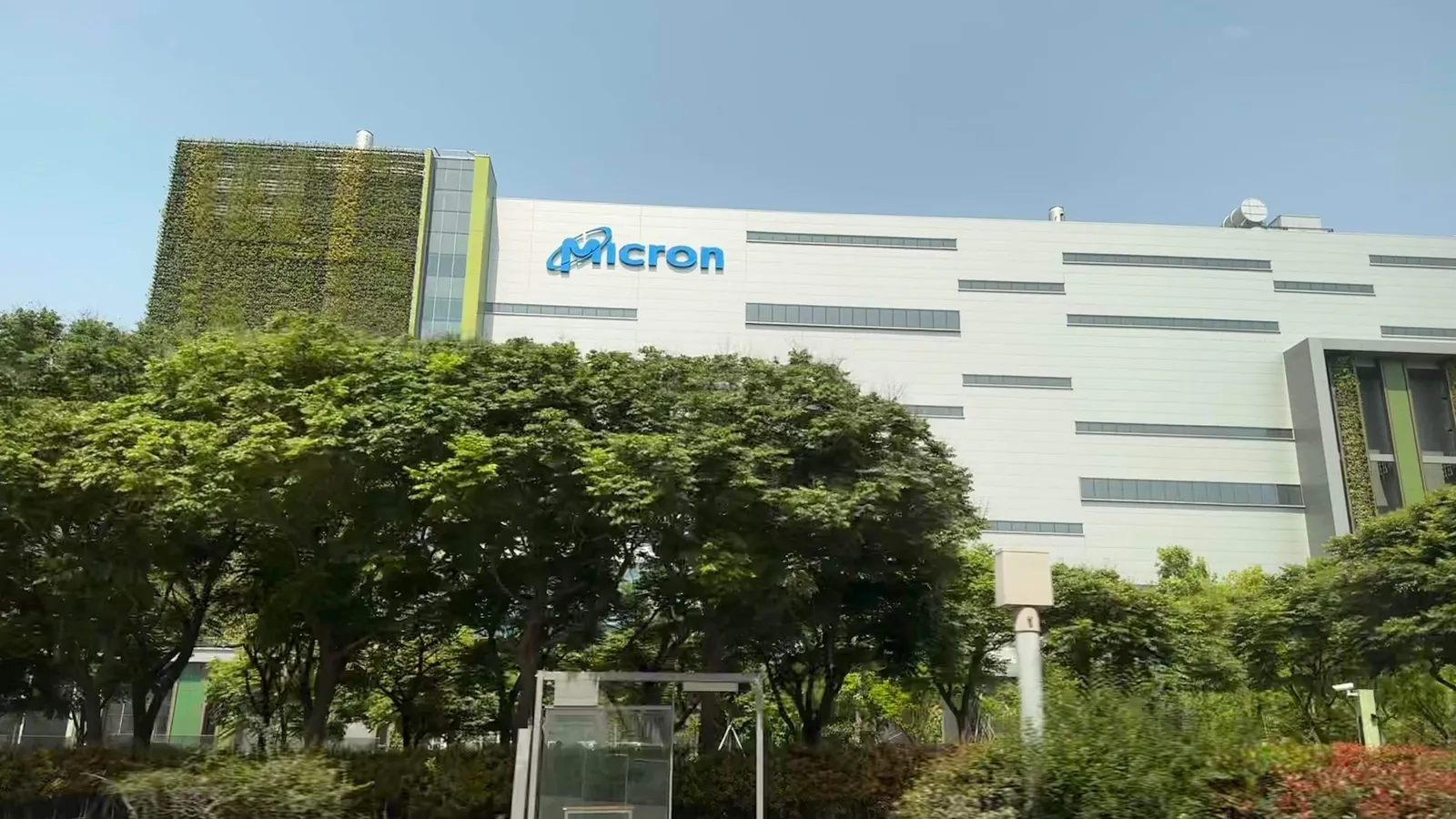
The memory industry spent the first half of 2026 telling investors it had learned its lesson and would not chase capacity. Then it changed its mind and committed roughly $2 trillion. On August 7, 2026, SK hynix alone approved 54 trillion won for two new fabs, and the press release quietly gives away the problem with the whole story: the first cleanroom at Cheongju M17 opens in December 2028, and the first cleanroom at Yongin Y2 opens in June 2029.
That is the entire supply-side story in one sentence. The capitulation is real, the money is real, and none of it produces a single bit of memory before late 2028. Anyone reading the capex announcements as a signal that RAM prices are about to break should read the delivery dates instead.
Every figure below was checked against its primary source on August 15, 2026, the HBM market-share figures were refreshed on September 26, 2026, and Micron’s fiscal 2026 capital spending was added on October 7, 2026.
| Project | Site and product | Announced or broke ground | First wafers or cleanroom | Lag | Schedule change | Announced capital |
|---|---|---|---|---|---|---|
| Micron Boise ID1 | Idaho, leading-edge DRAM | September 2022 | 2H 2027 | 4.8 yrs | Slipped 2.0 yrs | $15B |
| Samsung Pyeongtaek P5 | Korea, paused 2024 to 2025 | 2023 | 2028 | 5.0 yrs | Not rescheduled | ~$22B |
| SK hynix M15X | Cheongju, DRAM and HBM | April 2024 | May 2026, trial | 2.1 yrs | Slipped 0.6 yrs | 20T won |
| SK hynix Indiana | Indiana, advanced packaging | April 2024 | 2H 2028 | 4.3 yrs | Not rescheduled | $3.87B |
| SK hynix Yongin fab 1 | Korea, DRAM | February 2025 | Q1 2027 | 1.9 yrs | Not rescheduled | Part of 600T |
| SK hynix Cheongju M17 | Approved August 7, 2026 | August 2026 | December 2028 | 2.3 yrs | Not rescheduled | 19.1T won |
| SK hynix Yongin Y2 | Approved August 7, 2026 | August 2026 | June 2029 | 2.8 yrs | Not rescheduled | 35.2T won |
The U-turn actually happened
As recently as early July 2026 the accurate description of this industry was restraint. The makers had been badly burned by the 2023 glut, and through late 2025 and into 2026 Samsung and SK hynix told investors they would not pursue aggressive capacity expansion. That restraint is a large part of why RAM got so expensive in the first place: when the two companies holding roughly 70% of the DRAM market decline to add supply, scarcity is a pricing decision rather than an accident.
That posture has now broken, and it broke fast.
SK hynix disclosed a mid- to long-term framework of 1,100 trillion won, reported by Tom’s Hardware as roughly $712.5 billion, split as 600 trillion won for the Yongin Semiconductor Cluster, 100 trillion won for Cheongju and 400 trillion won for a proposed southwestern cluster. SK Group chairman Chey Tae-won has framed the goal as tripling wafer capacity by 2034. Micron, separately, raised its US commitment past $250 billion through 2035. South Korea layered a national package on top, steering schedules at Pyeongtaek and Yongin forward by 3 to 12 years and targeting a doubling of national DRAM capacity within five years.
For scale, the entire US CHIPS Act set aside about $52.7 billion. SK hynix’s Korean framework alone is more than thirteen times that.
Money is not silicon
The hero chart is the argument. Read it as a set of intervals rather than a set of projects.
The most instructive row is Micron’s Boise fab. Micron broke ground in September 2022, days after the CHIPS Act passed, on what Idaho Commerce announced as a roughly $15 billion investment. The original plan put DRAM production in calendar 2025. Micron now expects first wafers in the second half of 2027. That is not merely a long lag. It is a lag that grew by about two years while the project was underway, on the flagship American memory fab, with federal money attached.
Micron’s own spending shows the same order of operations. In its fiscal fourth-quarter 2026 results, filed with the SEC on September 30, 2026, Micron reported net capital expenditures of $10.77 billion for the quarter and $27.37 billion for fiscal 2026, on record quarterly revenue of $54.23 billion. Chief executive Sanjay Mehrotra said the company is “increasing our investments in technology, products and manufacturing.” The cash is leaving now. The Boise wafers it pays for still arrive in the second half of 2027.
Samsung’s Pyeongtaek P5 tells the same story from the other direction. Samsung started building it in 2023, then suspended the project in 2024 when the memory market softened, and has only recently restarted it for a 2028 opening. The pause was rational at the time and is precisely why there is no spare capacity now. Capacity decisions made in a downturn set the supply three to five years later, which is to say the 2026 shortage was substantially determined by what the industry chose not to build in 2024.
Even SK hynix’s fastest project, M15X in Cheongju, slipped. The April 2024 announcement targeted completion in November 2025. Trial operations began in May 2026.
The capacity decisions that will determine memory prices in 2029 are being made now. The capacity decisions determining prices today were made in 2022 and 2023, and one of them was a two-year pause.
Against that, the August 2026 commitments look less like relief and more like the industry starting a clock. Cheongju M17 breaks ground in February 2027 for a December 2028 cleanroom. Yongin Y2 breaks ground in July 2027 for a June 2029 cleanroom. A cleanroom opening is also not the same as volume output: qualification and ramp follow, and they take quarters.
What the filing says that the factory tour does not
SK hynix’s July 2026 Nasdaq listing changed something useful for anyone trying to check these claims. The company raised $26.5 billion in what Reuters and others reported as the largest US listing ever by a foreign company, surpassing Alibaba’s 2014 debut. It also means SK hynix now files with the US Securities and Exchange Commission, and a registration statement is a very different document from a press release, because misstating one is a legal problem.
The Form F-1/A is worth reading against the confident public narrative that AI has structurally ended the memory cycle.
- AI is a structural change producing a much longer cycle
- The industry is "subject to cyclical fluctuations, including recurring periods of oversupply"
- The world is queuing up for long-term contracts
- Largest customer was 23.9% of 2025 revenue; top two were 14.8% and 12.4% of Q1 2026
- Construction began February 2025
- Phase 1 cleanroom of the first fab expected in Q1 2027
- A Korean and now American champion
- Owns and operates fabs in Wuxi and Dalian, China
Three things there deserve emphasis.
The oversupply language is not boilerplate that the company privately dismisses. It is listed among the summary risk factors, ahead of competition and ahead of the capacity risk. The same filing separately notes that the company believes its strengths in HBM, server DRAM and enterprise SSD “mitigate” cyclicality risk, which is a considerably more careful claim than saying the cycle is over.
The customer concentration is the sharper number. A single customer at 23.9% of 2025 revenue, in a year when HBM demand was the whole story, describes a company whose capex case rests heavily on a small number of AI buyers continuing to buy. That is the actual bust risk, and it is disclosed rather than hidden.
The Chinese fabs matter because the same filing is the basis for a US listing during an export-control regime aimed squarely at Chinese memory capacity.
New wafers are still not new bits
There is a second reason the capex does not convert cleanly into cheaper RAM, and it is the one most often skipped. Wafer capacity and bit supply are not the same quantity when the product mix is shifting to HBM.
HBM stacks DRAM dies vertically with through-silicon vias, which costs die area and yield. Tom’s Hardware, summarizing the industry rule of thumb, reports that HBM consumes roughly three times the wafer capacity of DDR5 per gigabyte, with HBM4 potentially reaching five times. The consequence is that a maker can grow wafer starts substantially while commodity bit output barely moves.
This site has already worked through that mechanism and the specific forecast numbers in the 2027 memory shortage forecast, so it is not re-argued here. The point for a capex post is narrower: when you read “triple wafer capacity by 2034,” the tripling is denominated in the wrong unit for a consumer buying a DDR5 kit.
The case that this is overstated
Two honest counterweights.
First, the announcements may be softer than the headline numbers. Analyst Robert Castellano has argued that South Korea’s promised doubling will deliver far less than advertised, putting realistic annual capacity growth in the single digits. If he is right, the practical conclusion is not that relief arrives sooner. It arrives later, which strengthens rather than weakens the argument above.
Second, the competitive picture is moving in a way the triumphal coverage tends to miss. SK hynix is the HBM leader, but its share is falling, not rising: from about 69% in the first quarter of 2025 to 56.4% in the first quarter of 2026 by revenue, and to 50% in the second quarter per Counterpoint Research’s Q2 2026 HBM market share release (September 2026). Micron briefly passed Samsung into second place, but Samsung rebounded to 33% in the second quarter. A more contested HBM market is a genuine argument for faster supply growth, and it is the strongest available case against the shortage narrative. It is also the reason the customer-concentration figure in the filing cuts both ways.
The one supply source that could break the cycle faster than any Korean fab is Chinese capacity, which is covered separately in the analysis of CXMT.
What this means for what you pay
Nothing in the August announcements changes a purchasing decision in 2026 or 2027. The timeline says the earliest new Korean cleanroom from the 2026 capex wave opens in December 2028, Micron’s Idaho wafers arrive in the second half of 2027, and Samsung’s P5 opens in 2028. Independent forecasters land in the same window: Counterpoint has pointed to an inflection no earlier than the fourth quarter of 2027, UBS expects DRAM undersupplied until at least the second quarter of 2028, and Intel chief executive Lip-Bu Tan has said plainly there is no relief until 2028.
The practical guidance has not moved, and it is set out in full in when RAM prices will drop. The capex wave is a 2029 story wearing 2026 clothes.
Frequently asked questions
- How much are memory makers spending on new fabs in 2026?
- SK hynix disclosed a mid- to long-term framework of 1,100 trillion won, reported as roughly $712.5 billion, covering the Yongin cluster, Cheongju and a proposed southwestern cluster. Micron raised its US commitment past $250 billion through 2035. On August 7, 2026 SK hynix separately approved 54 trillion won for two specific fabs, Yongin Y2 at 35.2 trillion won and Cheongju M17 at 19.1 trillion won. Combined industry and government commitments across Korea and the US total roughly $2 trillion.
- When will the new memory fabs actually start producing?
- The first cleanroom at SK hynix Cheongju M17 is scheduled for December 2028 and Yongin Y2 for June 2029, per SK hynix. The phase 1 cleanroom of the first Yongin fab is expected in the first quarter of 2027 per the company Form F-1/A. Micron targets first DRAM wafers at its Boise fab in the second half of 2027, and Samsung expects Pyeongtaek P5 operational in 2028. A cleanroom opening precedes qualification and volume ramp by further quarters.
- Will the SK hynix investment lower RAM prices?
- Not within the 2026 to 2027 window. The earliest cleanroom from the August 2026 commitments opens in December 2028, and wafer capacity does not translate directly into commodity bit supply because HBM consumes roughly three times the wafer area per gigabyte of DDR5. Independent forecasters place any inflection between the fourth quarter of 2027 and the second quarter of 2028 at the earliest.
- Why did memory makers reverse their capacity discipline?
- Through late 2025 and early 2026 Samsung and SK hynix told investors they would not aggressively expand capacity, having been burned by the 2023 oversupply crash. Sustained AI memory demand, long-term customer contracts with prepayments, and South Korean government support changed that calculus during 2026. SK hynix chief executive Kwak Noh-jung has said demand is expected to exceed the company capacity beyond 2030.
- What does the SK hynix SEC filing say about the memory cycle?
- The Form F-1/A lists among its summary risk factors that the memory semiconductor industry is subject to cyclical fluctuations, including recurring periods of oversupply. It also discloses that the largest customer represented 23.9% of total revenue in 2025, and that the company owns and operates fabs in Wuxi and Dalian, China. This is a more cautious framing than the public narrative that AI has structurally ended the memory cycle.
Sources
- SK hynix (2026). SK hynix Invests 54 Trillion Won in Yongin Y2 and Cheongju M17. SK hynix Newsroom, August 7, 2026. The 54 trillion won total, the 35.2 and 19.1 trillion won splits, and the groundbreaking and cleanroom dates for both fabs. Verified August 15, 2026.
- SK hynix Inc. (2026). Form F-1/A registration statement. Filed with the US Securities and Exchange Commission. The oversupply risk factor, customer concentration of 23.9% in 2025 and 14.8% and 12.4% in Q1 2026, the Yongin Q1 2027 cleanroom date, and the Wuxi and Dalian fabs. Verified August 15, 2026.
- SK hynix (2024). SK hynix to Produce DRAM From M15X in Cheongju. SK hynix Newsroom, April 24, 2024. The April 2024 announcement, the over 20 trillion won figure, and the original November 2025 completion target. Verified August 15, 2026.
- Tom’s Hardware (2026). SK hynix to invest $712.5 billion in South Korean operations. The 1,100 trillion won framework and its 600 / 100 / 400 trillion won split. Verified August 15, 2026.
- Tom’s Hardware (2026). HBM is coming for your PC’s RAM. The approximately three times wafer capacity per gigabyte of HBM against DDR5, and the potential five times figure for HBM4. Verified August 15, 2026.
- Micron Technology (2026). Micron and Trump Administration Announce Expanded U.S. Investments in Leading-Edge DRAM Manufacturing and R&D. Micron investor relations. The more than $250 billion US commitment through 2035. Verified August 15, 2026.
- Micron Technology (2026). Micron Technology, Inc. Reports Record Fiscal Fourth-Quarter and Full-Year 2026 Results. Press release, Exhibit 99.1 to Form 8-K, September 30, 2026. Net capital expenditures of $10.77 billion in the fourth quarter and $27.37 billion in fiscal 2026, fourth-quarter revenue of $54.23 billion, and the chief executive quote. Verified October 7, 2026.
- Idaho Commerce (2022). Micron Announces $15 Billion Investment In Boise. State of Idaho. The September 2022 groundbreaking, the approximately $15 billion figure, and the original calendar 2025 production target. Verified August 15, 2026.
- Indiana Economic Development Corporation (2024). Generational multi-billion dollar investment to make Indiana leader in semiconductor packaging. April 3, 2024. The SK hynix West Lafayette advanced packaging project and its announcement date. Verified August 15, 2026.
- NIST (2024). SK hynix (Indiana), West Lafayette. US CHIPS Program Office. The approximately $3.87 billion investment and the second half of 2028 mass production target. Verified August 15, 2026.
- The Elec (2026). Samsung to resume construction of P5 fab. The 2023 construction start, the 2024 suspension, and the 2028 operational target for Pyeongtaek P5. Verified August 15, 2026.
- TrendForce (2026). Diverging Memory Market Outlook in 2027 as DRAM Supply Remains Tight While NAND Flash Supply Conditions Ease. July 30, 2026. DRAM supply constrained through 2027. Verified August 15, 2026.
- Castellano, R. (2026). South Korea Promised to Double DRAM Memory Capacity. It May Deliver Less Than 10% a Year. Independent analyst commentary, published on Substack. The skeptical case on delivered capacity against announced capacity. Verified August 15, 2026.
- Counterpoint Research (2026). SK hynix HBM share falls to 50%, Samsung chases at 33%. Counterpoint Research, September 3, 2026 (Korean-language release). SK hynix 50% and Samsung 33% of HBM revenue in Q2 2026. Verified September 26, 2026.
- Tom’s Hardware (2026). SK Hynix says 2027 will be the worst year for memory shortage. Reporting remarks by chief executive Kwak Noh-jung to Reuters on the day of the Nasdaq listing, including demand exceeding capacity beyond 2030. Verified August 15, 2026.
Related Capital and Compute coverage referenced above: the pricing decision behind why RAM is so expensive, the wafer-to-bit mechanism in the 2027 shortage forecast, the buying guidance in when RAM prices will drop, the Chinese supply wildcard in what CXMT is, and the live readings in the memory price tracker.