Is the AI Bubble Popping? What Alphabet's Drop Shows
Alphabet lost about $500B in a day, yet Google Cloud revenue doubled. The strain is $51B of quarterly capex and negative free cash flow, not AI demand.
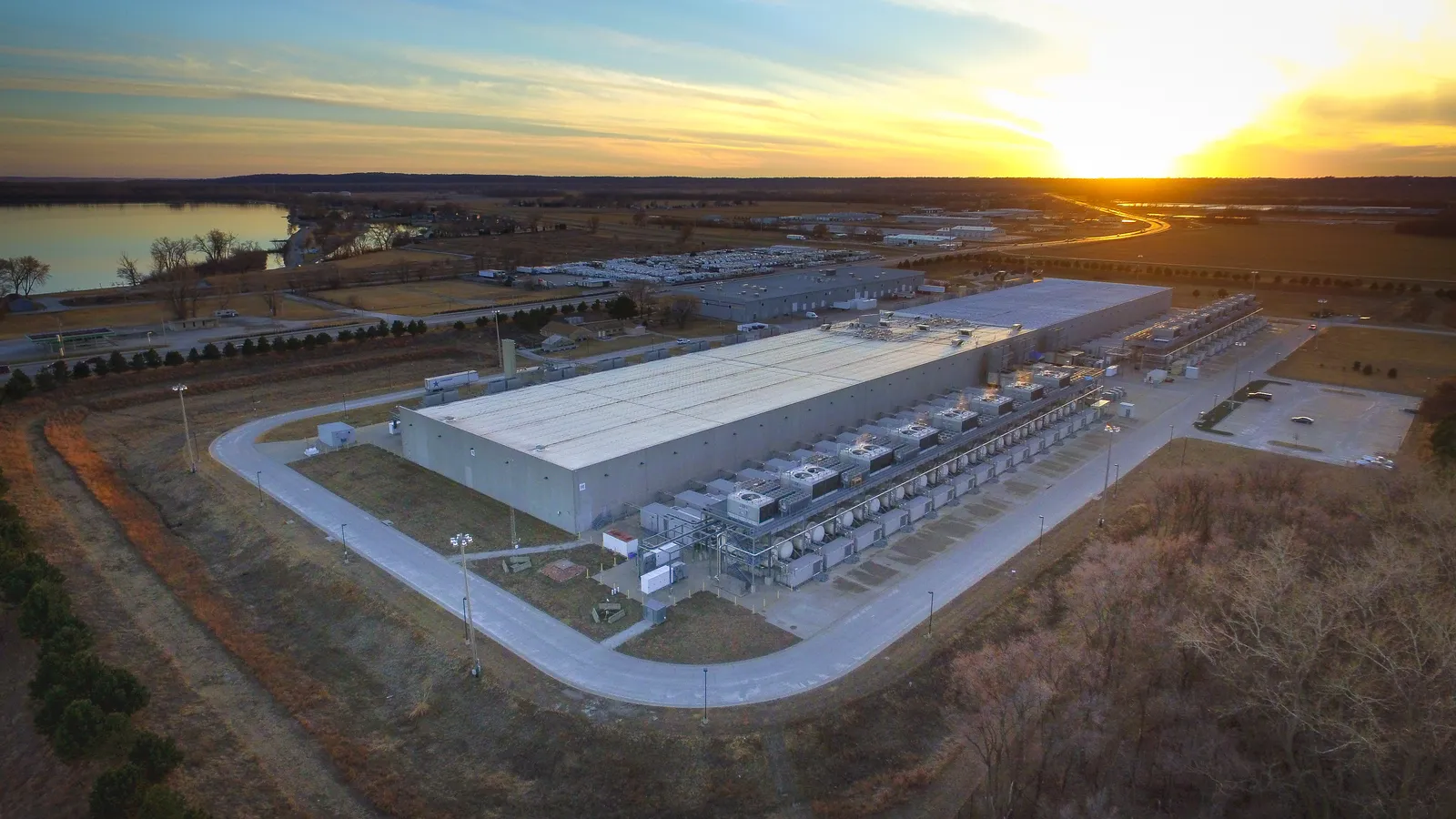
Not yet. Alphabet fell 12.6% on October 29, 2026, its worst day since its 2004 IPO, while Google Cloud revenue doubled. The strain showing up is cash, not demand: one quarter of capex now exceeds what the business earns.
That distinction matters, because “bubble” gets used for two different failures. A demand bubble pops when customers stop paying for the thing being built. A financing squeeze happens when the builders run out of internal cash and have to borrow or sell stock to keep building. This week’s earnings show plenty of the second and almost none of the first.
Every company figure below was checked against its SEC filing or earnings release on October 30, 2026. Market moves come from named news coverage and are labelled as such.
Why did Alphabet stock fall?
Alphabet published its third-quarter 2026 results after the close on October 28. Revenue rose 25% to $127.6 billion. Diluted earnings per share fell to $2.12 from $2.87 a year earlier, against a Wall Street consensus near $3.01, as reported by Investing.com. The next day the Class A shares closed at $283.82, down 12.64%, wiping out about $499.8 billion of value according to The Wall Street Journal, as cited by Fox Business.
Fox Business called it the second-largest one-day market-value loss on record, behind Nvidia’s roughly $589 billion in January 2025. Yahoo Finance noted it was Alphabet’s steepest session since it listed in 2004.
Three things drove the miss, and only one of them is about AI.
- A SpaceX markdown. Alphabet booked an $8.7 billion net loss on equity securities. CFO Anat Ashkenazi said on the earnings call that the loss came “primarily” from its investment in SpaceX after a decline in SpaceX’s share price. That’s a non-operating mark, not a business problem.
- Slower Search growth. Google Search and other revenue grew 12% to $63.4 billion. Fox Business reported that was down from 17% the quarter before.
- Spending. Capex hit $51.4 billion in one quarter, and Ashkenazi repeated that she expects capex “to increase significantly in 2027.”
The market punished the third one hardest, because it’s the one that compounds.
Did AI demand slow down?
No. On every measure the companies publish, AI demand accelerated this quarter.
Google Cloud revenue rose 103% to $30.7 billion, and Cloud operating income went from $3.6 billion to $11.1 billion in a year. Alphabet’s 10-Q puts Cloud revenue backlog at $560.8 billion, with “just over 55%” expected to become revenue within 24 months. CEO Sundar Pichai said Cloud growth was “powered by huge demand for our AI infrastructure and AI solutions.”
The other three hyperscalers reported the same week and told the same story:
| Company | Cloud growth, latest quarter | Contracted backlog | 2026 capex outlook |
|---|---|---|---|
| Alphabet | Google Cloud +103%, to $30.7B | $560.8B Cloud backlog | $195–205B (unchanged) |
| Microsoft | Azure +48% | $677B commercial RPO, +73% | About $170B, calendar year |
| Amazon | AWS +39%, to $46.0B | Not in release | About $220B (unchanged) |
| Meta | No cloud business | Not applicable | $135–145B (narrowed) |
Sources: Microsoft FY27 Q1 release, Amazon Q3 2026 release, Meta Q3 2026 release. Verified October 30, 2026.
Amazon called AWS’s 39% “its fastest growth in nearly five years.” Microsoft’s commercial remaining performance obligation, the contracted revenue it hasn’t recognised yet, grew 73% to $677 billion.
Microsoft’s capex number is the one that spooked people, and it’s being misread. CNBC reported the calendar-year outlook fell to $170 billion from $175 billion. But CFO Amy Hood gave the reason on the call: spend “should be approximately $170 billion due to the 3P capacity delays.” Third-party GPU capacity Microsoft had contracted for arrived late. That’s a supply problem. A demand bubble looks like customers cancelling, not vendors failing to deliver fast enough. (Microsoft’s capex is already squeezing elsewhere: it’s part of why Microsoft is cutting staff.)
Is Alphabet’s AI spending paying off?
Partly, and the answer depends on which line you read.
The Cloud unit is a clear yes. It added $7.5 billion of quarterly operating income in a year, and Google Cloud CEO Thomas Kurian said on the call that “all of the inventory for TPU systems are associated with committed contracts.” Google is now selling whole TPU systems to outside customers. Ashkenazi expects “a meaningful revenue ramp in 2027” from them.
The cash flow statement is a clear not yet. Here’s Alphabet’s own five-quarter record:
| Period | Operating cash flow | Capital expenditure | Free cash flow |
|---|---|---|---|
| Q3 2025 | $48.4B | $24.0B | +$24.5B |
| Q4 2025 | $52.4B | $27.9B | +$24.6B |
| Q1 2026 | $45.8B | $35.7B | +$10.1B |
| Q2 2026 | $39.1B | $44.9B | -$5.9B |
| Q3 2026 | $42.3B | $51.4B | -$9.1B |
Two details in that chart deserve a second look. First, operating cash flow fell in 2026 even as revenue grew 25%. Ashkenazi tied part of the Q3 dip to building TPU inventory before customers pay, plus a $5.2 billion payment for a 2018 European Commission fine. Second, trailing-twelve-month free cash flow is still positive at $19.7 billion, but a year ago it was far higher, and the slope is the point.
She said the investments “will put pressure on free cash flows” and that she expects returns “meaningfully above our cost of capital.” Investors have heard the first half. They’re waiting for proof of the second.
Why is Alphabet’s free cash flow negative?
Because capex now runs ahead of the cash the business throws off, and the gap is being filled from outside.
The 10-Q financing section is the most important page in the filing. In the nine months to September 30, 2026, Alphabet:
- raised $42.9 billion from issuing common stock (zero a year earlier),
- raised $19.1 billion from mandatory convertible preferred stock,
- issued $85.2 billion of debt, against $38.0 billion a year earlier,
- and repurchased no stock at all, after $39.8 billion of buybacks in the same period of 2025.
It also sold $12.4 billion of Class A and C shares through its $40 billion at-the-market program in Q3 alone, with $27.6 billion of capacity left. The company says those proceeds mainly cover tax on employee equity grants, but the cash is fungible.
A year earlier Alphabet was buying back roughly $13 billion of its own stock a quarter. Now it’s a net issuer. That’s the real regime change in this quarter, and it’s bigger than the earnings miss.
Add up the four 2026 capex outlooks and you get roughly $720–740 billion for one calendar year. Three of the four can no longer cover their share from operations. The Bank for International Settlements flagged this shift in January in Financing the AI boom: from cash flows to debt (Aldasoro, Doerr and Rees, BIS Bulletin No 120, 2026). This quarter it showed up in the filings themselves. The private-credit and SPV side of that financing runs deeper still.
What would an actual AI bubble pop look like?
A pop would show up in demand-side numbers first, well before it shows up in share prices. Here’s what to watch and where each signal stood on October 30, 2026:
| Signal | What a pop looks like | Reading now | Status |
|---|---|---|---|
| Cloud revenue growth | Decelerating for two or more quarters | Google Cloud +103%, Azure +48%, AWS +39% (fastest in ~5 years) | Not popping |
| Contracted backlog | Flat or shrinking; cancellations disclosed | Google Cloud $560.8B; Microsoft commercial RPO $677B, +73% | Not popping |
| Capex guidance | Cut for lack of demand | Microsoft trimmed ~$5B for vendor delays, Alphabet signals a large 2027 increase | Not popping |
| Component prices | Memory and GPU contract prices falling | TrendForce forecasts conventional DRAM contracts +10–15% in 4Q26 (memory tracker) | Not popping |
| Funding source | Capex funded by equity and debt instead of cash flow | Alphabet and Meta issuing equity; Amazon trailing FCF -$42.4B; buybacks halted | Strained |
| Equity market | Repeated large drawdowns on good revenue | Alphabet -12.6% on a 25% revenue quarter | Strained |
Four of six signals still read as a boom. The two that flash are about money, not machines. That’s the profile of a capital cycle getting expensive to fund, which can end badly without demand ever collapsing: if the cost of the equity and debt rises faster than Cloud margins, projects get cancelled even with customers waiting.
We continue to expect our CapEx to increase significantly in 2027 and will provide further details on our Q4 call.
What to watch next
- Nvidia’s next quarterly results (late November 2026). Its hyperscale data center line is the cleanest read on whether this capex is still landing. The AI data center stocks breakdown shows how that line split in the last reported quarter.
- Alphabet’s Q4 call (early 2027). It will put a number on “increase significantly” for 2027 capex. A big number with free cash flow still negative means more issuance.
- The pace of equity issuance. Watch Alphabet’s at-the-market sales in the next 10-Q and whether Amazon or Microsoft follow Meta into the equity market.
- Memory and GPU prices. If DRAM contract prices roll over, the memory price tracker will show it before the hyperscalers say anything. Supply-side capacity is not coming quickly either: the memory capex buildout mostly lands in 2028–2029.
- AI lab financing. The hyperscaler backlog is partly owed by labs that are themselves cash-negative. Anthropic’s IPO prospectus shows how large those obligations are relative to revenue.
Bottom line
The AI bubble hasn’t popped. Customers are paying more for AI compute than they were three months ago, the contracted backlogs are larger, and the one capex cut this week came from vendors who couldn’t ship fast enough.
What broke on October 29 was the assumption that the hyperscalers could fund this from cash flow. Alphabet, Amazon and Meta can’t any more, and the market just repriced Alphabet for being a net issuer of stock instead of a buyer of it. Watch the financing, not the headlines about demand. That’s where a real pop would start.
Frequently asked questions
- How much did Alphabet stock fall on October 29, 2026?
- Alphabet Class A shares closed at $283.82 on October 29, 2026, down 12.64%, after its Q3 2026 results. About $500 billion of market value was erased, per The Wall Street Journal as cited by Fox Business. It was Alphabet’s worst day since its 2004 IPO.
- Why did Alphabet miss earnings in Q3 2026 if revenue grew 25%?
- Diluted EPS fell to $2.12 from $2.87 because of an $8.7 billion net loss on equity securities, which the CFO attributed mainly to SpaceX, plus higher depreciation from AI infrastructure. Revenue rose 25% to $127.6 billion and Google Cloud grew 103%.
- How much is Alphabet spending on AI capex in 2026?
- Alphabet guides to $195–205 billion of capital expenditure for 2026, unchanged after Q3. It spent $51.4 billion in Q3 alone and said it expects capex to increase significantly in 2027.
- Is Alphabet issuing stock to fund AI?
- Yes. In the nine months to September 30, 2026, Alphabet raised $42.9 billion from common stock and $19.1 billion from mandatory convertible preferred, issued $85.2 billion of debt and bought back no shares, per its Q3 2026 10-Q.
- Which hyperscalers have negative free cash flow?
- As of Q3 2026: Alphabet (negative $9.1 billion in the quarter), Meta (negative $2.12 billion in the quarter) and Amazon (negative $42.4 billion trailing twelve months). Microsoft reported positive free cash flow of $18.6 billion for its September quarter.
Sources
Alphabet (2026). Alphabet Announces Third Quarter 2026 Results [revenue $127.6B up 25%, Search & other $63.4B up 12%, Google Cloud $30.7B up 103% with operating income $11.1B vs $3.6B, capex $51.4B, operating cash flow $42.3B, free cash flow -$9.1B quarterly and $19.7B TTM, quarterly FCF reconciliation Q4 2025 to Q3 2026, diluted EPS $2.12 vs $2.87, $8.7B net loss on equity securities, Pichai quote]. Form 8-K Exhibit 99.1, SEC. Verified October 30, 2026.
Alphabet (2026). Form 10-Q for the quarter ended September 30, 2026 [revenue backlog $567.7B of which Google Cloud $560.8B, just over 55% within 24 months, nine-month financing cash flows, ATM program sales and remaining capacity, Q3 2025 operating cash flow and capex]. SEC. Verified October 30, 2026.
Investing.com (2026). Earnings call transcript: Alphabet Q3 2026 [Ashkenazi on SpaceX loss, 2026 capex guidance, 2027 capex increase, TPU inventory, EC fine payment, free cash flow pressure and ROIC; Kurian on TPU contracts]. Secondary transcript. Verified October 30, 2026.
Fox Business (2026). Alphabet stock plunges as Google parent loses nearly $500 billion [close $283.82, down 12.64%, ~$499.8B per The Wall Street Journal, comparison with Nvidia January 2025, Search growth 17% prior quarter]. Secondary news coverage. Verified October 30, 2026.
Yahoo Finance (2026). Alphabet loses $482 billion in market value, the biggest drop in its history [steepest session since the 2004 listing]. Secondary news coverage. Verified October 30, 2026.
Investing.com (2026). Alphabet shares tumble as search unit slowdown overshadows cloud boom [EPS consensus near $3.01]. Secondary news coverage. Verified October 30, 2026.
Microsoft (2026). Microsoft Announces First Quarter Results [Azure up 48%, commercial RPO $677B up 73%, Microsoft Cloud $63.9B]. Form 8-K Exhibit 99.1, SEC. Verified October 30, 2026.
The Motley Fool (2026). Microsoft (MSFT) Q1 2027 Earnings Call Transcript [Hood: Q1 capex $45.2B, calendar-year capex ~$170B due to 3P capacity delays, Q1 free cash flow $18.6B, remain free cash flow positive in FY27]. Secondary transcript. Verified October 30, 2026.
CNBC (2026). AI buildout hits snag as Google and Microsoft put off raising capex forecasts [Microsoft prior capex outlook of $175B]. Secondary news coverage, as reported. October 29, 2026.
Amazon (2026). Amazon.com Announces Third Quarter Results [AWS $46.0B up 39%, fastest growth in nearly five years, TTM free cash flow -$42.4B vs $14.8B, $94.8B increase in property and equipment purchases, 2026 capex ~$220B]. Form 8-K Exhibit 99.1, SEC. Verified October 30, 2026.
Meta Platforms (2026). Meta Reports Third Quarter 2026 Results [capex including finance lease principal $34.91B, operating cash flow $32.79B, free cash flow -$2.12B, 2026 capex $135-145B]. Form 8-K Exhibit 99.1, SEC. Verified October 30, 2026.
Meta Platforms (2026). Form 8-K dated October 26, 2026 [250M depositary shares of 6.50% Series A mandatory convertible preferred, forward sale of 40M Class A shares]. SEC. Verified October 30, 2026.
Aldasoro, I., Doerr, S. and Rees, D. (2026). Financing the AI boom: from cash flows to debt. BIS Bulletin No 120, Bank for International Settlements.
TrendForce (2026). AI Server Demand Sustains Memory Contract Price Increases in 4Q26, While Consumer-Side Pressure Persists [conventional DRAM contract prices +10-15% QoQ in 4Q26]. September 30, 2026.