Why Are Phones More Expensive in 2026?
Phones cost more in 2026 because memory does: phone RAM went from $2.80 to $12 per GB. iPhone 18 Pro rose $100 to $1,199, and the iPhone Duo starts at $1,999.
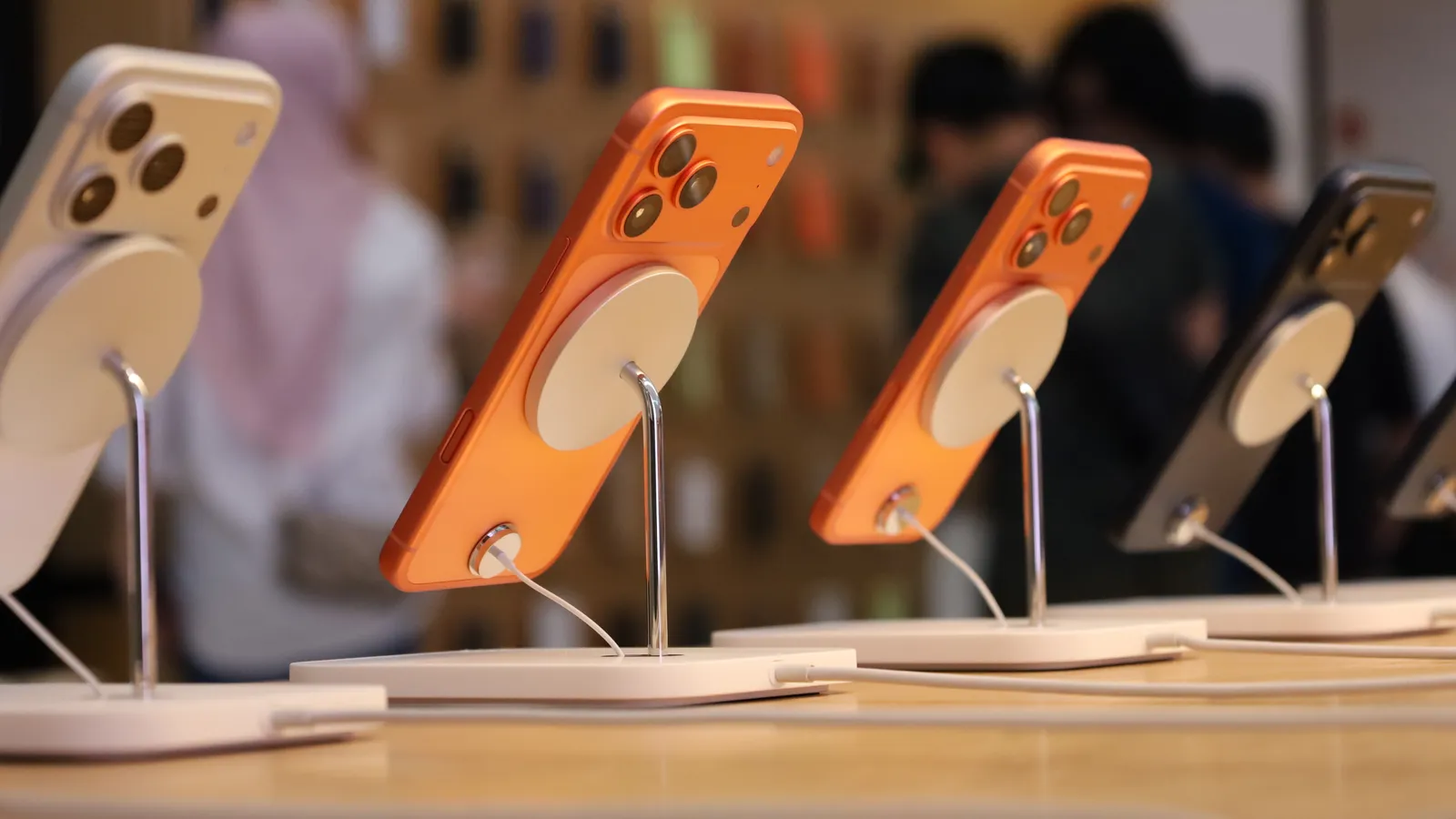
Phones are more expensive in 2026 because the memory inside them is. One gigabyte of phone RAM went from about $2.80 in 2025 to about $12 in 2026, according to Morgan Stanley data cited by Google’s devices chief. Apple raised the iPhone 18 Pro by $100 to $1,199, Google raised the Pixel 11 by $100, and Apple’s first foldable, the iPhone Duo, starts at $1,999 when it goes on sale October 23. The data centers buying memory for AI got to the factories first. Phone makers are paying what is left.
What do phones cost in 2026?
Here is the 2026 price sheet for the phones people are actually comparing, with the change against the model each one replaced. Every price is the US starting price at the base storage tier.
| Phone | 2026 starting price | Change vs. predecessor | Base storage | Availability |
|---|---|---|---|---|
| iPhone 17e | $699 | +$100 | 256GB | On sale |
| iPhone 17 (still sold) | $899 | +$100 | 256GB | On sale |
| Google Pixel 11 | $899 | +$100 (128GB tier dropped) | 256GB | Announced August 12 |
| iPhone 18 Pro | $1,199 | +$100 | 256GB | On sale since September 18 |
| iPhone 18 Pro Max | $1,299 | +$100 | 256GB | On sale since September 18 |
| Samsung Galaxy Z Fold 8 | $1,899 | Not compared (new generation) | 256GB | On sale since August 7 |
| Google Pixel 11 Pro Fold | $1,899 | +$100 | 256GB | Announced August 12 |
| iPhone Duo (first foldable) | $1,999 | New category for Apple | 256GB | Pre-order October 16, ships October 23 |
Apple prices come from its newsroom for the iPhone 18 Pro and iPhone Duo, with the year-over-year changes from Macworld’s September 9 price comparison. Pixel 11 pricing is from TechRepublic’s launch coverage, and the Fold 8’s $1,899 base is from SamMobile’s report on Samsung’s US pricing.
Look at the second row. The iPhone 17 isn’t new hardware, but it went from $799 to $899 anyway. So did the iPhone 17e ($599 to $699) and the iPhone 16, which is two years old and now costs $799 instead of $699, per Macworld. A company charging more for a new camera raises the price of the new phone. A company whose costs went up raises the price of everything. Apple did the second.
Why are phones more expensive in 2026?
Phones are more expensive in 2026 because DRAM and NAND flash, the two kinds of memory in every handset, more than quadrupled in price as AI data centers bought up supply. Memory went from one of the cheaper parts of a phone to the most expensive single component in a premium model, and phone makers passed the increase on at retail.
The numbers that matter come from three places.
The per-gigabyte price. Google’s Vice President of Devices and Services, Shakil Barkat, cited Morgan Stanley data showing 1GB of RAM going from $2.80 in 2025 to $12 in 2026, in an interview with 9to5Google on July 24, 2026. 9to5Google described that as a sixfold rise. The arithmetic says 4.3 times. That’s still enormous, but the difference matters if you are checking someone else’s math.
The bill of materials. Counterpoint Research’s July 2026 BoM analysis (Shenghao Bai) found smartphone memory prices rose more than 80% quarter over quarter in the second quarter of 2026, and that DRAM passed the processor to become “the most expensive single component in a premium smartphone.” In mid-range phones memory now takes 40% of the whole bill. In low-end phones, component costs rose 70% year over year, and Counterpoint says almost all of it was memory.
The iPhone specifically. TrendForce’s September 3, 2026 release on iPhone 18 costs says memory costs in the third quarter “are expected to be nearly 400% higher than a year earlier”, and that savings on other parts are “unlikely to offset the resulting pressure on overall BOM costs.”
Why memory, and why now? The short version: the same three companies (Samsung, SK hynix and Micron) make the DRAM for both phones and AI servers. High-bandwidth memory for AI accelerators pays them far more per wafer, so capacity moved there. The long version, including why the makers have little reason to end the shortage quickly, is in why RAM is so expensive in 2026. The live contract and retail readings are on the memory price tracker.
How much of the price rise is really memory?
Run the per-gigabyte numbers through a phone and the hike stops looking like a negotiating position.
A phone with 12GB of RAM carried about $34 of DRAM at the 2025 rate ($2.80 × 12). At the 2026 rate it carries about $144 ($12 × 12). That’s roughly $110 more per handset, before storage. Apple added $100 to the iPhone 18 Pro. Google added $100 to the Pixel 11. The increases line up with the RAM delta almost to the dollar.
Two cautions keep that comparison honest. Apple doesn’t publish RAM capacity for any iPhone, including the 18 Pro and the Duo, so 12GB is an illustrative configuration, not an Apple spec. And Morgan Stanley’s figure is an industry rate. Apple buys at a scale that gets better terms, and it stockpiled memory earlier in the year. TrendForce’s own reading is that Apple will “absorb some of the higher costs to protect market share,” and it had projected new-model prices up 10–20%. The $100 Apple landed on, about 9% on the Pro, sits below that range. Apple ate part of the bill.
Storage is the second half, and it’s where the pricing shows up most.
| Item | iPhone 17 Pro Max (2025) | iPhone 18 Pro Max (2026) |
|---|---|---|
| Upgrade to 2TB | +$800 | +$1,200 |
| Upgrade to 1TB | +$400 | +$600 |
| Upgrade to 512GB | +$200 | +$200 |
On the 2025 iPhone 17 Pro Max, going from 256GB to 2TB cost $800 ($1,199 to $1,999). On the 2026 iPhone 18 Pro Max it costs $1,200 ($1,299 to $2,499), per Macworld’s tier-by-tier table. The 1TB step went from $400 to $600. The 512GB step didn’t move at all. So the base price went up $100 and the high-capacity steps went up 50%. If you buy a big-storage phone, you pay for the memory shortage twice: once in the base price for DRAM, and again in the upgrade for NAND. The storage side has its own tracker on the SSD price page, and the history behind it is in why SSDs got so expensive.
Why is the iPhone Duo so expensive?
The iPhone Duo costs $1,999 because foldables are already priced around $1,900 across the industry, and Apple added $100 on top. Two displays, a hinge and a two-battery layout make foldables costly to build. Memory pushes the storage tiers up the same way it does on the Pro Max.
The comparison makes this clear. Samsung’s Galaxy Z Fold 8 starts at $1,899, $2,099 at 512GB and $2,499 at 1TB, per SamMobile. The Duo is $1,999, $2,199 and $2,599 for the same three tiers, then $3,199 for 2TB, which Samsung doesn’t offer (Apple lists the four tiers in its Duo announcement, and the per-tier US prices are from The Independent’s launch-week pricing guide). Google’s Pixel 11 Pro Fold also starts at $1,899. Apple charges exactly $100 over Samsung at every tier the two share.
Apple’s storage steps on the Duo are the same as its 2026 Pro Max steps: $200 to 512GB, $600 to 1TB, $1,200 to 2TB. So the memory pricing that raised the Pro Max upgrades is built into the Duo too. At 2TB, $1,200 of the $3,199 is storage.
Apple appears confident in demand. IDC’s Nabila Popal forecasts Apple will ship more than 17 million foldable iPhones by 2027, and says that without Apple, foldable shipments would have fallen at a double-digit rate this year, in IDC’s August 26, 2026 smartphone forecast. TrendForce puts foldables at only about 2% of the global phone market in 2026. A high price on a low-volume premium product is the easiest kind of price to pass through.
Are cheap phones hit harder?
Yes, and by a lot. A flagship has room in its margin to absorb part of the memory bill. A $150 Android phone doesn’t, because memory is a much larger share of what it costs to build.
IDC’s August forecast says the 173 million phones under $100 that shipped last year “are facing an existential crisis.” In the second quarter of 2026 that segment fell almost 60% year over year, and IDC expects it to fall faster in the second half. Counterpoint’s 70% component-cost rise in low-end phones, almost all of it memory, is the reason. Brands are cutting those models instead of selling them at a loss.
This is the overlooked part of the 2026 phone story. iPhone buyers see a $100 increase on a $1,099 phone. Budget buyers find that the phone they would have bought no longer exists, or has come back with less RAM.
How much more expensive are phones overall?
IDC now expects the average smartphone to sell for $581 in 2026, up 27.6% year over year, revised up from the $550 it forecast a quarter earlier. It also expects global shipments to fall 16.7% to just over 1 billion units, which it calls a record drop (IDC, August 26, 2026).
Part of that 27.6% isn’t phones getting pricier. It’s the mix getting richer as cheap phones disappear. When the $100 segment collapses, the average rises even if no single model changes price. That’s why the average sounds worse than the $100 sticker increases on any one flagship. Both numbers are true. They measure different things.
When will phone prices go down?
Not in 2026, and probably not in 2027. IDC’s Francisco Jeronimo says average selling prices “will keep rising well into 2027,” in the same August forecast, and IDC expects memory prices to keep climbing until at least 2028.
The supply side agrees. TrendForce’s 4Q26 contract forecast of September 30, 2026 says suppliers keep shifting capacity toward servers, “leaving mobile DRAM allocations tight,” so “the upward price trend remains firmly in place.” Growth is expected to moderate because so much increase was already priced in. Slower increases are not decreases. Conventional DRAM contracts are forecast up another 10–15% and NAND up 15–20% in the quarter. For the full supply timeline, including the new fabs that don’t reach volume until 2028 or later, see the memory shortage forecast for 2027 and when RAM prices might drop.
Two things could change that sooner. A pause in AI data-center spending would free memory capacity within quarters. And Google says it has a “dedicated effort” to make Android run on less RAM (9to5Google), which would let phone makers fit less memory without a worse experience. Neither shows up in any forecast yet.
Should you buy a phone now or wait?
Buy when your current phone stops doing the job, not before, and don’t wait for prices to fall. That’s the verdict the forecasts support.
If your phone still works, keeping it is the cheapest option. Nothing in the 2026–2027 outlook rewards an early upgrade. If you have to buy (a broken screen, a dead battery, a work requirement), buying now beats waiting. TrendForce and IDC both expect costs to keep rising, and Google’s statement that Pixel prices “will be rolled out dynamically to match supply realities” means existing models can go up too.
Three moves get the most out of 2026 pricing:
- Pick storage once, at the base if you can. The 512GB step held at $200, but the 1TB and 2TB steps rose 50%. If you live in iCloud or Google Photos, the 256GB base is the tier the shortage touched least.
- Look at last year’s model, but check its price. Apple raised the iPhone 17, 17e and 16 by $100 too, so an older iPhone isn’t the bargain it used to be. Carrier and refurbished channels are where older-model discounts still show up.
- Compare the 24-month total, not the monthly number. Apple’s own financing shows the 18 Pro at $49.95 a month. A $100 increase spread over 24 months looks like $4. It’s still $100.
The same shortage hit laptops, consoles, GPUs and cloud servers this year. The cross-category picture, ranked by dollars rather than percentage, is in AI price hikes in 2026. The Mac and iPad side of Apple’s pricing is covered in what Apple’s June price hike means for local AI.
Frequently asked questions
- Why are phones more expensive in 2026?
- Memory costs. Phone RAM rose from about $2.80 to about $12 per gigabyte between 2025 and 2026, according to Morgan Stanley data cited by Google, because AI data centers absorbed DRAM supply. Counterpoint found DRAM became the most expensive single part of a premium phone in 2Q26.
- How much did the iPhone go up in 2026?
- Most iPhones rose $100. The iPhone 18 Pro starts at $1,199 and the Pro Max at $1,299, each $100 more than the 17 Pro models. The iPhone 17, 17e, Air and 16 also rose at least $100. Higher storage tiers rose more: the 2TB Pro Max is $500 more than last year.
- Why does the iPhone Duo cost $1,999?
- Foldables already start around $1,899 (Galaxy Z Fold 8, Pixel 11 Pro Fold), and Apple prices the Duo $100 above Samsung at every shared storage tier. Its storage steps match the 2026 Pro Max, so the 2TB model costs $3,199, with $1,200 of that for the storage upgrade.
- Will phone prices go down in 2027?
- Unlikely. IDC expects average smartphone prices to keep rising well into 2027 and memory prices to rise until at least 2028. TrendForce expects mobile DRAM increases to slow in 4Q26 but not reverse.
- Are budget phones affected by the memory shortage?
- More than flagships. IDC says phones under $100 face an existential crisis, with the segment down almost 60% year over year in 2Q26, because memory is a much larger share of a cheap phone cost and there is no margin left to absorb it.
Sources
- Apple (2026). Apple debuts iPhone 18 Pro and iPhone 18 Pro Max. Apple Newsroom, September 9, 2026. https://www.apple.com/newsroom/2026/09/apple-debuts-iphone-18-pro-and-iphone-18-pro-max/
- Apple (2026). Apple unveils iPhone Duo. Apple Newsroom, September 9, 2026. https://www.apple.com/newsroom/2026/09/apple-unveils-iphone-duo/
- Loyola, R. and Simon, M. (2026). iPhone price increases. Macworld, September 9, 2026 (secondary; prior-year prices). https://macworld.com/article/3229342/iphone-price-increases.html
- Li, A. (2026). Google confirms Pixel 11 price increase, reveals ‘dedicated’ effort to make Android more RAM-efficient. 9to5Google, July 24, 2026. https://9to5google.com/2026/07/24/google-pixel-11-price-increase/
- TechRepublic (2026). Google Pixel 11 Starts at $899 as Google Doubles Base Storage. TechRepublic (secondary). https://www.techrepublic.com/article/news-google-pixel-11-price/
- SamMobile (2026). Samsung confirms Galaxy Z Fold 8 price starts at $1,899. SamMobile, July 22, 2026 (secondary). https://www.sammobile.com/news/samsung-confirms-galaxy-z-fold-8-price-starts-at-1899/
- Bai, S. / Counterpoint Research (2026). Reshuffling the BoM: Component-Cost Dynamics Amid Memory Price Spikes. Counterpoint Research, July 28, 2026. https://counterpointresearch.com/en/insights/reshuffling-the-bom-componentcost-dynamics-amid-memory-price-spikes
- TrendForce (2026). Memory Costs Drive Up iPhone 18 Series BOM; AI and Pricing to Shape Upgrade Demand. TrendForce press release, September 3, 2026. https://www.trendforce.com/presscenter/news/20260903-13213.html
- TrendForce (2026). AI Server Demand Sustains Memory Contract Price Increases in 4Q26, While Consumer-Side Pressure Persists. TrendForce press release, September 30, 2026. https://www.trendforce.com/presscenter/news/20260930-13258.html
- IDC (2026). Smartphone Shipments Set for Record 16.7% Drop in 2026, as the Memory Crisis Hits Full Force. IDC blog, August 26, 2026. https://www.idc.com/resource-center/blog/smartphone-shipments-set-for-record-16-7-drop-in-2026-as-the-memory-crisis-hits-full-force/