Will CXMT End the RAM Shortage? China's Doubling, Explained
China's CXMT may nearly double DRAM output by 2028, but its share of world memory only rises from 9% to 11%. Why RAM and gadget prices stay high.
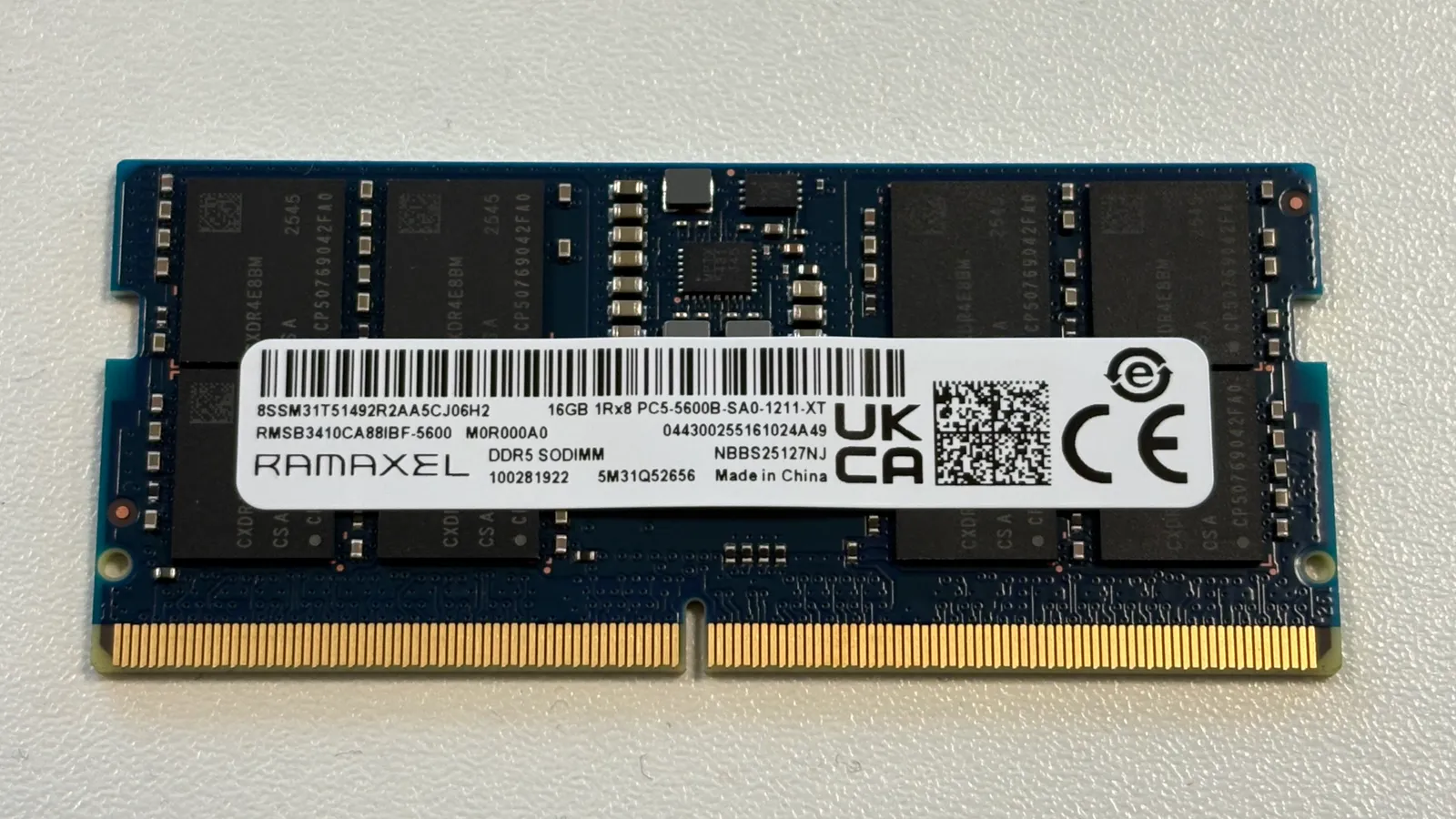
No, not on its own, and not before 2028. CXMT, China’s largest memory maker, is forecast to grow from about 320,000 DRAM wafers a month to 420,000 in 2027 and possibly 600,000 by 2028. That is close to doubling. But Counterpoint Research expects CXMT’s share of the world’s DRAM output to rise only from about 9% to 11% by 2028, much of the new supply stays in China, and CXMT charges about what Samsung does. RAM and gadget prices stay high through 2027.
Is China really doubling RAM production?
One Chinese company is, on the optimistic forecast, by 2028. The “China is doubling RAM production” headlines all trace back to one chain of reporting. On October 18 2026 the account P Equity Research posted figures it attributed to Counterpoint Research and TrendForce. Wccftech wrote them up on October 19, TechRadar followed the same day, and consumer sites turned it into “China is doubling RAM production to keep gadget prices from skyrocketing.”
The underlying numbers hold up against the research firms’ own published work:
- Today: about 320,000 wafers a month. Counterpoint’s July 2026 analysis of CXMT’s listing gives “its current 320,000” wafers per month.
- 2027: about 420,000. Both Counterpoint (July) and a September 24 2026 TrendForce report citing Taiwan’s Commercial Times give 420,000 wafers a month by 2027, an increase of about 31%. Counterpoint names new fabs in Shanghai and Beijing and a new cluster in Hefei.
- 2028: 500,000 to 600,000. This is the figure behind “doubling,” and it is the least well sourced. It appears in the October 18 relay but not in the Counterpoint or TrendForce pages above. At 600,000 it is an 87.5% increase on today, not a full doubling. At 500,000 it is 56%. Counterpoint’s own long-range view is that CXMT aims to double capacity by 2030, two years later than the headlines say.
So the honest version of the headline is: CXMT may come close to doubling its DRAM wafer capacity between 2026 and 2028, if every planned fab ramps on time. The “to keep gadget prices from skyrocketing” part is the headline writer’s framing of who CXMT sells to. No research firm forecasts that outcome.
Why doesn’t doubling CXMT double the world’s RAM supply?
Because CXMT is one supplier out of four, and the other three are growing too. In the second quarter of 2026 CXMT held 9.5% of global DRAM revenue, against 39.4% for Samsung, 24.9% for SK hynix and 23.3% for Micron, according to the same TrendForce report. Even large growth at the fourth-largest maker moves the global total by a few percent.
SemiAnalysis gives a sense of the scale. Its June 2026 model, covered in the CXMT company explainer, puts CXMT’s 2027 level of about 420,000 wafers a month at roughly 17% of global DRAM wafer capacity. That implies a world total of around 2.5 million wafers a month. On that base, the extra 100,000 wafers CXMT adds in 2027 is about 4% more DRAM wafer capacity worldwide. Useful, not transformative.
Counterpoint’s market-share forecast makes the same point in output terms. It expects CXMT’s share of global DRAM bit shipments to go from about 9% now to 11% by 2028 in its base case. The chart below puts the two numbers on one scale: wafer capacity, which is what the headlines count, and share of world output, which is what moves prices.
| Group | Row | Index, 2026 = 100 |
|---|---|---|
| CXMT wafer capacity | 2026: 320k wafers/month | 100 |
| CXMT wafer capacity | 2027: 420k wafers/month | 131 |
| CXMT wafer capacity | 2028: 500k to 600k (optimistic) | 156 to 188 |
| CXMT share of world DRAM bits | Now: about 9% | 100 |
| CXMT share of world DRAM bits | 2028: about 11% (base case) | 122 |
There is also the question of what those wafers make. The global shortage is driven by high-bandwidth memory (HBM) for AI accelerators, which TrendForce estimates will take roughly 30% of combined DRAM wafer input at the three big makers by the end of 2027. CXMT’s expansion is in ordinary DRAM, the kind in PCs and phones, which is what makes it interesting to consumers. Counterpoint describes CXMT’s HBM as “still unproven” at scale, so CXMT does not take any of the AI demand off the incumbents. It adds supply where consumers buy, but it does nothing to slow the HBM pull that created the shortage. Why that pull starves ordinary RAM is laid out in the 2026 memory shortage explained.
Where will CXMT’s extra RAM actually go?
Mostly to Chinese buyers. Investors quoted in the TrendForce September report expect the new capacity to be “absorbed domestically rather than immediately flowing into overseas markets,” and say it “may not have a meaningful impact on global supply and demand until 2027 or later.” Chinese cloud and AI companies are building fast and are first in line. Reuters has reported a $3 billion CXMT supply deal with Tencent, as covered in the CXMT explainer.
Western buyers face two more limits:
- Compliance. CXMT is on the Pentagon’s Section 1260H list of “Chinese military companies,” a designation it is contesting in court. That makes Western PC makers cautious. When HP, Asus and Acer began using CXMT memory in 2026, Tom’s Hardware reported, citing Nikkei Asia, that it went into a small number of notebooks for markets outside the US.
- Allocation. Like the big three, CXMT signs long-term supply deals. Spare capacity for small brands and the retail channel is the last thing to appear.
Is Chinese RAM cheaper?
Not at the moment. The same Nikkei-sourced reports say CXMT’s DRAM costs no less than Samsung’s, and Wccftech reports that CXMT turned down Apple’s request for a discount. CXMT has no reason to undercut a market where every maker is selling out. Its first-half 2026 results showed a second-quarter gross margin of 87.59%, as summarized by TrendForce, roughly what the incumbents earn. A seller with that margin prices to the market, not below it.
The one route by which CXMT lowers prices is volume. Once enough of its new capacity reaches the global market, the big three lose the ability to raise contract prices every quarter. That is a 2028 story at the earliest, and it depends on the AI demand curve, not just on CXMT. The 2027 memory shortage forecast sets out the demand side.
Will RAM and gadget prices go down in 2027?
Unlikely. The 2027 indicators all point up:
- TrendForce forecast conventional DRAM contract prices up 10% to 15% in the fourth quarter of 2026. KB Securities expects another double-digit rise in the first quarter of 2027, as covered in will GPU prices go up in 2027.
- Michael Dell told the Wall Street Journal the memory shortage could last up to four years, to 2030, as reported by TechRadar.
- KB Securities estimates Samsung has long-term contracts for about 80% of its 2027 memory output, including all of its HBM4, as reported by Yonhap on October 20 2026.
CXMT’s growth is the main reason forecasters see any relief at all in 2028, so it matters. It just does not matter yet. Phones, laptops and PCs priced in 2027 will carry memory bought at 2027 contract prices. For the device side of that, see why phones are more expensive in 2026. For the current numbers, see the RAM price tracker.
Should you wait for cheaper Chinese RAM?
No. If you need RAM or a device with a lot of it in the next year, waiting for CXMT to bring prices down means waiting into 2028 at the earliest. A practical plan:
- Buy what you need now, at the capacity you need. The when will RAM prices drop forecast puts relief no earlier than 2028.
- Consider DDR4 if your platform supports it. It is still the cheaper retail option per gigabyte, though its spot price has risen. The how to save money on RAM guide covers the workarounds.
- Watch CXMT’s actual shipments, not its plans. The signal that matters is CXMT memory appearing in retail kits and Western laptops at a discount, not another capacity forecast.
Frequently asked questions
- Is CXMT doubling its RAM production?
- Close to it, on the most optimistic forecast. TrendForce and Counterpoint figures put CXMT at about 320,000 DRAM wafers a month now and 420,000 in 2027. A 2028 figure of 500,000 to 600,000 would be a 56% to 88% increase. Counterpoint says the company itself aims to double capacity by 2030.
- Will CXMT make RAM cheaper?
- Not in 2027. CXMT prices its memory at about the same level as Samsung, much of its new output is expected to stay in China, and its share of world DRAM output only rises from about 9% to 11% by 2028. Any price effect is a 2028 story at the earliest.
- Can you buy CXMT RAM in the US?
- Only in limited ways. CXMT is on the Pentagon Section 1260H list, which it is contesting in court, and the PC makers that use its chips have put them in a small number of models for markets outside the US.
- Does CXMT make HBM for AI chips?
- Not at scale yet. Counterpoint describes CXMT HBM as still unproven at scale, so its expansion adds ordinary PC and phone DRAM, not the high-bandwidth memory driving the shortage.
Sources
- Counterpoint Research (2026). Capital-Rich CXMT Eyes the “Big Three” Memory Club. July 16 2026. https://counterpointresearch.com/en/insights/cxmt-stock-market-big-three-memory-club
- TrendForce (2026). CXMT, YMTC Ramp Memory Capacity, but China’s AI, Cloud Boom Could Soak Up New Supply Through 2027. September 24 2026; citing Commercial Times. https://www.trendforce.com/news/2026/09/24/news-cxmt-ymtc-ramp-memory-capacity-but-chinas-ai-cloud-boom-could-soak-up-new-supply-through-2027/
- Wccftech (2026). CXMT Is Expected To Add Over 100,000 DRAM Wafers Per Month Within A Year. October 19 2026; secondary, relaying a P Equity Research post citing Counterpoint and TrendForce. https://wccftech.com/cxmt-is-expected-to-add-over-100000-dram-wafers-per-month-within-a-year-aiming-at-consumer-electronics-squeezed-by-the-memory-shortage/
- TechRadar (2026). Analysts forecast Chinese RAM surge through 2028, but it’s not likely to help the average consumer. October 19 2026; secondary, including Michael Dell’s Wall Street Journal interview. https://www.techradar.com/computing/memory/analysts-forecast-chinese-ram-surge-through-2028-but-its-not-likely-to-help-the-average-consumer-as-dell-ceo-warns-the-memory-crisis-could-last-until-2030
- Tom’s Hardware (2026). Three major PC makers now using Chinese memory to fight “unprecedented memory shortage,” report claims. Secondary, citing Nikkei Asia. https://www.tomshardware.com/tech-industry/three-major-pc-makers-now-using-chinese-memory-to-fight-unprecedented-memory-shortage-report-claims-hp-asus-and-acer-using-small-amounts-of-cxmt-chips-in-limited-number-of-notebooks-for-non-us-market
- TrendForce (2026). CXMT Gross Margin Hits 87% in Q2 to Rival Memory Giants. August 31 2026. https://www.trendforce.com/news/2026/08/31/news-cxmt-gross-margin-hits-87-in-q2-to-rival-memory-giants-as-lpddr6-mass-production-reportedly-begins
- TrendForce (2026). Tight DRAM Supply Gives Suppliers Greater Pricing Power in HBM, with HBM Contract Prices Expected to Surge Multiples Higher in 2027. Press release, June 2 2026. https://www.trendforce.com/presscenter/news/20260602-13074.html
- SemiAnalysis (2026). China’s CXMT Is Set to Challenge DRAM Incumbents. June 23 2026; modeled estimates. https://newsletter.semianalysis.com/p/chinas-cxmt-is-set-to-challenge-dram